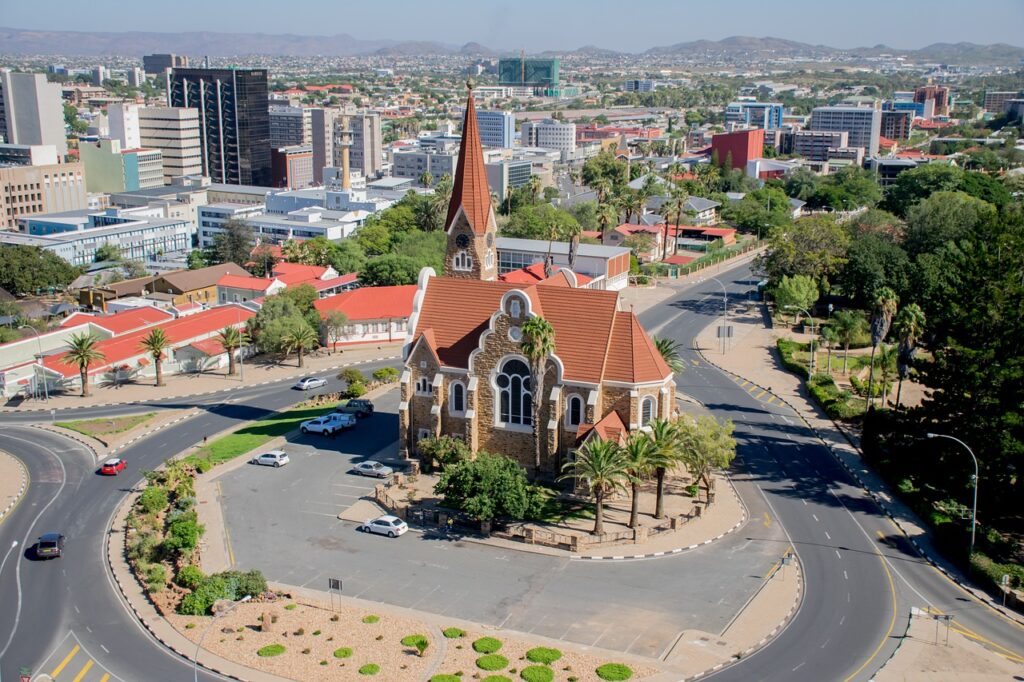
Namibia has emerged as one of Africa’s strongest-performing countries in the 2026 African Performance Index, climbing from 15th position last year to third place overall.
According to the index, published by Jeune Afrique and The Africa Report, Namibia’s strong improvement was driven by political stability, improved governance, expanding infrastructure, a growing financial sector and effective management of natural resources.
Enhanced fiscal capacity, particularly in tax collection, also contributed to the country’s rise.
“Namibia records the strongest rise of the year, moving from 15th to 3rd place. Its political stability, its infrastructure, its financial market, its natural resources and the improvement of its governance indicators – notably its ability to collect tax – make it the great revelation of this edition,” the report stated.
South Africa retained the top position in the rankings, maintaining a clear lead due to its strong performance in the areas of influence and innovation.
The country benefited from its advanced academic and entrepreneurial ecosystem, diplomatic reach through platforms such as BRICS and the G20, and its significant cultural influence across the continent.
Mauritius climbed to second place, reflecting its institutional stability, favourable investment climate and successful economic diversification efforts.
Morocco ranked fourth, followed by Nigeria and Egypt in fifth and sixth positions respectively. Rwanda, Ghana, Côte d’Ivoire and Kenya completed the top ten.
“The top 10 is completed by Rwanda in 7th, Ghana in 8th, Côte d’Ivoire in 9th and Kenya in 10th. West Africa thus confirms its dynamism, driven by the economic rivalry between Accra and Abidjan, the rise of Nigeria and the progress of Côte d’Ivoire, which has become one of the continent’s major regional hubs,” the report said.
The report highlights broader shifts across Africa’s economic landscape. West Africa’s growing influence is reflected in the strong performances of Ghana and Côte d’Ivoire, while Nigeria continues to advance despite governance constraints.
Egypt, however, slipped in the rankings due to weaker macroeconomic indicators, rising debt levels and governance challenges.
Elsewhere, countries such as Algeria improved their standings, while Ethiopia and several others declined, reflecting the increasing importance of governance quality, fiscal transparency and regional integration in the index methodology.
The 2026 African Performance Index is based on 24 indicators grouped into three categories: governance, which accounts for 50% of the overall score, influence at 25%, and innovation at 25%.
Indicators include political stability, foreign direct investment, rule of law, diplomatic influence, education outcomes, patent activity and start-up funding.
According to the editors, the index seeks to measure not only current performance but also future potential, assessing how countries are positioning themselves through institutional strength, innovation capacity and global engagement.