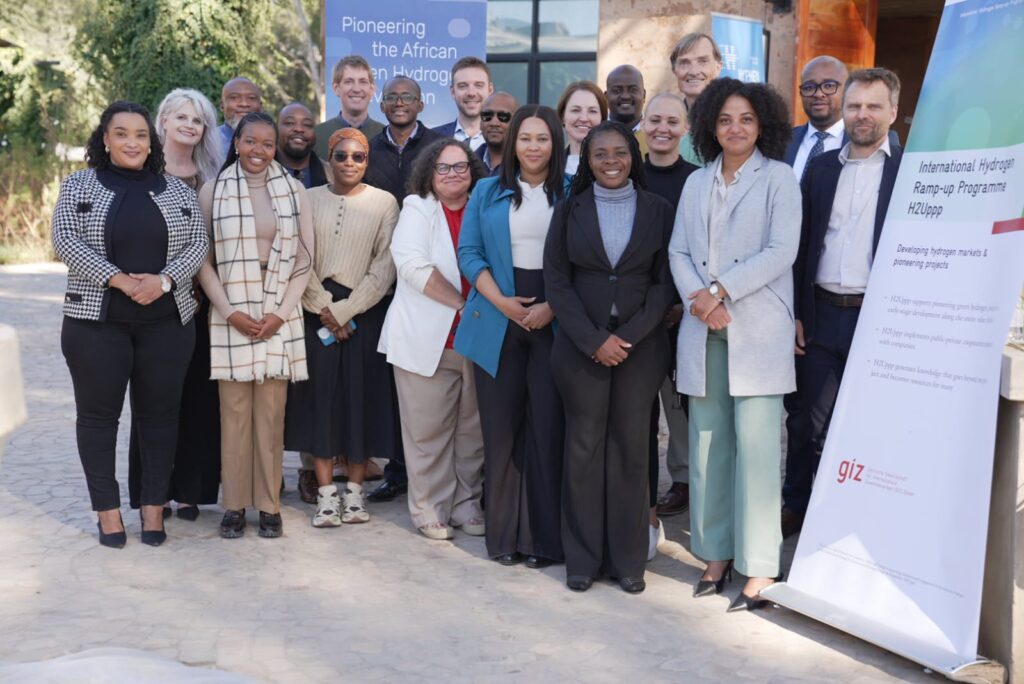
Capacity constraints, limited access to finance and procurement barriers are threatening Namibian businesses’ ability to fully participate in the country’s emerging green hydrogen sector, according to discussions held during a supplier development workshop hosted by Hyphen Hydrogen Energy in Windhoek.
The workshop, organised together with AHK Southern Africa and GIZ Namibia, focused on identifying structural bottlenecks preventing local businesses from participating in large industrial and infrastructure projects.
The discussions come as Hyphen advances plans for Namibia’s first large-scale green hydrogen project under a Feasibility and Implementation Agreement with government.
The project carries a local procurement target of 30.6% of its estimated €10 billion capital expenditure, potentially creating opportunities for Namibian companies across renewable energy, logistics, manufacturing, civil infrastructure, operations, maintenance and related services.
However, workshop participants warned that weak enterprise scalability, financing constraints and procurement qualification requirements continue to limit local participation.
The session brought together commercial banks, development finance institutions, government officials, enterprise and supplier development practitioners, and business support organisations.
Key issues discussed included enterprise bankability, procurement readiness, technical capability and coordination gaps across Namibia’s supplier development ecosystem.
Earlier this year, Hyphen secured €300,000 in matched funding under the German government-backed H2Uppp initiative to support the development of its Enterprise and Supplier Development programme.
The initiative is aimed at strengthening long-term industrial capability and competitiveness within Namibia’s wider green industrial economy.
Hyphen Senior Economic Development Manager responsible for Local Content and ESD, Johannes Shipepe, said local content targets alone would not guarantee meaningful economic participation.
“Local content ambitions alone are not enough. If Namibia is to realise the socio-economic potential of green hydrogen fully, we must collectively understand where the real bottlenecks lie – whether in procurement design, access to finance, technical capability, or ecosystem coordination – and work collaboratively to address them,” Shipepe said.
The workshop used the Hyphen project as a practical case study to generate recommendations that could also support Namibia’s wider industrialisation and green energy ambitions.
The discussions reflect growing pressure on Namibia’s green hydrogen sector to demonstrate that large-scale investments will translate into local business growth, skills development and long-term industrial capacity.