Thursday, September 10, 2026
Subscribe
The Brief | Namibia's Leading Business & Financial News
  • Home
  • Companies
    • Finance
    • Agriculture
    • Technology
    • Property
    • Trade
    • Tourism
  • Business & Economy
  • E-PAPERreader
  • Mining & Energy
  • Opinions
    • Analysis
    • Columnists
  • Africa
No Result
View All Result
The Brief | Namibia's Leading Business & Financial News
  • Home
  • Companies
    • Finance
    • Agriculture
    • Technology
    • Property
    • Trade
    • Tourism
  • Business & Economy
  • E-PAPERreader
  • Mining & Energy
  • Opinions
    • Analysis
    • Columnists
  • Africa
No Result
View All Result
The Brief | Namibia's Leading Business & Financial News
Subscribe
No Result
View All Result
Home Latest

High banking costs keep many Namibians out of formal financial system

by reporter
July 31, 2026
in Latest
8
A A
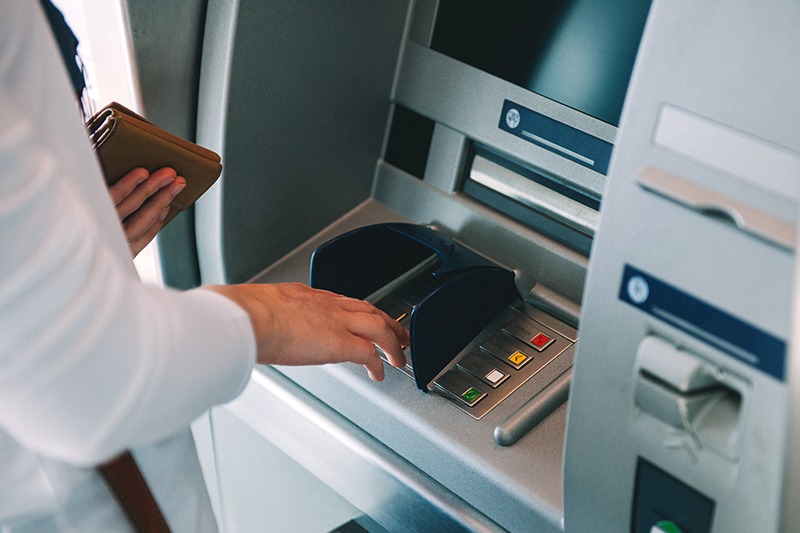
Person using an ATM, inserting a card while holding a wallet nearby in a bank lobby

High banking costs and the inability to maintain savings remain the biggest barriers preventing thousands of Namibians from accessing formal financial services, even as financial inclusion has reached a record 86%.

The latest Namibia Financial Inclusion Survey (NFIS) 2025 shows that 43.2% of adults without bank accounts cited insufficient funds to maintain savings as the main reason for remaining unbanked, highlighting affordability as the biggest obstacle to expanding financial access.

Although 86.0% of Namibia’s adult population, equivalent to 1.56 million people, are now financially included, up from 78.0% in 2017, significant disparities remain between urban and rural communities.

Formal financial inclusion increased to 81.5%, with 75.6% of adults holding commercial bank accounts and 71.3% using other formal non-bank financial institutions.

The survey found that Namibians choose financial institutions largely based on recommendations from family, friends and communities (48.4%), while 37.7% said low fees and charges influence their choice of financial service provider.

Access to banking infrastructure also remains uneven. While 40.1% of urban residents can reach a bank within 30 minutes, only 5.7% of rural residents enjoy the same level of access. In contrast, 28.3% of rural residents travel more than three hours to reach a bank, compared with just 1.6% of urban residents.

The survey shows that women continue to lead financial inclusion, with 87.6% of females financially included compared with 84.2% of males, although the gender gap has narrowed since 2017.

Savings remain central to household financial management, with 72.5% of adults reporting that they save in some form.

However, the use of formal savings products declined from 60.0% in 2017 to 53.2% in 2025, while informal savings increased slightly from 2.9% to 3.5%.

Borrowing has become more common, rising from 42.1% in 2017 to 49.0% in 2025, with most loans used to cover essential household expenses such as food (51.3%), education (22.1%) and transport (16.4%).

Insurance coverage remains low, with only 32.7% of adults covered by either formal or informal insurance, leaving a majority of households exposed to financial shocks.

Money transfers remain widespread, with 61.6% of adults using formal or informal remittance channels, of which 58.5% relied on formal services. Most remittances (94.1%) were sent within Namibia.

Despite the progress, 14.0% of adults remain financially excluded, down from 22.0% in 2017, with exclusion highest in rural areas at 20.7%, compared with 8.3% in urban centres.

The survey also found that many households continue to face financial pressure. While the proportion of adults struggling to meet financial commitments fell to 63.0% from 68.5% in 2017, only 25.4% said they were often able to make their income last until their next payday.

Food remains the largest household expense, with 90.1% of adults identifying it as their primary spending category, while awareness of investment products remains limited. Only 6.4% of adults were aware of unit trusts and 5.6% knew about bonds and other investment products.

author avatar
reporter
See Full Bio
Previous Post

Mondjila appointed to lead Daures Green Hydrogen Village Phase 2

Next Post

July was the month Namibia became more expensive

Must Read

Speaker at a podium delivering the keynote at the African Green Industries Summit, with a blue screen behind him displaying event details
Latest

Namibia targets 25% secondary industry contribution to GDP by 2030

September 9, 2026
Group of six adults standing with plaques in front of a bright blue wall; woman sits front center in a dark dress with colorful accents.
Latest

MTC, MVA Fund build 61 classrooms to ease rural school infrastructure shortages

September 9, 2026
Shadow AI employees: Why your company needs an AI usage policy
Latest

AI is already at employees’ desks. Is your board ready to govern AI?

September 9, 2026
Seedlings sprouting from stacked coins on soil beside a moss ball labeled CO2, symbolizing green investment and sustainability.
Latest

Namibia eyes carbon markets as new source of climate finance

September 8, 2026
Close-up portrait of a woman wearing a gray blazer over a black-and-white striped top, facing the camera against a gray background.
Latest

Psychological safety: The missing ingredient in high-performing teams

September 4, 2026
Seven diverse professionals pose in a row in front of a green backdrop with repeating white logo marks.
Latest

Nedbank launches 30-person funeral cover including extended family, domestic workers

September 3, 2026
Load More

Related News

Interest rates: Reserve Bank acted early enough to keep inflation in check, says Kganyago

Interest rates: Reserve Bank acted early enough to keep inflation in check, says Kganyago

June 23, 2022
Namibia’s inflation hits record high in April

Namibia’s inflation hits record high in April

May 12, 2022
Gymnasium secures N$73m DBN funding for schools expansion

Gymnasium secures N$73m DBN funding for schools expansion

June 21, 2023

Browse by Category

  • Africa
  • Agriculture
  • Analysis
  • Business & Economy
  • Columnists
  • Companies
  • e-edition
  • Finance
  • Finance
  • Fisheries
  • Green Hydrogen
  • Health
  • Investing
  • Latest
  • Market
  • Mining & Energy
  • Namibia
  • namibia
  • News
  • Opinions
  • Property
  • Retail
  • Technology
  • Tourism
  • Trade
The Brief | Namibia's Leading Business & Financial News

The Brief is Namibia's leading daily business, finance and economic news publication.

CATEGORIES

  • Business & Economy
  • Companies
    • Agriculture
    • Finance
    • Fisheries
    • Health
    • Property
    • Retail
    • Technology
    • Tourism
    • Trade
  • e-edition
  • Finance
  • Green Hydrogen
  • Investing
  • Latest
  • Market
  • Mining & Energy
  • namibia
  • News
    • Africa
    • Namibia
  • Opinions
    • Analysis
    • Columnists

CONTACT US

Cell: +264814612969

Email: newsdesk@thebrief.com.na

© 2026 The Brief | All Rights Reserved. Namibian Business News, Current Affairs, Analysis and Commentary

Welcome Back!

Login to your account below

Forgotten Password?

Retrieve your password

Please enter your username or email address to reset your password.

Log In
No Result
View All Result
  • Home
  • Companies
  • Mining & Energy
  • Business & Economy
  • Opinions
    • Analysis
    • Columnists
  • Africa

© 2026 The Brief | All Rights Reserved. Namibian Business News, Current Affairs, Analysis and Commentary

This website uses cookies. By continuing to use this website you are giving consent to cookies being used. Visit our Privacy and Cookie Policy.