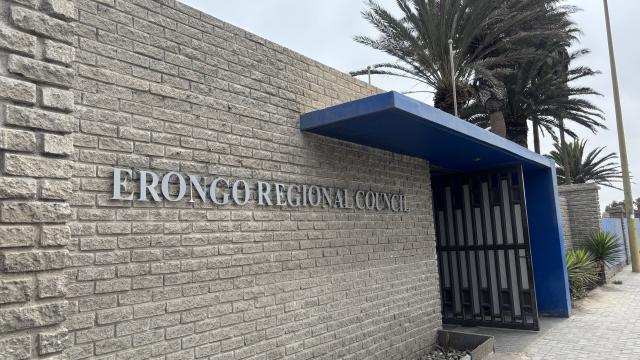
The Erongo Regional Council has proposed the establishment of a water reclamation plant to strengthen water security, support industrial growth and improve long-term resilience in Namibia’s coastal region.
Speaking at the Africa Public Service Day 2026 event in Swakopmund, Erongo Regional Council Director of Planning, Monitoring and Evaluation Desmond Kambatuamasa said the region should replicate Windhoek’s potable water reclamation model to reduce pressure on scarce water resources.
“We have a reclamation plant in Windhoek. Why can’t we have a reclamation plant in other towns if volumes allow? Is it not an option? How can we reuse and recycle our greywater? Scientifically, it’s proven that 70% of your potable water ends one way or another at your ponds. That is water which is still useful,” Kambatuamasa said.
He said water reclamation should extend beyond urban water supply and play a broader role in protecting groundwater resources while improving access to water in rural areas.
Kambatuamasa called for stronger collaboration between government, local authorities, academia, the mining sector and NamWater to develop coordinated regional water security strategies.
“Governance requires us to sit around the table. We need to have regional council, academia, local authorities, mining associations, the ministries, NamWater. We all need to sit around and look at water supply security, water supply governance within the region and at the national level,” he said.
He added that water reclamation should become a national priority to balance industrial demand, rural livelihoods and environmental protection.
“Those issues really need to be taken up,” he said.
The proposal comes as Windhoek continues to rely on the Goreangab Water Reclamation Plant, a globally recognised facility that converts treated wastewater into drinking water and supplies about a quarter of the capital’s potable water needs.
In 2024, the City of Windhoek approved a combined N$1.7 billion (€90 million) investment to expand its direct potable water reclamation capacity and upgrade the Gammams and Otjomuise wastewater treatment plants.
At the time, City of Windhoek spokesperson Harold Akwenye said the projects were integrated because the success of the new Direct Potable Reclamation Plant depended on expanding the city’s upstream wastewater treatment infrastructure.
“It became apparent that the DPR2 project is highly reliant on the upgrading and expansion of the upstream Wastewater Treatment Plants, Gammams (GWWTP) and Otjomuise (OWWTP), to ensure supply of adequate water, both quantity and quality, for reclamation. As a result, it was decided to implement the project as one package,” Akwenye told The Brief.
He said a technical feasibility study completed in 2023 found that upgrading the existing wastewater treatment plants was essential to ensure the long-term success of the new reclamation facility.