Friday, July 31, 2026
SUBSCRIBE
The Brief | Namibia's Leading Business & Financial News
  • Home
  • Companies
    • Finance
    • Agriculture
    • Technology
    • Property
    • Trade
    • Tourism
  • Business & Economy
  • E-PAPERreader
  • Mining & Energy
  • Opinions
    • Analysis
    • Columnists
  • Africa
No Result
View All Result
The Brief | Namibia's Leading Business & Financial News
  • Home
  • Companies
    • Finance
    • Agriculture
    • Technology
    • Property
    • Trade
    • Tourism
  • Business & Economy
  • E-PAPERreader
  • Mining & Energy
  • Opinions
    • Analysis
    • Columnists
  • Africa
No Result
View All Result
The Brief | Namibia's Leading Business & Financial News
Subscribe
No Result
View All Result
DSTV WC26 Campaign
Home Latest

Why Namibia’s trade moment matters more than ever

by reporter
May 12, 2026
in Latest
7
A A
Professional headshot of a smiling woman in a navy blazer and white shirt against a blue background with a small lapel pin

By Hellen Amupolo

Namibia is entering a period where the conversation around trade is becoming more tangible for everyday businesses.

As global supply chains continue to adjust and regional trade becomes less abstract and more operational, the question is no longer whether Namibia is well positioned, but whether local enterprises are ready to participate meaningfully in what lies ahead.

From where I sit, the most important shift is not happening only at the level of ports, corridors or policy frameworks.

 It is happening at the level of small and mid-sized businesses that are increasingly being drawn into regional value chains, sometimes deliberately and sometimes simply because demand is finding them.

Namibia’s location has always offered an advantage, but location only matters if it translates into opportunity for the businesses operating here. The Port of Walvis Bay and the corridors that feed into it are becoming more relevant to traders, suppliers, logistics operators and producers who previously saw regional trade as something distant or reserved for larger players. As transport routes become more reliable and regional demand patterns shift, more Namibian businesses are finding themselves one step closer to customers beyond our borders.

What often determines whether they can respond is not ambition, but readiness. For many businesses, participation in trade depends on practical considerations such as whether they can finance inventory, replace ageing equipment, manage uneven cash flows or absorb longer payment cycles. These are not abstract challenges. They are day-to-day realities for wholesalers, contractors, agri-processors and service providers trying to grow without overextending themselves.

Encouragingly, there are signs that business confidence is beginning to translate into action. More enterprises are investing in productive assets, upgrading fleets, improving systems and formalising operations in order to meet demand more reliably. This is particularly evident among mid-sized businesses that have outgrown purely local markets but are still navigating what scale looks like in practice. Their growth tends to be incremental rather than dramatic, but it is precisely this segment that creates jobs, builds resilience and anchors local supply chains.

Digitalisation is also changing how businesses engage with trade. For many, the adoption of real-time banking, digital payments and better cash flow visibility has made it easier to manage the uncertainty that comes with expansion. Faster settlements and improved financial oversight reduce the risk that often discourages small businesses from taking on new customers or entering new markets.

Vision 2030 speaks to inclusive growth and sustainability, and these objectives depend heavily on how well smaller and mid-sized enterprises are supported to grow responsibly. Trade should not remain the preserve of a few highly capitalised firms. Its benefits are strongest when participation is broad and when businesses across sectors are able to supply, distribute and service the regional economy.

Namibia’s opportunity lies in ensuring that trade activity strengthens the domestic business base rather than bypassing it. That means making it easier for enterprises to access finance that aligns with their operating realities, to invest at the right pace and to build capacity without undue strain. It also means paying attention to the fundamentals that matter most to business owners: predictability, affordability and the ability to plan ahead with confidence.

This moment calls for steady, practical progress rather than overstatement. The foundations are in place, but the real measure of success will be whether ordinary businesses feel the impact in their order books, their balance sheets and their ability to employ more people. Namibia’s trade story is becoming more immediate. The task now is to ensure that local enterprises are not just observers of that story, but active participants in it.

* Hellen Amupolo, Executive: Business and Commercial Banking, Standard Bank Namibia

author avatar
reporter
See Full Bio
Previous Post

Teachers aren’t machines and they shouldn’t have to act like them

Next Post

Yango increases fares by 5% to help drivers meet compliance costs

Must Read

Person using an ATM, inserting a card while holding a wallet nearby in a bank lobby
Latest

High banking costs keep many Namibians out of formal financial system

July 31, 2026
Professional man in a white shirt with a teal logo stands with arms crossed in a bright, modern office setting (logo reads 'DAURES GREEN HYDROGEN VILLAGE').
Latest

Mondjila appointed to lead Daures Green Hydrogen Village Phase 2

July 31, 2026
Namibia fuel prices set to drop in June
Latest

Fuel prices to rise by N$2.00 a litre as government restores levies

July 31, 2026
Namibia’s beef exports plunge nearly 50% in Q2
Latest

Namibia targets higher beef exports and value addition in livestock sector

July 31, 2026
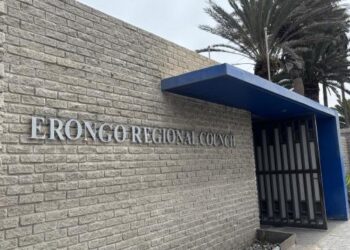
Erongo Regional Council sign on a beige brick wall with a blue canopy over a gated entrance along a sidewalk.
Latest

Erongo proposes reclamation plant to address water challenges

July 31, 2026
Professional headshot of a man in a dark suit and red tie against a white background.
Latest

NamPost appoints Willem Mouton as CEO

July 31, 2026
Load More

Related News

CDH Namibia rebrands as Kauta Barendse & Kishi Inc under new leadership team

CDH Namibia rebrands as Kauta Barendse & Kishi Inc under new leadership team

September 1, 2025
Oryx Properties posts N$334.5m net income, declares N$123m payout

Oryx Properties posts N$334.5m net income, declares N$123m payout

September 12, 2025
Cheetah Cement ordered to suspend night ops

Cheetah Cement ordered to suspend night ops

August 23, 2022

Browse by Category

  • Africa
  • Agriculture
  • Analysis
  • Business & Economy
  • Columnists
  • Companies
  • Finance
  • Finance
  • Fisheries
  • Green Hydrogen
  • Health
  • Investing
  • Latest
  • Market
  • Mining & Energy
  • Namibia
  • namibia
  • News
  • Opinions
  • Property
  • Retail
  • Technology
  • Tourism
  • Trade
The Brief | Namibia's Leading Business & Financial News

The Brief is Namibia's leading daily business, finance and economic news publication.

CATEGORIES

  • Business & Economy
  • Companies
    • Agriculture
    • Finance
    • Fisheries
    • Health
    • Property
    • Retail
    • Technology
    • Tourism
    • Trade
  • Finance
  • Green Hydrogen
  • Investing
  • Latest
  • Market
  • Mining & Energy
  • namibia
  • News
    • Africa
    • Namibia
  • Opinions
    • Analysis
    • Columnists

CONTACT US

Cell: +264814612969

Email: newsdesk@thebrief.com.na

© 2026 The Brief | All Rights Reserved. Namibian Business News, Current Affairs, Analysis and Commentary

Welcome Back!

Login to your account below

Forgotten Password?

Retrieve your password

Please enter your username or email address to reset your password.

Log In
No Result
View All Result
  • Home
  • Companies
  • Mining & Energy
  • Business & Economy
  • Opinions
    • Analysis
    • Columnists
  • Africa

© 2026 The Brief | All Rights Reserved. Namibian Business News, Current Affairs, Analysis and Commentary

This website uses cookies. By continuing to use this website you are giving consent to cookies being used. Visit our Privacy and Cookie Policy.