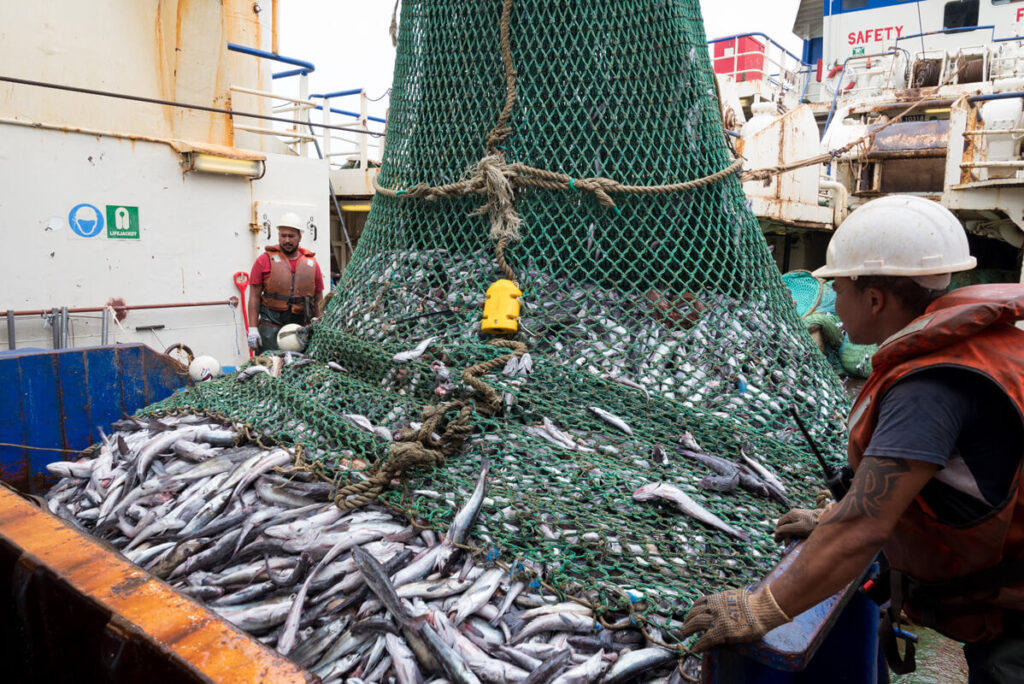
Cabinet has approved a temporary easing of fishing restrictions for Namibia’s wet-landed horse mackerel sector, alongside a set of changes aimed at improving access, conservation and employment in the fishing industry.
The decision, taken during meetings on 14 and 21 April 2026 and announced by the Ministry of Information and Communication Technology, allows vessels to operate closer to shore under controlled conditions.
“Cabinet authorised the temporary relaxation of trawling within the two-hundred (200) metre isobath to a specified zone of one-hundred and fifty (150) metres (and not shallower) for wet-landed horse mackerel fishing vessels for a period of twelve (12) months, effective from 1 May 2026 to 30 April 2027.”
The measure will apply for one year and is intended to support fishing operations while still protecting marine resources.
Cabinet has also approved the creation of a dedicated fishing zone for the subsector. The Ministry of Agriculture, Fisheries, Water and Land Reform will designate an area south of latitude 22° S, beyond the 200-metre depth line, for exclusive use by wet-landed horse mackerel operators.
In a separate decision, government has opened applications for seal harvesting rights, allowing new players to enter the industry under a formal licensing system.
Efforts to strengthen conservation were also approved through a partnership between the ministry and Namibia Foundation for the Conservation of Seabirds.
“Cabinet approved for the Ministry of Agriculture, Fisheries, Water and Land Reform to enter into a collaboration through a Memorandum of Understanding (MoU) with Namibia Foundation for the Conservation of Seabirds (NAMCOB) on strengthening the management and conservation of seabirds and their ecosystem.”
On employment, Cabinet confirmed changes to the Government Employment Redress Programme (GERP) following implementation challenges and audit findings.
Under the new approach, GERP workers will be absorbed into fishing companies, with quotas incorporated into commercial allocations as part of a phased transition away from the programme.
“Cabinet further approved that the above recommendations be implemented from the new fishing seasons, for hake to be effective from 1 November 2026 and for horse mackerel effective from January 2027.”
The changes signal a shift towards integrating employment and quota systems within the commercial fishing sector, while balancing industry support with conservation priorities.