By Hilda Basson Namundjebo
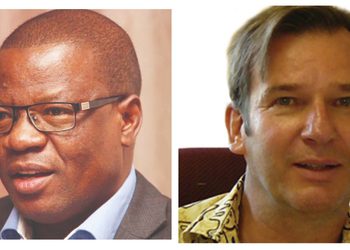
“Great leaders, like most things you value in life come at a price”. These are the words of the First Gentleman Lieutenant General Epaphras Denga Ndaitwah, delivered at a public lecture on the topic of Strategic Leadership & Management.
Every leadership position carries a price tag. And to occupy the seat of authority is to inherit its weight; the expectations of those who entrusted it, the legacy of those who shaped it, and the responsibility to carry it forward with integrity. The seat is not a possession; it is a covenant. It is heavy with history and hope, and demands more than presence; it demands purpose.
In my earlier reflections on missional clarity, I argued that clarity is the compass of leadership. Without it, authority drifts into spectacle, mistaking visibility for vision. With it, every decision is anchored in purpose, every action aligned with service. Missional clarity is not about slogans or soundbites; it is about knowing whom we lead for and what we lead for. It is about resisting the temptation of comfort and holding firm to the enduring mission that gives leadership meaning.
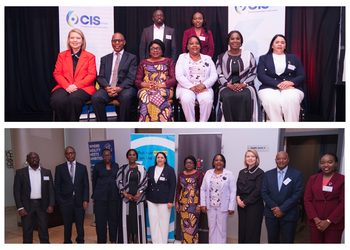
“Seats are easy to sit in. But meaningful seats ask something of us. And that is where leadership begins”. During the course of last week, I attended a Masterclass hosted by the NICG in Windhoek and one of the speakers was Joy‑Marie Lawrence, Chartered Director at Boardvisory. During this training she sharpened this truth with her framework on the concomitant costs of leadership. She reminded us that the seat at the table carries weight in very practical ways: the cost of being prepared, the cost of patience, the cost of courage, the cost of integrity, and the cost of judgement.
Preparation demands discipline. It is the unseen labour of reading, listening, and equipping oneself for the decisions that will shape lives. Patience requires restraint in the face of urgency, the wisdom to wait for the right moment rather than rushing into action for the sake of appearances. Courage calls us to act when silence is easier, to confront prejudice, injustice, or complacency even when it costs us comfort. Integrity insists that we hold the line even when compromise tempts, that we remain faithful to principle when expedience beckons. Judgement asks us to discern wisely, knowing that every choice shapes legacy and that every decision carries consequences beyond the immediate.
These costs are not burdens to be avoided; they are investments in credibility. They remind us that the weight of the seat is measured not in titles but in the daily sacrifices leaders must be willing to make. They are the price of stewardship.
Missional clarity transforms these costs from obligations into opportunities. It reframes leadership as stewardship, not ownership. It insists that authority is exercised not for self but for community, not for ambition but for renewal. When leaders embrace clarity, they lighten the weight of the seat by sharing it—inviting trust, building credibility, and anchoring their mission in service. Clarity is what allows leaders to carry the weight without being crushed by it.
In moments of uncertainty, the seat grows heavier. Crises amplify expectations, and the burden of decision becomes sharper. Yet it is precisely then that clarity matters most. Expedience may offer relief, but only clarity offers direction. Leadership is not about knowing every answer; it is about holding fast to the question that guides every answer: for whom and for what do I lead?
Our Namibian struggle for Independence reminds us of this truth, and that is that our independence was not won by those who sought comfort, but by those who carried the weight of the seat with clarity of mission. They understood that leadership was not about possession but about service, not about visibility but about vision. Today, as we face new challenges; economic transformation, social cohesion, and generational renewal; the same clarity is required.
The weight of the seat will always be felt. But when carried with missional clarity; and with the courage to pay the costs Joy‑Marie Lawrence outlines; it becomes less of a burden and more of a blessing. It becomes the means by which authority is transformed into legacy, and legacy into hope. This is when leadership ceases to be about survival and becomes about stewardship. It ceases to be about the individual and becomes about the collective.
The true measure of leadership is not how lightly one sits, but how faithfully one carries the weight. To sit without clarity is to squander trust. To sit with clarity is to honour the covenant between leaders and people. And in that covenant lies the possibility of renewal; the chance to transform authority into service, service into legacy, and legacy into hope.
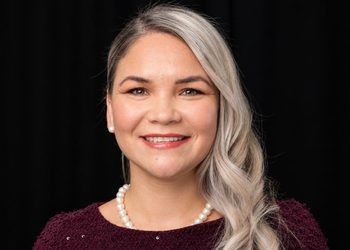
* Hilda is a business leader, public speaker and a seasoned broadcast journalist. Founder of the national brand and organisation Team Namibia, Hilda believes her purpose is to impact the world with kindness, one engagement at a time.