Construction activity in Namibia is expected to remain a key driver of economic growth in 2026, although expansion is projected to slow following a strong rebound in 2025.
Simonis Storm Securities Economist Almandro Jansen forecasts sector growth of between 4% and 6%, reflecting tighter fiscal conditions and more selective private-sector investment.
“Construction remains a key contributor to economic growth in 2026, though the pace of expansion is expected to normalise following the elevated rebound recorded in 2025,” Jansen said.
Public investment is expected to continue underpinning activity, supported by a pipeline of government and parastatal projects in water, energy and transport infrastructure.
In the water sector, the Erongo desalination project, a joint venture between NamWater and Swakop Uranium, is expected to commence construction from mid-2026 following Cabinet approval. The plant is projected to produce about 20 million cubic metres of water annually and will include bulk pipelines and pumping infrastructure.
Agricultural infrastructure is also advancing, with the Neckartal Irrigation Scheme in the ǁKaras Region moving into its second phase, which will develop 5,000 hectares of irrigation capacity.
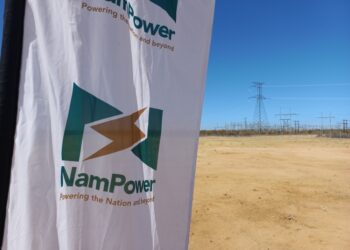
Energy projects are expected to play a central role in driving construction demand. NamPower’s 100 MW Sores ǀGaib solar photovoltaic plant near Rosh Pinah is on track for commissioning in the second quarter of 2026, while the Obib–Oranjemund transmission line linking Namibia to Eskom is nearing completion.
In Windhoek, the Khomas substation project is expected to be completed by the end of 2026, strengthening electricity supply capacity.
Jansen said mining developments are providing additional momentum, with several large-scale projects progressing or nearing execution.
These include Bannerman Energy’s Etango uranium project, Deep Yellow’s Tumas development, Osino Resources’ Twin Hills gold project and the expansion of B2Gold’s Otjikoto mine.
“The current wave of mine development activity is a significant tailwind for construction, with multiple projects progressing simultaneously,” he said.
Further support is expected from multilateral financing, including a US$1.78 billion country strategy approved by the African Development Bank, aimed at supporting infrastructure investment through to 2030.
However, Jansen cautioned that private-sector construction, particularly in housing and commercial property, is likely to remain constrained due to affordability pressures.
“Private construction is expected to remain selective given persistent household affordability constraints,” he said.
He added that the outlook could improve if large-scale energy investments proceed, particularly in oil and gas and green hydrogen.
“The principal upside risk centres on final investment decisions by oil and gas operators and green hydrogen developers. Should these proceed, construction growth could exceed 6%,” Jansen said.
Such projects are expected to drive concentrated activity in regions including Erongo, ǁKaras and Otjozondjupa, particularly around logistics hubs such as Walvis Bay and Lüderitz.
Jansen said the sector’s growth trajectory will depend on the pace of investment decisions, project execution and coordination across key industries.