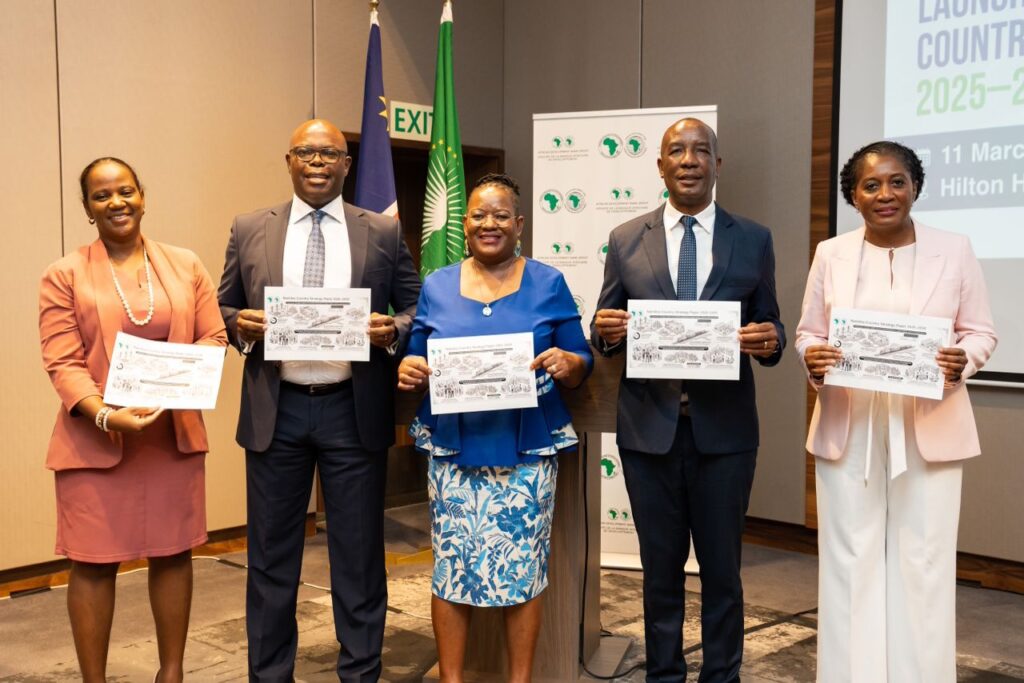
The African Development Bank (AfDB) has unveiled a Country Strategy Paper (CSP) for Namibia covering the period 2025 to 2030, outlining development support worth approximately N$29 billion (US$1.78 billion) aimed at strengthening infrastructure, developing human capital and supporting economic transformation.
Speaking at the launch of the strategy on Wednesday, AfDB Namibia Country Manager Moono Mupotola said the plan focuses on building resilient systems while addressing issues such as economic fragility, gender equality, climate change and structural economic transition.
She added that all projects implemented under the strategy will be assessed using the bank’s updated infrastructure frameworks to ensure sustainability and long-term impact.
“The strategy will be supported by an indicative financing envelope of approximately US$1.78 billion. This includes about US$1.5 billion in lending operations, US$120 million in blended finance facilities, and US$180 million in grants and technical assistance,” Mupotola said.
The CSP outlines several expected outcomes across priority sectors including energy, transport, water infrastructure and skills development.
According to AfDB Country Economist for Namibia Veripamue Kahimise, the bank has already developed a project pipeline for the current year and the following year, while a further pipeline will be prepared for 2028.
Kahimise said the current pipeline includes eight operations across the four priority sectors, with around 80% classified as sovereign projects implemented through government, while the remaining 20% consist of non-sovereign projects involving private sector participation.
In addition to financing projects, the bank plans to support Namibia through a range of non-lending activities, including technical assistance aimed at strengthening policy frameworks, building institutional capacity and preparing projects for implementation.
“In addition, we have a number of non-lending activities. These mainly include technical assistance and similar support to help the country improve policies, strengthen institutional capacity and, in some cases, prepare projects for implementation,” Kahimise said.
She added that funding for the strategy will be drawn from three main sources.
These include support for domestic resource mobilisation by the Namibian government, financing from the bank’s internal resources, and co-financing from development partners and other financial institutions.