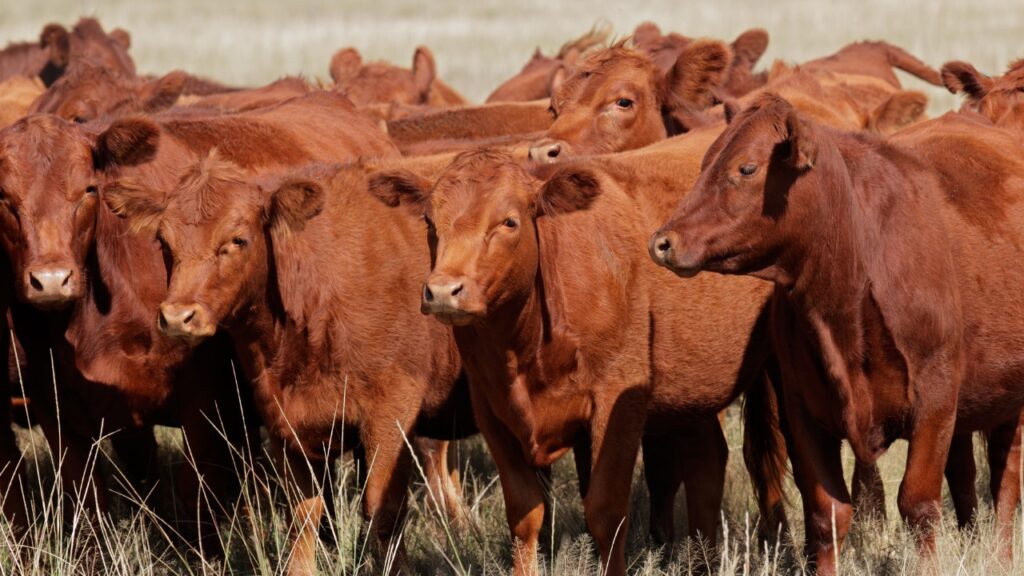
Namibia’s total cattle marketing declined by 19.1% year-on-year in January 2026, falling from 14,625 head recorded in January 2025 to 11,832 head, according to the Namibia Livestock and Livestock Products Board (LLPB).
The decline was mainly driven by lower slaughtering and live export volumes.
Slaughtering dropped by 15.5% to 8,471 head during the month. B and C class abattoirs recorded the sharpest decline, with volumes falling by 36.3%, while A-class abattoirs reported a more modest decrease of 2.9%.
Live exports also declined significantly, dropping by 26.9% to 3,361 head. South Africa remained the primary destination for Namibian cattle, although export volumes were lower compared with the same period last year.
According to the LLPB, the year-on-year decline is largely attributed to improved grazing conditions, which have encouraged producers to retain cattle after significant offloading during previous drought conditions.
On a month-on-month basis, however, cattle marketing increased by 8.7%, rising from 10,882 head in December 2025 to 11,832 head in January 2026. The increase was supported by an 18.3% rise in slaughtering, while live exports declined by 9.7%, reflecting seasonal marketing patterns.
Meanwhile, Namibia’s beef exports surged by 93.8% year-on-year, increasing from 441,962 kilograms to 856,370 kilograms.
The European Union accounted for the vast majority of exports, absorbing 97.6% of total shipments. The Netherlands was the largest destination, taking 76.1% of exports. Other European destinations included Greece (13.9%), Norway (5.5%) and Germany (2.2%).
Regional exports remained relatively small at 20,186 kilograms, with Lesotho accounting for 99% of shipments within the Southern African region. No beef exports were recorded to markets outside Europe and Southern Africa during the period.
Processed leather exports also increased significantly, reaching 43,863 kilograms, representing an 89.2% increase year-on-year. No raw hides were exported during the period, suggesting a shift towards higher value-added products.
South Africa received the largest share of processed leather exports at 59.3%, equivalent to 26,016 kilograms, while Zimbabwe accounted for the remaining 40.7%, or 17,847 kilograms.
The LLPB noted that the absence of raw hide exports and the exclusive shipment of processed leather may reflect a growing focus on value-added livestock products.
Producer prices also strengthened during the period. B2 cattle averaged N$82.53 per kilogram, representing a 15.9% increase from N$71.40 per kilogram recorded a year earlier.
At auctions, weaner cattle prices averaged N$34.91 per kilogram, up N$3.44 per kilogram, or 10.9% year-on-year, reflecting sustained demand amid limited supply.