The success of Namibia’s 2026/27 national budget will depend largely on disciplined implementation, structural reforms and stronger collaboration between government and the private sector, speakers said during a recent economic discussion on the fiscal framework.
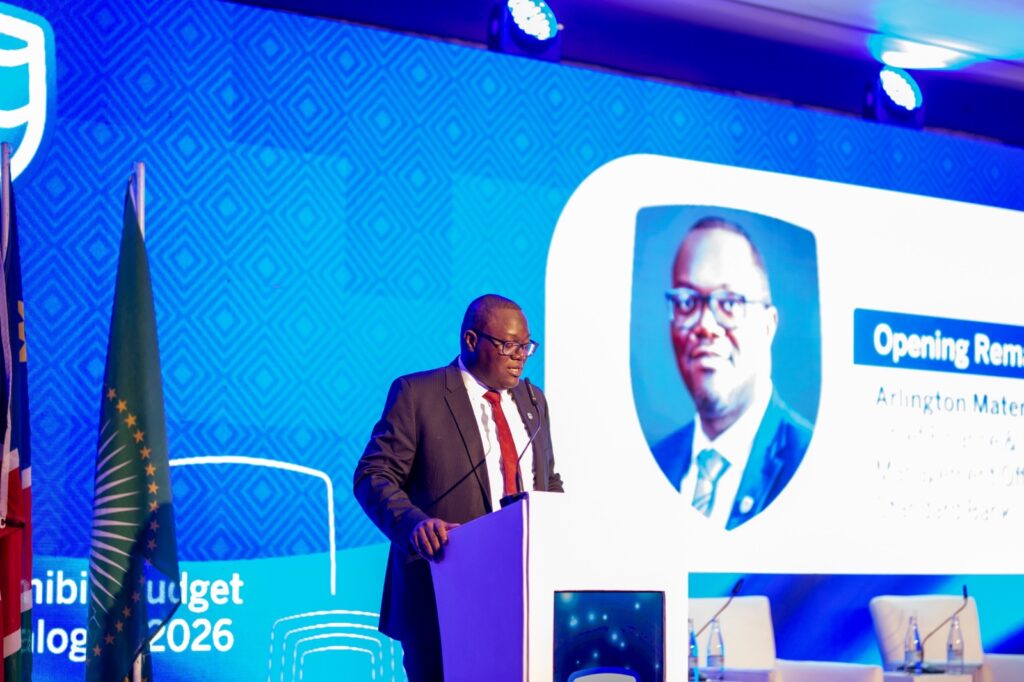
Arlington Matenda, Chief Finance and Value Management Officer at Standard Bank Namibia, said the budget should be assessed not only on its immediate fiscal balance but also on its long-term economic impact.
“Our role as a leading financial institution extends beyond the financial sector. We carry a responsibility to contribute meaningfully to the progress of our nation,” Matenda said.
He described the 2026/27 budget as fiscally responsible while recognising the social pressures faced by many households, adding that its success will ultimately depend on execution.
“The budget is fiscally responsible, attentive to the social realities facing many Namibians, and appropriately ambitious in supporting long-term development,” he said.
Matenda noted that disciplined implementation, expenditure control and timely structural and tax reforms would be critical to broadening the revenue base and stimulating investment.
Finance Minister Ericah Shafudah said the national budget should be viewed as a strategic development tool requiring collective participation from government, businesses and citizens.
“A national budget is not merely a government document. It is a national development instrument, and its success depends on collective effort between government, business, financial institutions and citizens,” Shafudah said.
She described the current fiscal environment as a decisive moment in Namibia’s economic trajectory, stressing the importance of responsible and forward-looking fiscal policy.
“Namibia stands at a pivotal moment in its economic journey,” she said, adding that fiscal policy must remain focused on improving the lives of citizens while supporting long-term economic development.
Shafudah also highlighted the role of collaboration in unlocking value from emerging sectors such as mining, renewable energy and the country’s developing oil and gas industry.
Guest speaker Vusi Thembekwayo, a global strategist and entrepreneur, offered an investor-focused perspective, arguing that national confidence, institutional discipline and effective management of natural resources would shape Namibia’s future competitiveness.
“Nations aren’t defined by the sum total of their population, but by what they believe of themselves and what they can contribute to the world,” he said.
Thembekwayo said Namibia’s recent natural resource discoveries represent a significant opportunity but warned that governance and policy direction will determine whether the country converts potential into sustained economic growth.
“These resources are a once-in-a-lifetime find. The question becomes how you extract them, multiply them, and build an oasis of a nation,” he said.
He cautioned that regulatory and institutional approaches must encourage innovation and investment.
“We are overregulated, over-compliant, and under-innovated,” Thembekwayo said, urging institutions to adopt a more enabling posture towards entrepreneurs and investors.
Despite these challenges, he noted that Namibia’s stability and openness remain key advantages for attracting international investment.
“You have a beautiful country that has found a curious balance between being sufficiently open to outsiders and at the same time preserving what it means to be Namibian,” he said.
He added that the country’s next phase of economic development will depend on institutions that support innovation and investment.
“The next chapter will be shaped by institutions that find ways to say yes and enable entrepreneurs, investors and innovators to build the future,” Thembekwayo said.