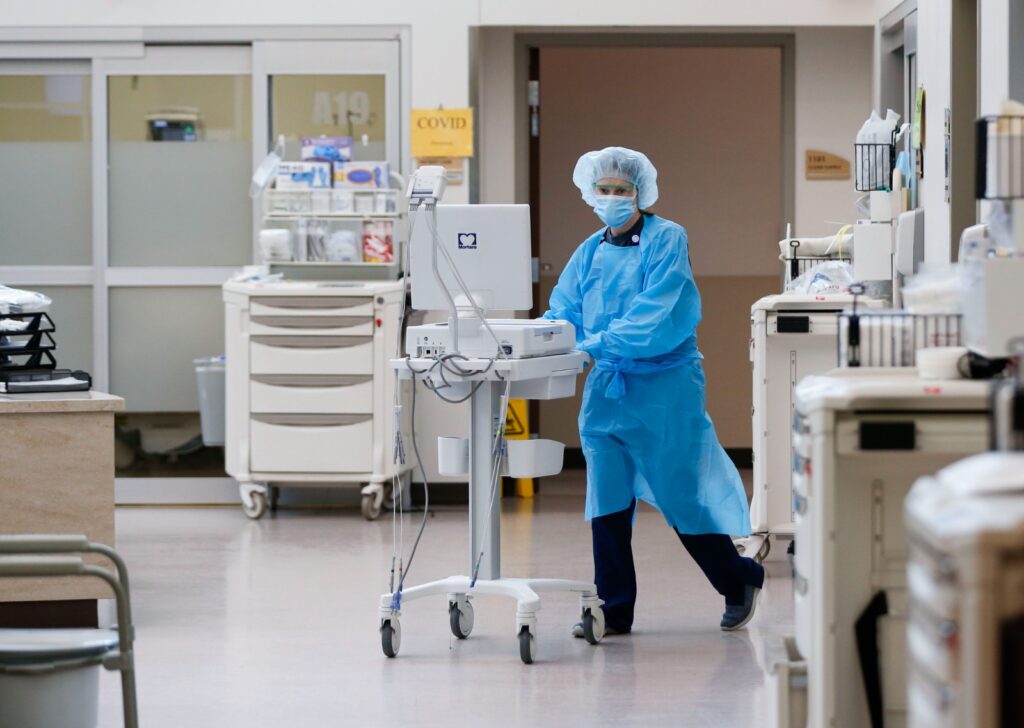
Government has allocated N$38.5 billion over the next three years to modernise Namibia’s public healthcare infrastructure, with funding aimed at upgrading state hospitals and clinics to standards comparable to those in the private sector.
The allocation forms part of the 2026/27 to 2028/29 Medium-Term Expenditure Framework (MTEF) and was announced by Finance Minister Ericah Shafudah while delivering the national budget statement in Parliament on Thursday.
For the 2026/27 financial year, the Ministry of Health and Social Services (MoHSS) has been allocated N$13.1 billion, including N$259 million earmarked for the recruitment of additional health professionals.
“The Ministry of Health and Social Services has been allocated a total of N$13.1 billion, which includes N$259 million for the recruitment of health professionals. Over the MTEF period, the ministry will receive a total of N$38.5 billion to upgrade public hospitals and clinics to match the private sector’s standards,” Shafudah said.
The investment is intended to strengthen service delivery across the public health system while improving access to quality healthcare, particularly in underserved areas.
Shafudah noted that remote health facilities will benefit from broader infrastructure development initiatives, including off-grid electrification projects such as the Puros Project, which is currently 80% complete.
In addition to infrastructure upgrades, government is introducing reforms aimed at strengthening financial oversight and improving the efficiency of public spending within the health sector.
The Finance Minister announced the rollout of Outcome-Based Budgeting (OBB), a reform designed to shift government budgeting away from traditional expenditure tracking towards measurable performance outcomes aligned with national development priorities.
“In order to strengthen fiscal discipline and improve the effectiveness of public spending, the Government will pilot Outcome-Based Budgeting in selected ministries. We shall continue to modernise our budget framework to ensure that every dollar delivers maximum impact,” she said.
Under the new approach, Offices, Ministries and Agencies (OMAs) will be required to define clear and measurable outcomes linked to national priorities, with funding tied to performance results rather than spending levels alone.
Government has also introduced stricter fiscal controls to safeguard development spending, including a prohibition on virements to prevent the transfer of funds from development budgets to operational expenditure.
Shafudah added that a comprehensive Public Finance Review will be conducted to identify efficiency gains and eliminate wasteful expenditure within the ministry.
The measures form part of broader efforts to improve fiscal discipline while ensuring that increased investment in healthcare infrastructure delivers tangible improvements in service quality and system performance.
The allocation comes as government prepares for the rollout of Vision April 2026, a flagship initiative that will require civil servants to use public healthcare facilities, with seven hospitals selected for the programme’s initial phase.
The first phase, set to commence on 1 April 2026, will focus on senior public servants, including political office bearers, executive directors and security chiefs.