Namibia has been ranked 83rd globally and 13th in the Africa and Middle East region in the 2026 Innovators Business Environment Index (IBEI), reflecting strong performance in taxation and market perception indicators.
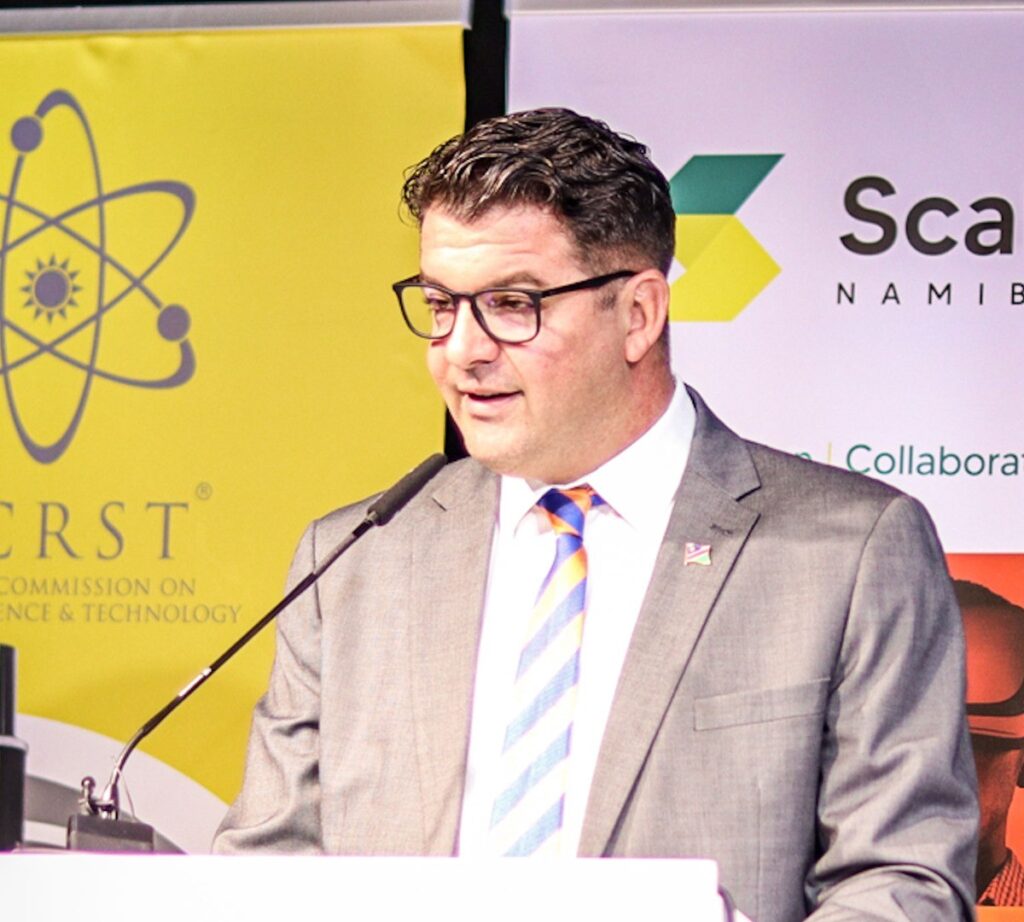
Deputy Minister of Education, Innovation, Youth, Sport, Arts and Culture Dino Ballotti said the ranking highlights ongoing efforts to strengthen the country’s innovation ecosystem and support entrepreneurship.
“Namibia is prioritising an enabling environment for founders and innovators by widening access to funding, strengthening coordination, expanding digital services and deepening links to regional markets,” Ballotti said.
The country achieved a score of 100.000 for Dividend Tax Rate, significantly above the global average of 74.591, and received a top-tier assessment in Capital Gains Tax Rate, also scoring 100.000 compared to a global average of 64.000.
English proficiency contributed positively to Namibia’s performance, with the country scoring 75.000 against a world average of 49.400.
Under the index’s pillar performance, Namibia recorded a global score of 39.563 in Business Incentives, ranking 90th; 51.847 in Market Perception, ranking 51st; and 50.246 in Ease of Operating a Business, placing 95th globally.
Namibia leads Africa under the Market Perception pillar and ranks second in Southern Africa overall in the index. The country also ranks first in Southern Africa in the Taxation Functional Category and third in Sub-Saharan Africa in the Global Mobility and Openness category, reflecting relatively favourable cross-border accessibility.
“As a country, our focus on sport and the creative and cultural industries is opening new pathways for enterprise growth. A sustainable economy requires continuous innovation, where we collectively build solutions across both established and emerging sectors,” Ballotti said.
The index notes that Namibia’s performance in the IBEI exceeds its ranking in the Global Startup Ecosystem Index 2025, suggesting that underlying business environment conditions are stronger than current startup output levels.
Namibia’s business environment is supported by stable institutions and predictable policy frameworks. Mining remains central to the economy, alongside growing activity in renewable energy, particularly green hydrogen development.
Infrastructure assets such as the Port of Walvis Bay, as well as regional integration through SACU and SADC, continue to support market access and trade flows.
However, the Access to Capital and Financial Infrastructure category remains an area requiring improvement, particularly in expanding credit availability and investment channels for entrepreneurs.
Covering more than 125 countries, the IBEI applies a consistent methodology across more than 30 measurable indicators, scoring national business environments on a 0–100 scale to assess accessibility, predictability and institutional support for innovators.