The Bank of Namibia has warned that climate-related shocks are emerging as a growing threat to the country’s financial and macroeconomic stability, calling for coordinated action to strengthen national resilience.
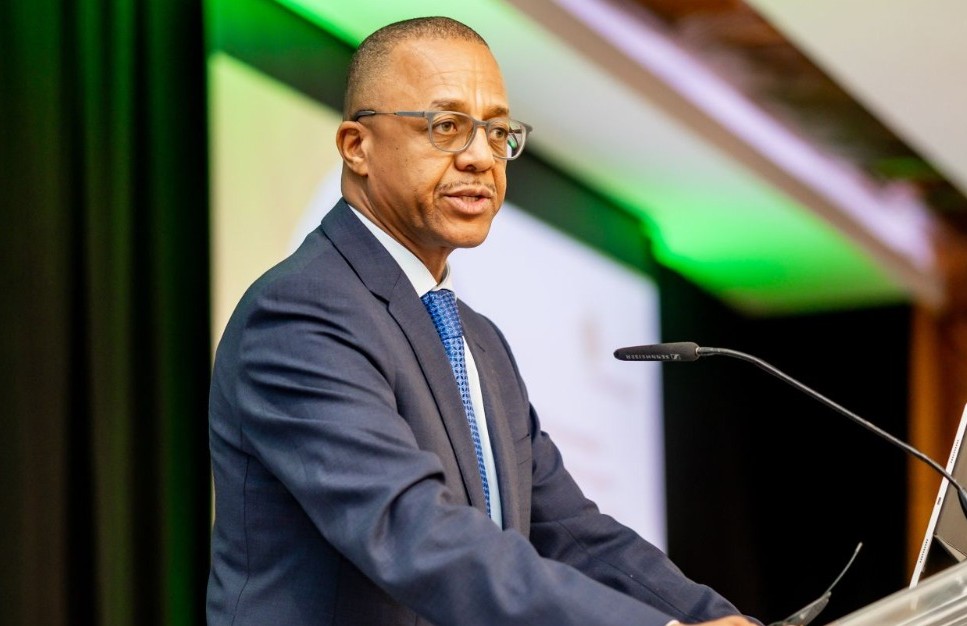
Speaking at a high-level platform on environmental stewardship and gender mainstreaming, Bank of Namibia Governor Ebson Uanguta said Namibia is increasingly exposed to interconnected economic and climate shocks, including floods, droughts, wildfires and heatwaves.
“These shocks directly affect climate-sensitive sectors such as agriculture, fisheries and finance, while compounding existing structural challenges such as high unemployment and global economic uncertainty,” Uanguta said.
“Namibia is characterised by increasingly frequent and interconnected economic shocks. These range from climate-related disasters such as flooding, wildfires and heatwaves, which can affect our environment and productivity in key sectors such as agriculture, fishing and finance,” he added.
Uanguta said financial system stability remains a prerequisite for sustainable economic growth and prosperity. He noted that the Bank’s expanded mandate under the Bank of Namibia Act of 2020, which includes macroprudential oversight of the entire financial system, requires the central bank to proactively identify and manage emerging risks, including those linked to climate change.
He said the Bank has in recent years strengthened its risk assessment and macroprudential surveillance frameworks through its Financial System Stability Committee. These measures include expanding the macroprudential toolkit, enhancing climate-related research and implementing targeted regulatory responses, such as agricultural relief measures introduced in 2025 to support farmers affected by severe drought.
“As a country, it is particularly important that we craft policies and strategies that move beyond mitigation to those that strengthen adaptation to climate-related shocks,” Uanguta said.
Looking ahead, the Bank is finalising a national Sustainable Finance Strategy with a strong focus on inclusive green finance. The strategy, developed in consultation with financial sector stakeholders, is nearing final validation before submission to Cabinet and is aligned with the Namibia Financial Sector Transformation Strategy and National Development Plan 6.
Uanguta said international best practice is informing Namibia’s approach, including lessons drawn from Mongolia’s gender-focused sustainable finance initiatives.