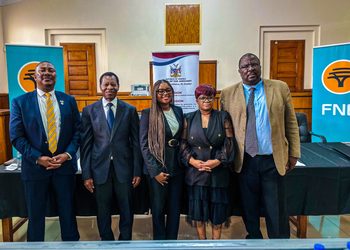
The Minister of Urban and Rural Development, James Sankwasa, has called for stricter enforcement of Namibia’s Public Procurement Act to ensure that local citizens, small and medium enterprises, women and youth benefit more directly from government contracts.
Speaking at the 2026 Regional and Local Authorities Induction Training, Sankwasa criticised the continued preference for foreign-owned companies in public tenders and warned regional and local councils to closely monitor joint ventures to ensure genuine local participation.
He urged authorities to fully implement procurement legislation and prevent public contracts from being dominated by foreign firms or fronting arrangements designed to bypass local ownership requirements.
“The time for ‘Namibia first’ has come. It is said that charity begins at home, but it does not end there. Our procurement must be geared towards the objective set out in section 2, subsection (b) of the Public Procurement Act 15 of 2015, as amended,” Sankwasa said.
The minister said sound procurement practices were central to government’s broader push for accountability, transparency and effective service delivery, linking proper procurement to improved infrastructure, housing and community services across the country.
He also instructed regional and local authorities to accelerate the delivery of housing, sanitation and basic services, warning that poor governance, corruption and mismanagement would no longer be tolerated.
Sankwasa said government has set a target of delivering at least 10,000 houses per year, alongside improved access to clean water, sanitation and serviced land in both urban and rural areas. He stressed that regional and local authorities are legally empowered to drive development and should reduce their reliance on central government transfers.
“The continued mushrooming of shacks in our local authorities is not the answer to the country’s housing and sanitation challenges. We need proper identification and allocation of land at affordable prices,” he said.
The minister also raised concerns about corruption, financial mismanagement, land abuse and nepotism within some regional and local authorities, describing certain councils as having turned into “ATMs for known tenderers”.
Sankwasa warned that councillors and officials responsible for financial losses to the state would be held personally accountable and could be required to repay misused public funds.