The Ministry of Education, Innovation, Youth, Sports, Arts and Culture has confirmed that the subsidised tertiary funding model set for implementation in 2026 will cover tuition and registration fees only for qualifying students, based on strict criteria tied to qualification level, programme type and institutional compliance.
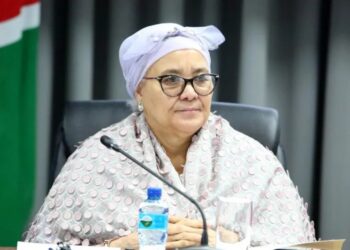
Minister Sanet Steenkamp said the subsidy applies exclusively to first primary qualifications, which include undergraduate programmes from NQF Level 5 to 8 such as diplomas, degrees and honours, and TVET trades from NQF Level 1 to 6.
“The support extends to bridging programmes when these are required to access a student’s primary qualification. Students who study abroad will qualify only when their programmes are priority areas not offered in Namibia,” Steenkamp said.
She confirmed that the subsidy will not apply to students studying for a second qualification at the same or lower NQF level, to repeating students or to non-Namibian citizens. Steenkamp stressed that any programme or institution that fails to meet the quality and legal standards of the National Council for Higher Education (NCHE), Namibia Qualifications Authority (NQA) or Namibia Training Authority (NTA) will also be excluded.
Steenkamp said the exclusions are necessary to ensure fair allocation and protect the integrity of public funds.
Non-tuition costs such as accommodation, food and transport will remain separate from the subsidy and will continue to be issued as loans through NSFAF following means testing.
“These are provided as loans through NSFAF and only after means testing. The household income threshold will fall from N$500 000 to N$100 000, while the annual non-tuition loan remains set at N$17 000,” she said.
She added that tertiary institutions must manage enrolment within their approved capacities to remain eligible for the model.
Only institutions that meet the Minimum Standards for Higher Education and the Regulations for Vocational Education and Training will be included, Steenkamp noted, adding that compliance, quality and controlled expansion are central to implementation.
Government agencies will finalise the national fee structure, programme costing model and priority fields list during 2026. Steenkamp said these measures form the backbone of a phased rollout, with broader coverage expected from 2029.