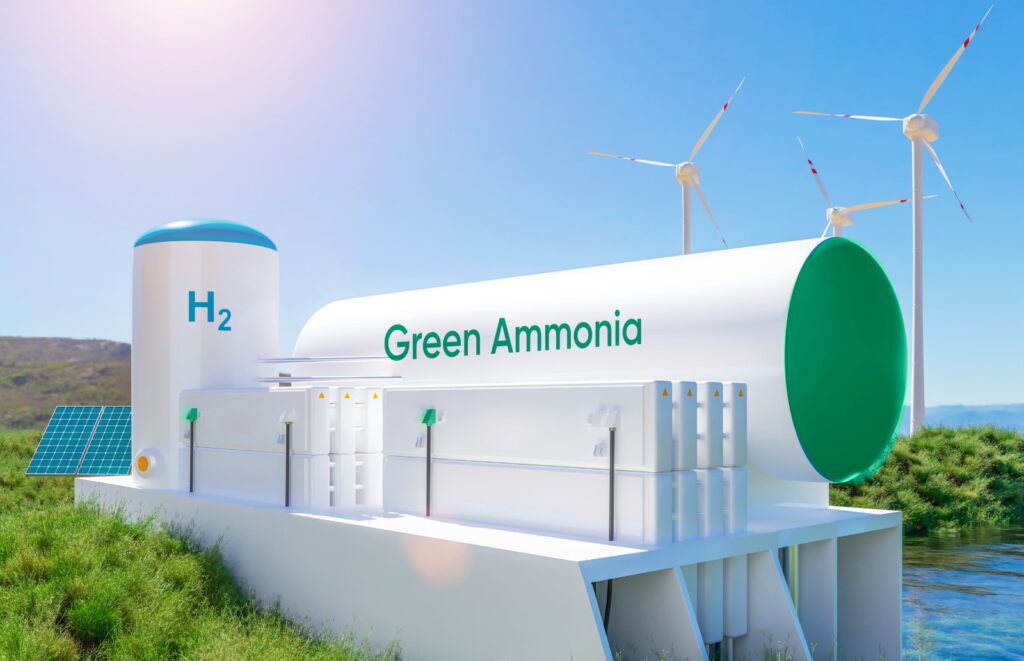
Namibia has emerged as one of the most competitive prospective suppliers of green ammonia, according to a new study by the Climate Neutrality Foundation, positioning the country at the centre of Germany’s transition to climate-friendly fertiliser production.
The report indicates that importing green ammonia from Namibia could reduce Germany’s production costs by up to 40% compared to domestic output.
This advantage is attributed to Namibia’s exceptional renewable-energy conditions, including lower electricity costs and significantly higher full-load hours for hydrogen electrolysers.
The study projects that by 2035, Namibia could supply green ammonia at approximately €693 per tonne.
This is substantially lower than Germany’s projected €1,130 per tonne for domestic production and even cheaper than fossil-based ammonia, estimated at €716 per tonne.
The analysis concludes that Namibia represents the lowest-cost supply option of all assessed routes, including pipeline imports from Spain.
“The cost analysis shows that domestic production of green ammonia in Germany is currently not competitive. Locations with excellent conditions for renewable energies – such as Namibia – can supply it at significantly lower prices: for 2035, the study forecasts supply costs of only €693/t in Namibia, while in Germany they will remain at €1,130/t despite learning curves; even fossil ammonia would still cost around €716/t,” the report stated.
Germany’s fertiliser industry is heavily dependent on ammonia, which accounts for roughly 80% of industrial hydrogen demand. The transition to green ammonia is therefore essential for meeting EU climate targets.
With the national quota for green ammonia expected to rise to 70% by 2035, import dependency will increase sharply. According to the study, without access to low-cost producers such as Namibia, German fertiliser manufacturing risks losing competitiveness as fossil-based ammonia faces escalating ETS-related compliance costs.
The report further highlights that infrastructure investment will be central to Namibia’s export capacity.
The Namibian Ports Authority has already entered into partnership with a major European port to support the expansion of storage, pipelines and loading facilities required for large-scale ammonia exports.
“Investments are also necessary on the export side: in Namibia, ports must be expanded to include product pipelines, tank farms and loading facilities. The Namibian port company has agreed to collaborate with a large European port for this purpose,” the study noted.
Namibia’s anticipated export role is seen as strategic not only for Europe’s decarbonisation needs but also for long-term industrial development at home, as the country positions itself as a global green hydrogen and ammonia hub.