By Ian Coffee
Namibia is preparing to overhaul its immigration and economic frameworks in a bid to attract long-term investment and stimulate sustainable growth.
At the recent Namibia Public–Private Forum in Windhoek, President Netumbo Nandi-Ndaitwah announced a series of reforms that signal a decisive pivot towards investor friendly policies.
Central to these reforms is the introduction of five-year visas for serious investors, a move that could redefine Namibia’s position in the regional and global investment landscape.
The announcement marks a significant departure from the country’s historically cautious approach to immigration and business facilitation. I have witnessed firsthand the friction that foreign investors encounter when navigating our visa and permit systems.
The President’s directive to the Ministry of Home Affairs to simplify visa application processes is not only timely but essential. Bureaucratic inertia has long been a barrier to entry, deterring capital inflows and stalling high impact projects.
The proposed five-year investor visa is a strategic instrument. It signals stability, commitment, and a recognition that serious investors require predictability. Short-term permits, often capped at one or two years, have historically undermined investor confidence.
They create uncertainty, complicate long-term planning, and discourage the establishment of permanent operations. By extending the validity period, Namibia is offering a tangible incentive for investors to embed themselves in the local economy.
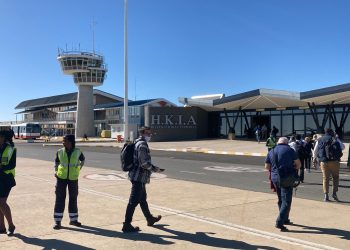
But the visa reform is only one piece of a broader economic transformation. The President’s call to enhance infrastructure at Hosea Kutako International Airport, including the addition of counters to reduce congestion, reflects an understanding that first impressions matter. For investors arriving in Namibia, the airport is the first point of contact.
Efficiency, professionalism, and ease of entry are not luxuries, they are prerequisites for a country aspiring to be a competitive investment destination.
Equally significant is the push to enact the long-delayed Migration Bill before the end of the financial year.
This legislation has been in limbo for too long. Its passage would provide the legal scaffolding necessary to support the new visa regime and clarify the rights and obligations of foreign nationals. Without it, the risk of policy inconsistency and administrative confusion remains high.
Tax reform is another cornerstone of the President’s agenda. By aligning Namibia’s tax-to-GDP ratio with global benchmarks and promoting progressive taxation, the government aims to balance competitiveness with equity.
This is a delicate balancing act. Excessive taxation can stifle investment, while insufficient revenue undermines public services. The success of this initiative will depend on execution, transparency, and stakeholder engagement.
The directive to finalise the Special Incentives Policy for Manufacturing within two months is ambitious but necessary. Manufacturing has long been touted as a vehicle for value addition and job creation.
Yet, without targeted incentives, the sector has struggled to gain traction. A well designed policy could catalyse industrial growth, reduce reliance on raw exports, and position Namibia as a regional manufacturing hub.
The President’s critique of the business registration process is also warranted. The current system is cumbersome, opaque, and slow. Entrusting the Business and Intellectual Property Authority (BIPA) with reform responsibilities is logical, but success will depend on execution.
The upcoming One-Stop Business Hub, set to open in November 2025, could be a game changer, if it delivers on its promise of integration and accessibility.
In agriculture, the emphasis on plant health capacity and the Transformation of the Agri-food Sector (STAS) plan reflects a growing awareness of food security and export potential. However, timelines are tight. December 2025 is less than two months away. Implementation will require coordination, funding, and technical expertise.
The mining sector, with its strategic mineral endowment, remains a pillar of Namibia’s economy. But the President’s warning is clear: without local capacity-building, the sector risks becoming an enclave economy, dominated by foreign expertise. The challenge is not just to extract value, but to retain it, through skills development, technology transfer, and inclusive employment.
The establishment of task forces on Economic Recovery, Health, and Housing is a pragmatic step. These cross-sectoral teams must move beyond rhetoric and deliver actionable recommendations. Their January 2026 reporting deadline is an opportunity to demonstrate that Namibia’s reform agenda is more than aspirational.
Underlying all these initiatives is a philosophy of inclusive development. The President’s framing of healthcare, housing, land, and sanitation as rights, not privileges, is a reminder that economic growth must be socially grounded. Investment without inclusion breeds inequality. Inclusion without investment breeds stagnation. The balance is non-negotiable.
Namibia’s creative, tourism, and cultural sectors were also acknowledged for their potential to generate employment and foster national pride. These sectors are often overlooked in economic planning, yet they offer unique opportunities for branding, soft power, and community engagement.
The Forum concluded with a call for unity, consistency, and delivery. These are not slogans. They are operational imperatives. As a legal practitioner and immigration strategist, I see the potential, and the pitfalls. The reforms announced are bold, but their success hinges on execution, institutional capacity, and political will.
Is Namibia ready to match vision with discipline? The answer will determine whether these reforms become transformative or merely symbolic.
* Ian Coffee, a Namibia Immigration Expert at IBN Immigration Solutions