Namibia has urged world leaders to reshape global trade and investment systems to support low-carbon development, calling for economic frameworks that align with the Paris Agreement’s 1.5°C target.
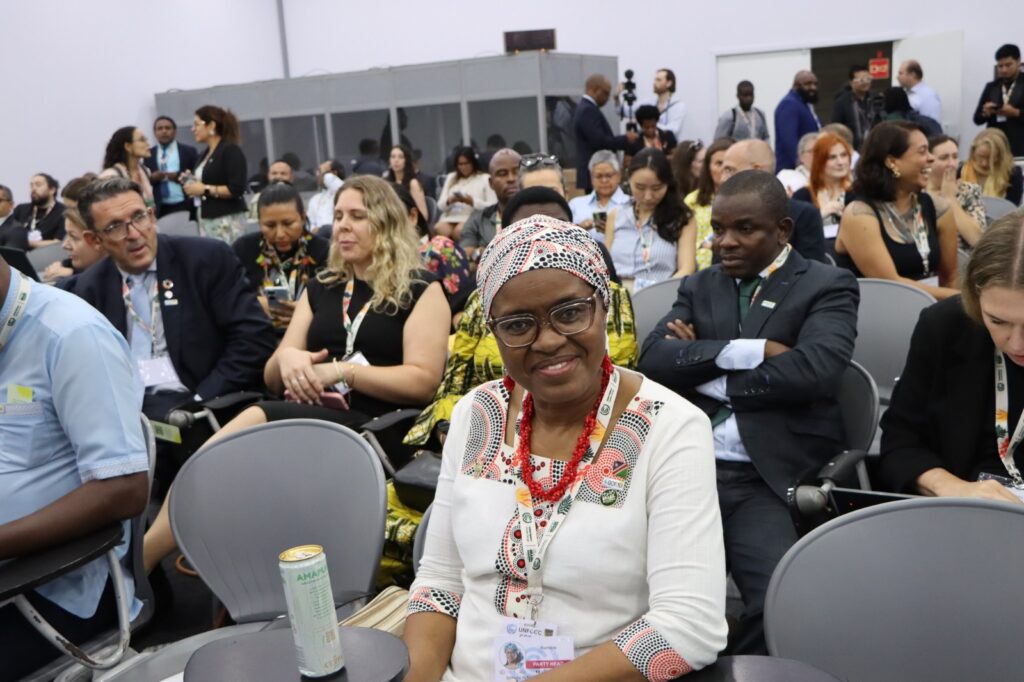
Speaking at a COP30 side event, Minister of Environment, Forestry and Tourism Indileni Daniel said trade policy must become a driver of climate-resilient and sustainable economic growth rather than a barrier for developing nations.
Daniel said the world must “transform how it produces, trades and invests”, shifting from extractive models to regenerative and climate-aligned economies.
She noted that Namibia is pursuing this agenda with clear intent under its Green Industrialisation Blueprint, which aims to position the country as a regional hub for renewable-powered, low-emission industries.
“Namibia approaches this challenge with clarity of purpose. Our Green Industrialisation Blueprint lays the foundation for a new growth model, one that embeds climate ambition within trade and industrial policy,” she said.
A key element of this strategy is the country’s Green Hydrogen Programme, which Daniel said is opening new export opportunities while strengthening regional energy security.
She also highlighted the Oshivela (HyIron) Project as a flagship initiative demonstrating the feasibility of zero-emission iron production powered entirely by renewable energy.
Daniel added that Namibia is working with the Climate Investment Funds through the Industry Decarbonisation Programme to support cleaner mining, sustainable manufacturing and the adoption of green technologies.
She said these efforts align with Namibia’s Nationally Determined Contribution, its Long-Term Low Emission Development Strategy and its National Adaptation Plan.
“This project proves that industrial decarbonisation is not a distant aspiration, but a viable, investable opportunity,” she said.
The minister stressed the importance of regional cooperation through the AfCFTA, SADC and the African Union’s Green Industrialisation Strategy to harmonise climate standards, build green supply chains and expand intra-African trade in sustainable goods and services.
However, Daniel cautioned that developing countries cannot carry the transition alone. She called for fair market access, predictable carbon border policies and stronger capacity-building support to ensure green transitions do not become new forms of trade restriction.
“Namibia stands ready, ready to lead, ready to partner, and ready to demonstrate that green industrialisation is both possible and profitable,” she said.