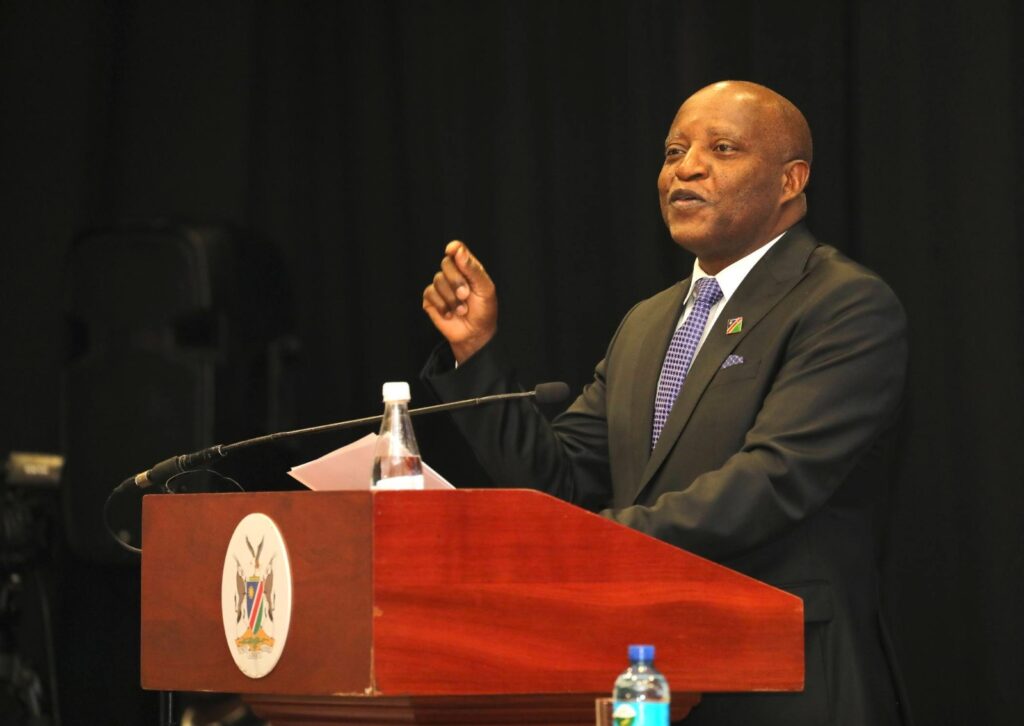
Prime Minister Elijah Ngurare has criticised poor coordination across government institutions, warning that “silo management” is undermining service delivery and slowing Namibia’s development agenda.
Ngurare said ministries, state-owned enterprises, regional councils and local authorities continue to operate independently despite being guided by the same national development framework under the Sixth National Development Plan (NDP6).
Speaking on the need for stronger collaboration across public institutions, the Prime Minister said fragmented planning and implementation are preventing government programmes from complementing each other effectively.
“Equally, one of the shortcomings we must recognise is silo management. You find that one ministry is doing its own work, while other ministries are also operating independently. The agency is doing its own work, local authorities are doing something completely different, regional councils are working separately, and SOEs are doing their own thing. Yet the bible of development is meant to be NDP6, but each institution is interpreting it in ways that are not complementary,” he said.
Ngurare identified food security and water access as critical national priorities that require coordinated efforts from all levels of government.
He questioned how local authorities and regional councils could function effectively without addressing essential human needs such as food and water access.
The Prime Minister also pointed to progress made under government agricultural initiatives, particularly in crop cultivation and livestock production, saying targeted interventions had already produced positive results in some areas.
However, he acknowledged that many communities continue to face hardships, particularly during the month of May, due to ongoing food production and livelihood challenges.
“Therefore, when I said I wanted to come and look at food production, the intention was to assess the extent of progress made. In terms of OMAS, we have made significant inroads regarding the cultivation of strategic crops, as well as livestock production. However, I think the month of May remains a difficult period for most communities,” he said.