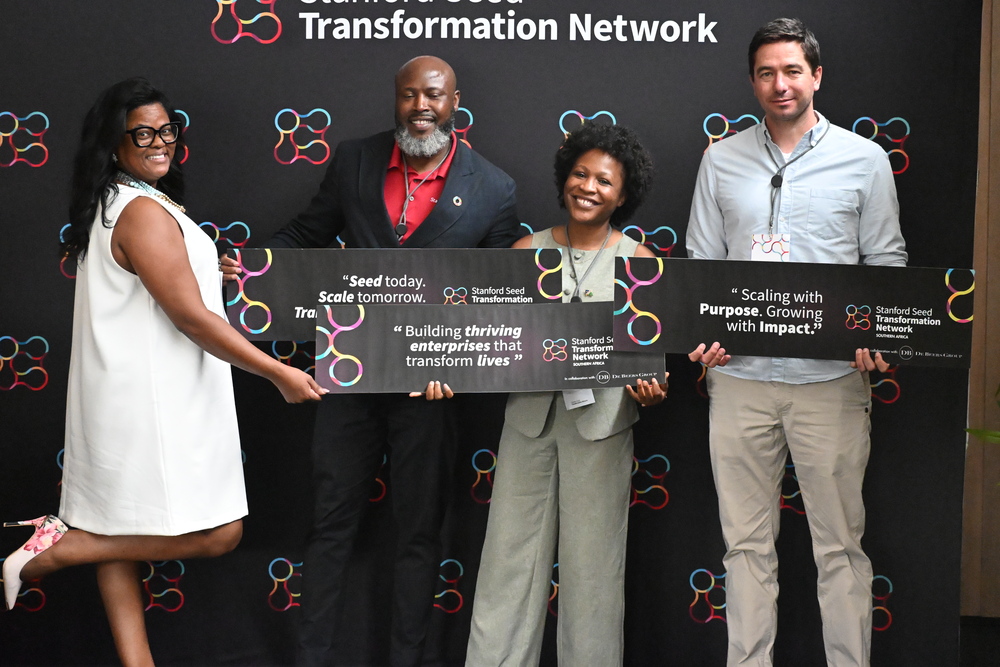
Namibia’s business sector remains heavily dominated by micro enterprises, with very few successfully transitioning into small or medium-sized businesses, a trend that experts warn is limiting economic growth and job creation.
Speaking at the Stanford Seed Network Masterclass, panellists said many entrepreneurs remain trapped at survival stage without progressing to scalable and sustainable operations.
Ombu Capital founder Vetumbuavi Mungunda said the policy and funding framework currently groups micro, small and medium enterprises together, despite the significant differences in their support needs.
“Policy discussions must start distinguishing between micros, small and medium enterprises instead of treating them as a single group. Each stage has unique challenges and resource requirements,” he said.
Mungunda said medium enterprises are critical for connecting small firms to large corporations with the capacity to expand regionally and globally. However, he noted that these firms often struggle to secure equity investment, adopt strong governance structures or raise capital for further expansion and potential future listings.
He added that founders frequently reach a ceiling because growth brings operational and financial complexity.
“Without external expertise or sound advisory structures, many businesses remain static and unable to compete beyond local markets,” he said. “Founders must bring in people with the right expertise to help them expand.”
De Beers Stanford Seed Network Manager Bakang Phuthego said Namibia faces a similar structural weakness to Botswana, where the market is oversaturated with micro enterprises while very few companies manage to grow into medium-sized operations.
He said stronger entrepreneurial programming is needed to support firms to grow from turnovers of N$3 million to N$50 million.
“There is a significant gap in that growth stage, and it must be addressed through strong entrepreneurial programming,” he said.
Phuthego added that ecosystem development is vital for enterprise success.
He said financial institutions are willing to invest when companies have solid structures and governance in place, which can stimulate exports and job creation.
Strong collaboration between banks, development agencies and training institutions, he said, is key to fostering an environment similar to global innovation hubs.
“If we achieve strong collaboration between entrepreneurs, banks and development partners, we can build a sustainable business ecosystem that supports growth,” he said.
International Training College–Lingua founder Ingrid Mettler advised entrepreneurs to focus on responsible scaling by managing resources wisely and separating business finances from personal spending.
“Don’t misuse your money for things that are not part of the business. Start within your means and upscale gradually,” she said.
De Beers Group has partnered with the Stanford Graduate School of Business since 2018 through its Stanford Seed Transformation Programme, which supports established African entrepreneurs to grow their businesses.
Between 2018 and 2024, 109 southern African companies completed the programme, collectively raising over US$87 million in capital, increasing revenues by US$172 million and creating more than 3,400 jobs.
The Stanford Seed Network plans to expand its footprint in Namibia further, with additional programming expected in 2026 to support both emerging and growth-stage enterprises.