International investors are showing strong interest in Namibia’s green hydrogen ambitions as the country’s programme gains attention at COP30 in Belém.
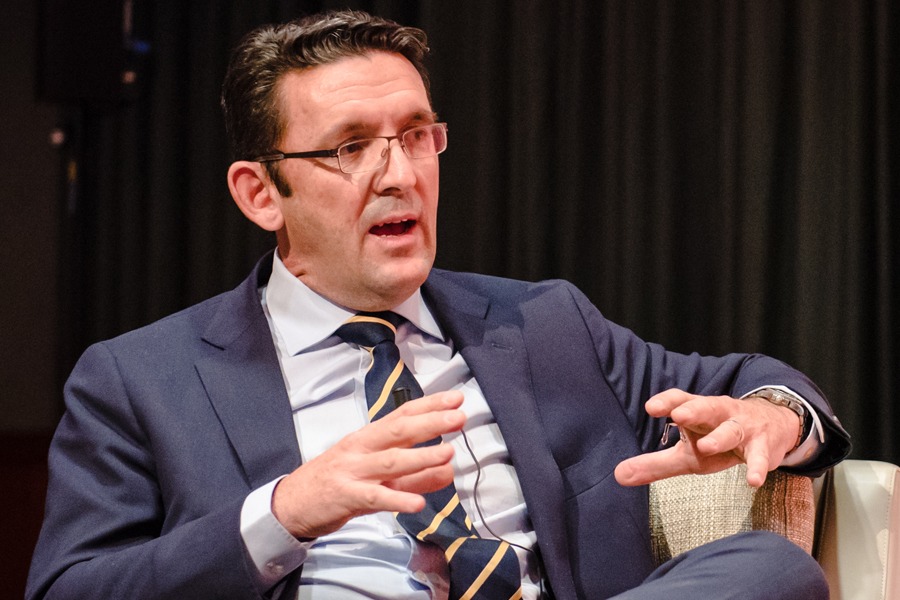
According to Andrew Johnson, CEO and Director of Climate Fund Managers, Namibia’s approach is emerging as a model for how developing countries can industrialise while contributing to global decarbonisation.
“It also hopefully gives a sense of how SDG Namibia-Wide fits into that broader architecture. It is a very important initiative, because it is a centrepiece of Namibia’s industrialisation strategy programme and serves as a window through which international investors can engage with the country both to support Namibia at a pivotal economic moment and to experience its remarkable beauty,” he said.
He further explained that hydrogen is expected to play a central global role in decarbonising energy systems, particularly as demand rises due to population growth, expanding industries, and energy-intensive technologies such as artificial intelligence.
Namibia’s natural endowment of renewable energy offers significant potential to generate and store green electrons, converting variable power into dependable baseload energy that can replace fossil fuels.
Johnson also noted that at COP30, countries are assessing progress on climate commitments as global temperatures have now officially exceeded the 1.5°C threshold the Paris Agreement sought to avoid.
With growing concern over unpredictable climate behaviour and increasing tipping-point risks, the summit is placing renewed focus on accelerated decarbonisation, climate adaptation, and resilient development.
Discussions at COP30 further highlight the importance of aligning climate finance with national development priorities. Countries are revising their Nationally Determined Contributions (NDCs) and linking them to domestic policies that span industrialisation, employment, youth development, and social welfare.
For Namibia, SDG Namibia-Wide is positioned as an investment window for international capital seeking credible climate-aligned opportunities, while supporting the country’s broader economic transformation.
“Every country has an index which is to say a suite of indices, that represents its commitments not only to climate goals, but also to how these commitments align with domestic policies, whether in employment, health, youth, climate, or industry. In this way, the pursuit of a sustainable planet becomes connected to what is happening at the national and domestic level,” he said.
The government adopted its Green Hydrogen Strategy two years ago, following discussions at the World Economic Forum in Davos. Developed with support from the European Commission, the Dutch government, the African Development Bank, and private-sector partners, the strategy now anchors key national development ambitions.
It includes a series of emerging hydrogen projects, a dedicated financing vehicle known as SDG Namibia-Wide, and policy reforms aimed at accelerating clean-energy investment.