The Ministry of Agriculture, Fisheries, Water and Land Reform (MAFWLR) says it has committed N$610 million from its 2025/26 development budget towards sustainable resource management and food security, with allocations expected to rise to N$737 million in 2026/27 and N$773 million in 2027/28.
According to a report presented to the Parliamentary Standing Committee on Natural Resources during a capacity-building workshop, the allocation forms part of Vote 38, which includes 28 capital development projects — six focused on water resource management, 14 on water supply and sanitation coordination, and eight on aquaculture development.
The Ministry said the funds will primarily support water infrastructure development, maintenance, rehabilitation, sanitation, and aquaculture initiatives to strengthen resilience to drought and climate change.
“A total of 67 capital projects are underway across agricultural research, veterinary services, production and extension, irrigation schemes and land reform,” the report stated.
The Ministry said progress has been made under these projects, including the drilling of 249 boreholes, equipping of 147, rehabilitation of 33, and the construction of 30 water harvesting structures. It also reported the rehabilitation of five bulk pipelines and the completion of a desalination plant in the Oshikoto Region.
Major rural water schemes such as Onamatanga and Okanguati-Ohamaremba have been finalised, while the Ohangwena Aquifer development has reached 80% completion, according to the report.
The Ministry anticipates maintaining a workforce of 6,110 positions in 2025/26 across its departments, covering agricultural development, veterinary and plant health, land management, cadastral surveying, and cooperative regulation.
“The Ministry operates with an approved staff structure of 5,464 positions, of which 3,318 are filled, with 28 additional to the establishment, amounting to 3,346 filled positions. Vacancies stand at 2,146. Within the fisheries sector, 616 positions are approved, 503 are filled, two are additional to the establishment, with 131 vacancies,” the Ministry reported.
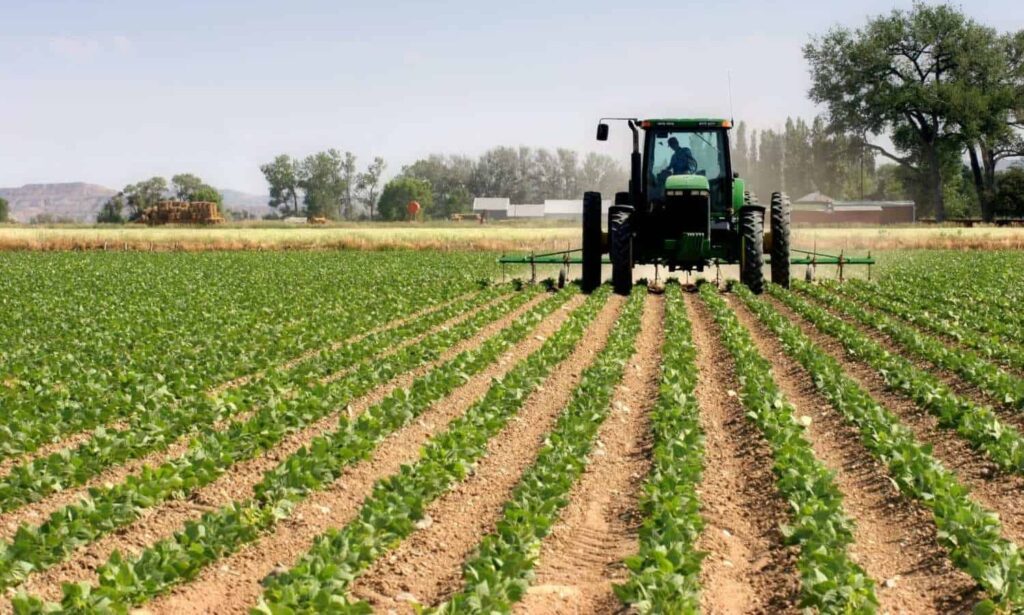
To strengthen national food security and resilience, MAFWLR said it has operationalised nine Green Schemes covering 5,600 hectares, of which 3,403 hectares are currently under cultivation. New sites are being developed in the Zambezi and Ohangwena regions.
The Ministry said more than 20 new crop varieties have been released, while 111,000 farmers have received training in crop and livestock management. It added that seeds and fertilisers were distributed to boost production, and 5,402 livestock producers were supported through fodder production and marketing infrastructure initiatives.
In the land reform sector, MAFWLR said that since 1990, 601 farms measuring more than 3.5 million hectares have been acquired, benefiting 5,502 resettled Namibians. The Land Bill has been completed, and the Namibian Council for Property Valuers Profession was established in May 2025.
However, the Ministry said challenges persist, including limited funding for land acquisition, delays in implementing the Flexible Land Tenure Scheme, illegal fencing, erratic rainfall, pest outbreaks, and high irrigation costs.
To address these constraints, MAFWLR said it is accelerating Public-Private Partnerships (PPPs) for Green Schemes, strengthening capacity in climate-smart agriculture, and expanding agro-processing. It is also advocating for increased budget allocations, the enactment of the Land Bill, and a review of the Resettlement Policy to ensure sustainability among resettled farmers.
Within the fisheries sector, the Ministry reported that the Total Allowable Catch (TAC) for monkfish has been increased from 9,000 to 9,600 metric tonnes, benefiting 40 right holders and promoting local value addition.
Despite progress, the Ministry said persistent challenges remain, including illegal, unreported and unregulated (IUU) fishing, intrusion by foreign vessels, high staff turnover, and limited scientific capacity.
Ongoing interventions, according to MAFWLR, include reviewing the Marine Resources Act and Inland Fisheries Act, improving compliance with international obligations, and broadening access for Namibian operators to fishing vessels.