Namibia has been urged to accelerate a new phase of economic and institutional reforms focused on inter-ministerial coordination, skills mapping and pro-employment budgeting to tackle rising unemployment and strengthen policy delivery.
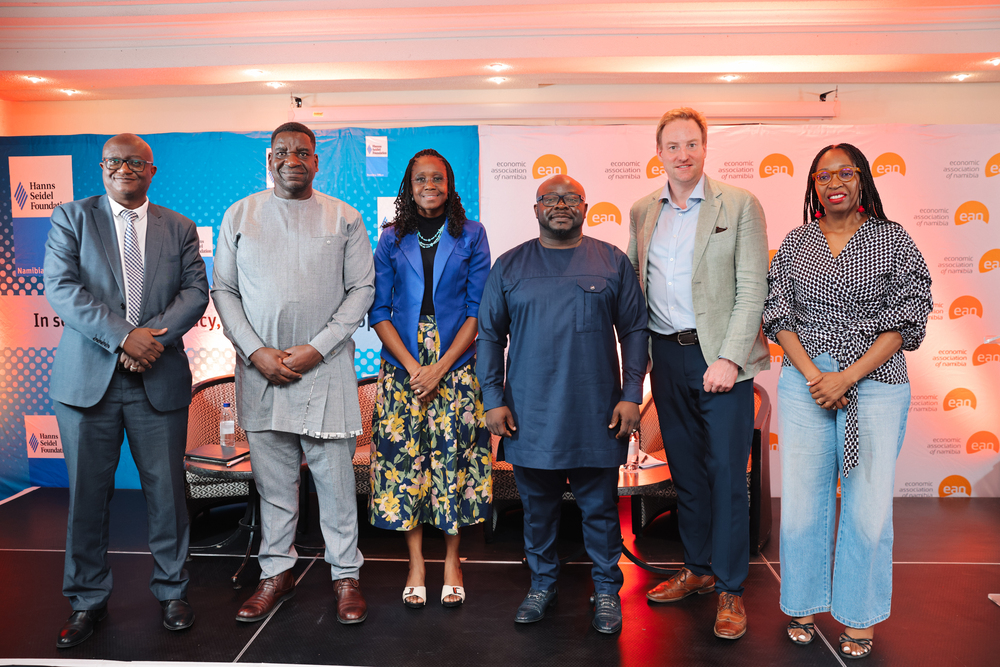
The call was made during the Economic Association of Namibia’s (EAN) dialogue on Jobless Growth, where experts from government, academia and international organisations emphasised the need for coordinated and accountable action to address structural joblessness.
International Labour Organisation (ILO) Employment Specialist Jealous Chirove said Namibia’s next phase of reform must ensure that public policies and spending directly generate jobs, particularly for young people.
“We do not lack frameworks. We fail to execute them effectively. Job creation must be a deliberate outcome of what we do. It cannot just happen,” Chirove said.
He said the ILO is assisting Namibia with pro-employment budgeting, a mechanism that links each government programme and budget allocation to measurable employment outcomes.
The ILO is also supporting employment impact assessments in sectors such as green hydrogen, agriculture and biomass to identify areas where job growth can be accelerated.
“These findings will feed into Namibia’s third National Employment Policy, currently under development,” Chirove said.
“The policy will introduce skills mapping and labour demand analysis to identify which sectors can absorb more workers and guide training institutions to align qualifications with market needs.”
Chirove also stressed the importance of stronger inter-ministerial coordination and accountability mechanisms.
“Employment is not the responsibility of one ministry. It must be mainstreamed across agriculture, industry, finance and education,” he said, citing Rwanda’s model where senior officials’ performance evaluations include employment indicators.
Executive Director in the Ministry of Finance, Michael Humavindu, said the government has adopted the Integrated National Financing Framework, which incorporates employment, gender and climate tracking into the budgeting process.
“We are not looking at the budget only through the lens of fiscal balance, but also its ability to support productive sectors and build domestic capacities,” Humavindu said.
He highlighted the National Youth Development Fund, capitalised at N$500 million, with N$257 million already available this year through the Development Bank of Namibia, Agribank and the Environmental Investment Fund.
The fund will provide targeted financing for youth-led enterprises, particularly in agribusiness, services and manufacturing.
Humavindu said government is also working with the Bank of Namibia and Wasandra Bank to establish an endowment fund to sustain youth financing beyond the current budget cycle.
“Inclusive prosperity is not an abstract ambition. It is the logical outcome of a state that is investing in its institutional muscle, in systems that link planning to implementation and investment to jobs,” he said.
Professor Denis Yuni from the University of Namibia said skills mapping will be crucial to ensure the country’s labour force matches market demand.
“Over 70% of the workforce have at least secondary education, but a large portion of jobs require less. We are overproducing in areas that do not match the economy’s needs,” he said.
A Deputy Director in the Ministry of Finance’s Public-Private Partnerships (PPP) Unit added that employment creation should be built into all PPP projects.
“When government structures PPP contracts, the number of jobs a bidder can create should be a deciding factor,” she said.
Panel participants agreed that Namibia’s unemployment challenge will not be solved through new policies, but through effective coordination, targeted skills development and budgets that reward programmes producing measurable employment outcomes.