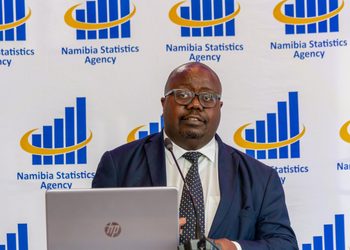
By Dr. John Steytler
The launch of the recent Fin Fit survey on how government employees view the Payroll Deduction Management System (PDMS) is about more than just collecting statistics.
The data should give us pause to reflect on what the numbers are saying. It reminds us that financial systems are not abstract mechanisms; they impact people’s lives.
As the former Statistician General, I know the power of data. It should connect policy with lived experience.
Payroll deduction systems have long been a cornerstone of financial access in Namibia. They were designed to make credit safer for lenders and more accessible for workers, particularly those in public service.
By automating repayments, PDMS reduced defaults, built trust, and opened the door for thousands of employees to participate in formal financial systems. In that sense, it has been a powerful tool for inclusion.
But inclusion, while important, is not the final goal. Access without understanding can quickly turn into dependency or over-indebtedness.
When payments are deducted automatically, financial discipline improves, but awareness can fade. One must not forget that financial discipline is exceedingly hard to maintain.
There’s always too much month left at the end of your salary, as the saying goes. People easily lose sight of how much disposable income remains for essentials like food, rent, or savings. True financial empowerment requires more than access. It requires financial literacy.
What the survey revealed was that many employees appreciate PDMS as a reliable, easy-to-use system that simplifies their financial lives. They would, however, like to see it improved and modernized. Not abolished. It tells us something profound: people want both access and autonomy.
They value systems that help them, but they resist systems that control them. Abolishing the present system would cause significant consternation and panic amongst the government employees.
The danger of moving too fast
As Namibia transitions toward more digital and debit-based systems, the temptation will be to innovate quickly. When it comes to people’s finances, speed without caution is not without pitfalls.
Automated processes like PDMS exist because they have been tested, refined, and proven to work. Replacing them hastily with less reliable and costlier alternatives risks undermining the very trust that sustains financial inclusion.
Financial systems operate in a zero-error environment. A glitch in a social app may be inconvenient; however, a glitch in payroll deductions could mean a missed mortgage payment or a family unable to buy food. Moving fast should be out of the question in this payroll space. Innovation must be deliberate, tested, and accompanied by safeguards.
Real financial inclusion rests on three pillars:
- Access: ensuring everyone can obtain fair, affordable financial services.
- Capability: equipping people with the knowledge and tools to manage those services wisely.
- Protection: safeguarding against reckless lending and financial abuse.
Payroll deduction systems have delivered powerfully on access and protection. But capability remains the missing piece.
Without financial literacy and transparency, inclusion risks becoming dependency.
The future is not about keeping or scrapping PDMS. It should be about improving it. Imagine a system where employees can view and manage their deductions in real time, supported by financial education that builds confidence and autonomy. It’s not just government employees, in Namibia we could all use financial literacy training. That is the kind of inclusion that lasts: one that strengthens households, not just balance sheets.
Systems alone do not make people financially healthy; awareness, behavior, and trust do. Our responsibility—as policymakers, lenders, and citizens is to design systems that build both a strong economy and strong households. Payroll deductions are one instrument in that symphony. Played in tune, they create harmony. Left unchecked, they make noise.
The Fin Fit survey started a vital conversation; one based on evidence, not emotion. By listening carefully and acting responsibly, Namibia can build a financial system where access, education, and protection go hand in hand. That is how we ensure that inclusion is not just about survival, but about dignity and strength. Which will lead to a more financially resilient workforce that has access to services they did not have before.
*Dr. John Steytler is the founder & Managing Director, R&J Steytler Management Consultants