By Hilda Basson-Namundjebo
There is a saying “1st generation makes it, 2nd generation maintains it, and the 3rd generation destroys it”. From shirtsleeves to shirtsleeves in three generations.
What an indictment !
In Namibia, we’ve witnessed the quiet collapse of family empires; businesses that once stood tall, now reduced to mere memory. The common thread – A lack of governance. No succession planning. No board. No structure. No vision. And as Scripture reminds us, “Where there is no vision, the people perish.” The same is true for business.
As our middle class rises and launch business ventures hoping to build generational wealth, I pause to ask: Will the business outlive its founder? It was either Peter Drucker or the late Dr Myles Maxwell who said “no success without a successor”. I am firm in my belief that part of the solution is found in governance. This is further strengthened by the intentionality of both succession planning and capacity building.
A Rising Middle Class, A New Responsibility
No data is hereto available in Namibia for the number of family-owned businesses. However, it would be fair to assume that family enterprises make up a significant portion of Namibia’s SME sector, which in itself accounts for over 70% of employment and thus contributes meaningfully to GDP.
Many of these businesses operate in retail, agriculture, hospitality, and transport. Often passed down informally across generations, only a small fraction has formal succession plans or governance structures, which puts their longevity at risk. This aligns with global trends which according to Rothwell & Prescott notes that only 42% of small businesses have a succession plan, a statistic that likely mirrors our local landscape, except I believe it to be worse in Namibia.
Namibia’s black middle class is growing. We are buying property, companies are awarded tenders, but we struggle to scale. Perhaps it is time for a hard look at the levels of governance in our businesses. Because wealth without governance is fragile. In our short history since independence, we have watched too many Namibian businesses fail.
Too many families have watched their wealth evaporate after the death of a patriarch. Businesses crumble. Assets are sold. Legacies are lost. Why? Because there was no independent structure of governance. The personalities who founded the business found it difficult to create independent structures of accountability and perhaps justifiably so. After all, what has become a beacon of success came about because of their blood, sweat and tears.
No vision. No board. No plan.
Case Studies in Generational Success: Namibia’s Legacy Builders
For every family business that faltered in succession, there are those that have transitioned with wisdom, structure, and vision. Namibia is home to a number of standout examples; each demonstrating how legacy can evolve into longevity.
1. Pupkewitz Group: From National Brand to Institutional Legacy
Imagine the emotional and strategic complexity of succeeding Tate Pupkewitz, also known as Uncle Harold, a man so well respected that he was literally the only person who was allowed to speak, after Founding President. More than a businessman; a respected national icon. Harold Pupkewitz was the personification of business in Namibia; a name synonymous with trust, integrity, and service. The Pupkewitz Group, now a 100 years old, is one of the country’s oldest and most iconic enterprises.
Under the leadership of his great-granddaughter Andrea Barry, the Group has transitioned with grace. Andrea, supported by an independent group of non-executive directors, has steered the Group into renewable energy, reaffirmed philanthropic commitments whilst embracing structured governance. Her leadership reflects a blend of humility and strategic clarity; anchored in legacy.
2. Frans Indongo Group: The Power of Independent Transition
Frans Aupa Indongo built a formidable business empire across retail, property, and hospitality. From his early days as a sweet seller, Tate Indongo was clearly a visionary – one who understood the meaning of seasons, and the signals they send. Tate Indongo made the bold decision to transition the business to independent leadership, supported by a professional board with Jeremy George as current CEO.
This move ensured that the business would outlive his personal involvement. Today, the Frans Indongo Group operates with corporate discipline, a visionary board of directors and strategic foresight. This is proof that legacy can be preserved through structure, not control. In fact, they have pinned something that is known as The Indongo Way.
The Myth of “Too Small for a Board”
Many Namibian entrepreneurs believe boards are reserved for large corporations. This is a belief system which is costing us dearly. Every business, no matter its size, needs governance. Boards also are not about prestige; it’s about sustainability and generational legacy.
Even a three-person enterprise benefits from external oversight. A board helps define roles, manages risk, and prepares for succession. It’s the difference between a business that dies with its founder and one that lives beyond them.
Independent Directors: The Missing Link
An independent director is someone who brings objectivity, wisdom, and distance. They are not family and thus they are not emotionally entangled. They are focused on the mission of the business, interested only in its longevity.
Independent directors help navigate transitions, allay sibling rivalry and conflict, while upholding ethical standards. It befalls them to ask the difficult questions.
In Namibia, we need more independent voices in our boardrooms, especially in family-owned firms. Not to replace family, but in order to protect it.
Vision, Legacy, and Service
Boards are not just about control, they are about clarity. They help us to translate vision into action. They ensure that legacy is not left to chance. And they remind us that business is a form of service – to family, to community, to nation.
Dedicated to the memory of Zacharias Alfred Basson (Katjitae), my Dad!
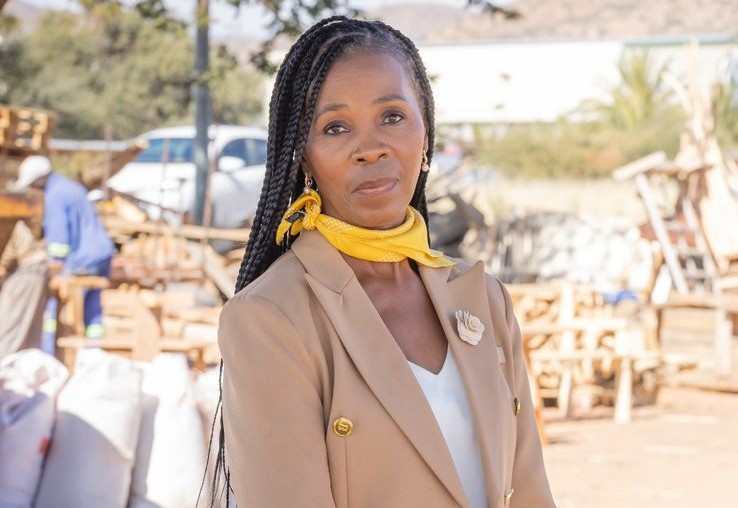
*Hilda is a business leader, public speaker and a seasoned broadcast journalist. Founder of the national brand and organisation Team Namibia, Hilda believes her purpose is to impact the world with kindness, one engagement at a time.