The Government Institutions Pension Fund (GIPF) has over the past nine years committed N$2.1 billion through various Namibian asset managers for infrastructure projects aligned with the country’s energy transition and development needs, with close to N$1 billion already drawn and invested, Chairperson of the Board of Trustees Penda Ithindi has said.
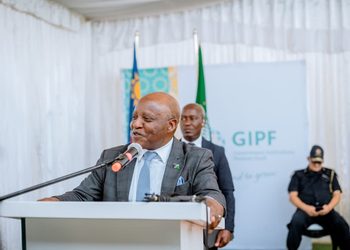
“The financial inclusivity agenda is of significant relevance to the GIPF, as the Fund’s members are part of the country’s financial community and thus the Fund has a vested interest to ensure that they are adequately serviced by the financial system,” he told the recently held Alliance for Financial Inclusion (AFI) 2025 Global Policy Forum in Swakopmund, emphasising that financial inclusion remained central to the Fund’s mandate.
The Forum, hosted in partnership with the Bank of Namibia, attracted about 800 delegates from Africa and beyond under the theme Empowering Society, Enabling Growth through Financial Inclusion.
Ithindi noted that GIPF’s contribution to the Namibian economy was substantial given the country’s historical struggle to attract foreign direct investment outside the mining sector.
“Apart from striving to earn inflation-beating returns on its investments with the objective of providing inflation-indexed annuity to its members, GIPF’s investment philosophy has at its core a steadfast commitment to creating tangible socio-economic value for Namibia through strategic investments that go beyond financial returns. By channelling capital into key economic sectors, GIPF supports national development objectives, fostering an ecosystem of opportunity and progress,” he said.
The Fund has adopted the United Nations Principles for Responsible Investment (UNPRI) and in 2022 introduced a Responsible Investment and Active Ownership Policy to embed environmental, social and governance (ESG) principles into all investment processes.
This has increased allocations to sustainable vehicles such as green bonds and infrastructure projects aligned to Namibia’s climate mitigation and development goals.
Recent investments include the Mashare Berries project on the Kavango River, the soon-to-be-implemented Pension Backed Home Loan Scheme, the Omburu Solar PV Power Plant in Omaruru, as well as projects in agriculture, renewable energy, pharmaceuticals and medical fields.
Ithindi confirmed the Fund’s participation in green bonds, including N$56 million of the N$227 million Bank Windhoek issuance in June 2021, and an investment in First National Bank of Namibia’s sustainability bonds in March 2025.
“Notably, the GIPF investments are earmarked for developmental projects, addressing key social needs such as housing, renewable energy infrastructure and public infrastructure,” Ithindi said.
“The Fund’s investments have and are making significant economic impact and contributing to critical areas for societal development and financial inclusivity.”
Looking ahead, he said the Board of Trustees saw growing opportunities in climate adaptation and mitigation investments, both regionally and domestically.
“The GIPF is committed to continue allocating more capital to these, considering these climate-related areas for investment are aligned with the Fund’s investment objective of ensuring responsible and sustainable investments that are inclusive in nature, span across various sectors and have a significant impact.”
The GIPF, as the largest investor in Namibia’s economy, maintains a presence in all 14 regions and continues to play a central role in promoting socio-economic development.
“The GIPF continues to guard and grow the Fund as it remains a critical social partner that empowers society and enables growth through its inclusive and robust investments and prudent management of its assets for the benefit of our country,” Ithindi said.