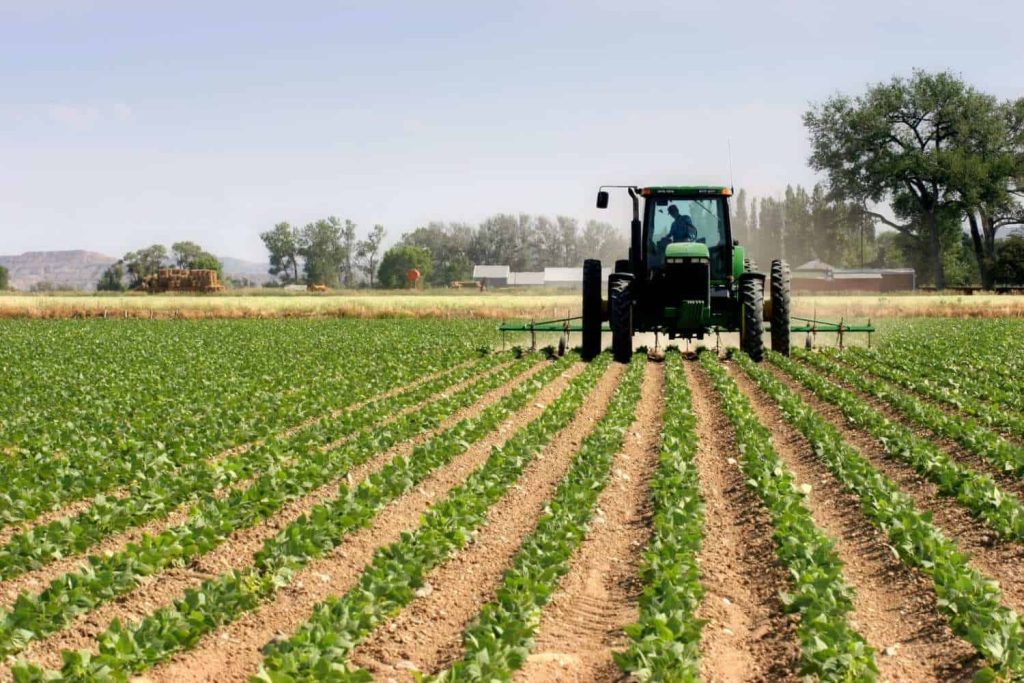
Namibia plans to expand large-scale farming land from 11,200 hectares in 2024 to 130,000 hectares by 2030, according to the Sixth National Development Plan (NDP6).
The government also aims to increase the value of strategic crop exports from N$1.9 billion to N$2.8 billion over the same period.
The targets form part of a broader strategy to improve food self-sufficiency, reduce imports, and grow the agricultural sector’s contribution to the economy.
“By 2030, the crop value chain’s contribution to GDP is expected to rise from 2.1% to 4%, while the livestock value chain is projected to increase from 2.5% to 4%. Combined, these sectors are targeted to contribute at least 8% to GDP, up from the current 4.6%,” the report states.
Government wants to raise the share of locally produced food from 60% to 80% by 2030. Currently, Namibia produces only about 40% of the food it consumes.
“During the 2024/25 season, imports accounted for 89% of maize, 98% of wheat, and 88% of pearl millet consumption. Total domestic cereal production for the season stood at 36,208 metric tonnes, just 8% of national demand,” according to the plan.
To address this, government plans to increase domestic production of key agricultural inputs such as seed, fertiliser, feed, and veterinary supplies from 0% to 65% by 2030.
This will be supported by investments in rangeland management, plant and animal health, and agricultural research.
The plan also includes a national programme to revitalise value chains in dairy, poultry, piggery, small stock, and horticulture.
“These will be supported by feedlot expansions, targeted incentives, and livestock development schemes in the Northern Communal Areas to improve access to markets and services,” the report states.
NDP6 further calls for expanded agricultural exports, including a focus on high-value crops and improved logistics to reach regional and global markets.
Government will also promote climate-smart agriculture through solar and biogas energy systems, sustainable irrigation, and cold storage to improve productivity and reduce waste.
The NDP6 analysis notes that 70% of the population depends on agriculture. In 2024, the livestock sub-sector contributed 3.1% to GDP and grew by 7.6%. Under the previous development plan, Namibia exported over 1.3 million weaners and nearly 4 million small stock on hoof.
The agricultural goals set out in NDP6 align with regional and national commitments, including the Malabo and Kampala Declarations and the 2024 SWAPO Party Manifesto, which prioritise food systems development and aim to cut staple food imports by 80%.