Friday, July 31, 2026
SUBSCRIBE
The Brief | Namibia's Leading Business & Financial News
  • Home
  • Companies
    • Finance
    • Agriculture
    • Technology
    • Property
    • Trade
    • Tourism
  • Business & Economy
  • E-PAPERreader
  • Mining & Energy
  • Opinions
    • Analysis
    • Columnists
  • Africa
No Result
View All Result
The Brief | Namibia's Leading Business & Financial News
  • Home
  • Companies
    • Finance
    • Agriculture
    • Technology
    • Property
    • Trade
    • Tourism
  • Business & Economy
  • E-PAPERreader
  • Mining & Energy
  • Opinions
    • Analysis
    • Columnists
  • Africa
No Result
View All Result
The Brief | Namibia's Leading Business & Financial News
Subscribe
No Result
View All Result
DSTV WC26 Campaign
Home Business & Economy

AfDB flags fiscal risks, urges deeper reforms in Namibia

by reporter
July 18, 2025
in Business & Economy
13
A A

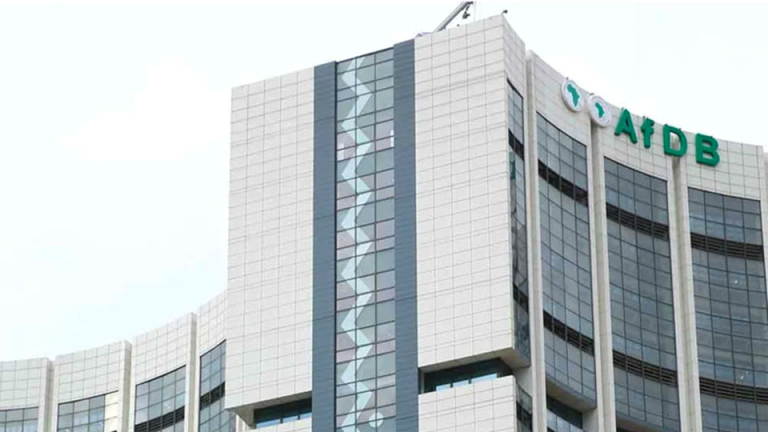
The African Development Bank (AfDB) has warned that Namibia continues to face elevated fiscal risks and structural inefficiencies that threaten private sector growth and long-term development.

In its 2025 Country Focus Report, released this week, the Bank acknowledges that Namibia’s macroeconomic stability is showing signs of improvement, but insists that “deeper reforms are needed in capital mobilisation and expenditure efficiency.”

The report highlights that the government’s expansionary, countercyclical fiscal policy has led to persistent deficits and rising debt levels.

“Namibia’s expansionary countercyclical fiscal policy has resulted in fiscal deficits and subsequently high public debt accumulation,” the report states.

Although the fiscal deficit has narrowed to 2.8% of GDP in 2024, public debt remains high at 67.6% of GDP,well above Namibia’s own target of 35% and the Southern African Development Community (SADC) ceiling of 60%.

A key concern raised by the AfDB is the mismatch in government spending priorities.

 “The government budget consists of the operational budget and the development/capital budget, with a ratio of 92:8 between the two components,” the report notes, describing this as “inefficient” in tackling Namibia’s structural development challenges.

Tax revenue collection has remained relatively strong, averaging 19.7% of GDP between 2020 and 2024.

However, the Bank warns that “uncertainty of SACU revenues remains a key risk to fiscal sustainability,” as these transfers account for roughly 30% of total government income.

The report also flags inefficiencies in capital utilisation and underdeveloped non-tax revenue streams, which currently contribute just 2% of GDP.

Despite the Namibian Stock Exchange having a market capitalisation roughly 10 times the size of GDP, the Bank notes its potential remains underutilised.

“There are only eight domestic equities with a primary listing,” the report points out.

Small and medium enterprises (SMEs) are identified as particularly constrained. “Access to finance, especially for SMEs, can be difficult, and high unemployment and income inequality persist,” the Bank observes.

To address these issues, the AfDB calls for a “comprehensive strategy” aimed at diversifying the economy. This includes investing resource revenues in non-extractive sectors, promoting local value addition, and supporting youth-led and SME-driven initiatives.

While acknowledging recent progress in financial sector development, including the Financial Technology Regulatory Sandbox and green bond issuances, the Bank notes continued gaps. “The lack of post-trading infrastructure reduces foreign investor participation, particularly in government bonds,” the report states.

The AfDB also stresses the importance of human capital development.

“Heavy investments in skills development through vocational training and improving access to finance for small businesses would harness entrepreneurship among young people,” it adds.

Concluding its analysis, the Bank calls for more effective policy implementation and institutional coordination.

 “Efficient capital utilisation coupled with strategic focus across key sectors will reduce reliance on external aid and build a resilient and prosperous future,” the report notes.

author avatar
reporter
See Full Bio
Previous Post

Electrifying informal settlements could unlock N$70 million for Windhoek

Next Post

Nandi-Ndaitwah flags N$35bn public wage bill as unsustainable

Must Read

42 youth ventures worth N$14.7m secure funding from N$500m fund
Business & Economy

42 youth ventures worth N$14.7m secure funding from N$500m fund

September 29, 2025
!Gawaxab earns PhD in Economics from UCT
Business & Economy

!Gawaxab earns PhD in Economics from UCT

September 10, 2025
DBN youth SME funding sees only N$1.25m disbursed amid low uptake
Business & Economy

DBN youth SME funding sees only N$1.25m disbursed amid low uptake

July 23, 2025
Namibia targets to formalise 950 informal businesses by 2030
Business & Economy

Namibia targets to formalise 950 informal businesses by 2030

July 22, 2025
Women now lead over 70% of Namibian SMEs
Business & Economy

Women now lead over 70% of Namibian SMEs

July 8, 2025
Namibia seeks stronger U.S. partnerships at Africa Business Summit
Business & Economy

Namibia seeks stronger U.S. partnerships at Africa Business Summit

June 23, 2025
Load More

Related News

Simbisa launches payment platform

Simbisa launches payment platform

November 11, 2021
Namibia approves culling of 80,000 Cape Fur Seals for 2024 season

Namibia approves culling of 80,000 Cape Fur Seals for 2024 season

June 27, 2024
Networking the right way: Building genuine connections

Networking the right way: Building genuine connections

January 17, 2025

Browse by Category

  • Africa
  • Agriculture
  • Analysis
  • Business & Economy
  • Columnists
  • Companies
  • Finance
  • Finance
  • Fisheries
  • Green Hydrogen
  • Health
  • Investing
  • Latest
  • Market
  • Mining & Energy
  • Namibia
  • namibia
  • News
  • Opinions
  • Property
  • Retail
  • Technology
  • Tourism
  • Trade
The Brief | Namibia's Leading Business & Financial News

The Brief is Namibia's leading daily business, finance and economic news publication.

CATEGORIES

  • Business & Economy
  • Companies
    • Agriculture
    • Finance
    • Fisheries
    • Health
    • Property
    • Retail
    • Technology
    • Tourism
    • Trade
  • Finance
  • Green Hydrogen
  • Investing
  • Latest
  • Market
  • Mining & Energy
  • namibia
  • News
    • Africa
    • Namibia
  • Opinions
    • Analysis
    • Columnists

CONTACT US

Cell: +264814612969

Email: newsdesk@thebrief.com.na

© 2026 The Brief | All Rights Reserved. Namibian Business News, Current Affairs, Analysis and Commentary

Welcome Back!

Login to your account below

Forgotten Password?

Retrieve your password

Please enter your username or email address to reset your password.

Log In
No Result
View All Result
  • Home
  • Companies
  • Mining & Energy
  • Business & Economy
  • Opinions
    • Analysis
    • Columnists
  • Africa

© 2026 The Brief | All Rights Reserved. Namibian Business News, Current Affairs, Analysis and Commentary

This website uses cookies. By continuing to use this website you are giving consent to cookies being used. Visit our Privacy and Cookie Policy.