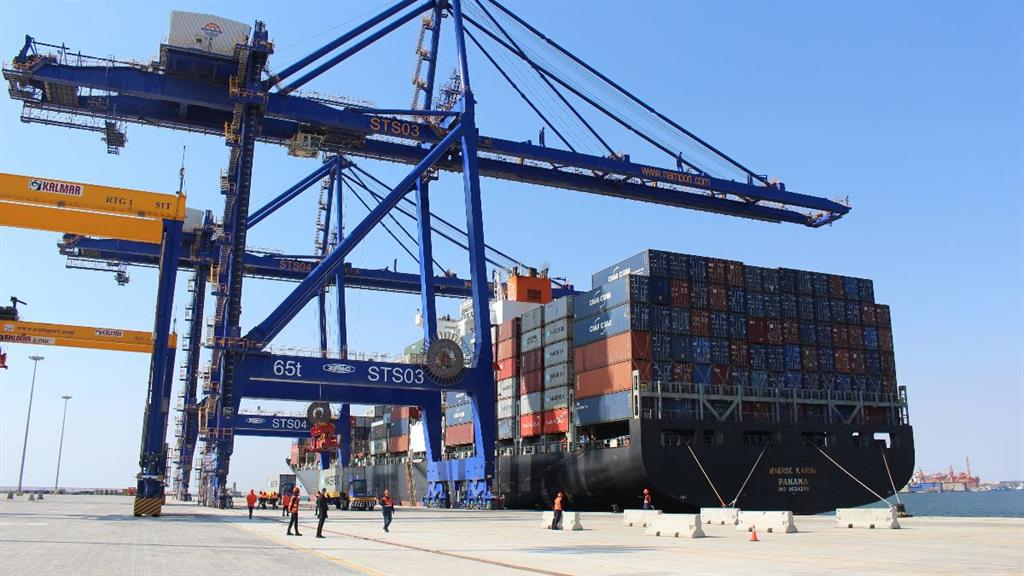
The Namibian Ports Authority (Namport) handled 253,996 twenty-foot equivalent units (TEUs) in the financial year ending 31 March 2025, a 33% increase from the previous year.
The growth, amounting to an additional 82,845 containers, was achieved despite a 13% drop in vessel calls.
Namport’s Commercial Executive Elias Mwenyo said the decline in ship arrivals was offset by larger vessels, particularly at the Port of Walvis Bay, carrying more cargo per call.
“This achievement highlights more than just a rise in regional and international trade. It also underscores Namport’s operational agility, strategic foresight in attracting high-value cargo volumes, ongoing investments in port infrastructure, and strong collaborations with cargo carriers and cargo owners,” said Mwenyo.
Namport recorded a total cargo throughput of 8.42 million tonnes across the Ports of Walvis Bay and Lüderitz, up 4.8% from 8.03 million tons the previous year.
Mwenyo said this growth reflected strength across bulk, break-bulk, containerised, and liquid cargo segments, supported by ongoing diversification and infrastructure upgrades.
The mining sector was again a key contributor, with increased exports of copper concentrate, zinc concentrate, and uranium oxide. Imports rose by 7.1%, with fertiliser, sulphur, ammonium nitrate, and petroleum products leading the increase, alongside higher volumes of wheat and machinery.
“This growth was primarily driven by a 12.8% surge in bulk and break-bulk cargo, where landed volumes led to the increase,” Mwenyo said.
Exports through Walvis Bay dropped by 5.7%, but the port saw gains in salt, copper and lead concentrates, charcoal, timber products, marble, and granite. It also recorded the first-time export of nickel and zinc concentrates.
“The Port of Walvis Bay also marked the first-time export of key critical minerals such as nickel and zinc concentrates, positioning Namibia as an emerging player in the global mineral supply chain,” he said.
The Port of Lüderitz posted a 21.7% increase in total cargo volumes, rising from 1.21 million to 1.47 million tons. The gain was driven by imports of empty containers, petroleum, wet fish, and machinery. While overall exports dropped by 5.4%, the impact was softened by solid performance in zinc ore, frozen fish, and ice.
“The two ports have achieved a notable achievement, marking the highest container throughput in over a decade, demonstrating a significant surge in cargo volumes and improved operational efficiency,” Mwenyo said.
He emphasised that Walvis Bay and Lüderitz serve as more than transit points, acting as strategic gateways for trade across the region.
“They provide essential gateways for importing critical inputs such as sulphur, fertiliser, and machinery, which fuel domestic and regional industries,” he said.
Namport’s Syncrolift repair facilities showed mixed results. Occupancy at the repair jetties dropped from 96% to 75%, while repair bay usage held steady at 47%. Cruise tourism rebounded at both ports, with international calls including the MSC Musica supporting Namibia’s tourism sector.
Namport attributed the overall performance to collaboration with stakeholders such as the Walvis Bay Corridor Group, shipping lines, government agencies, cargo owners, and port users.