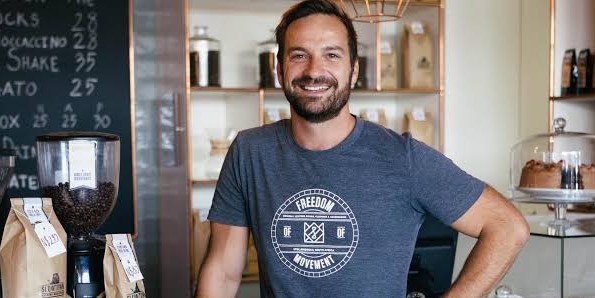
Namibian coffee company Slowtown is considering expanding into South Africa, with Cape Town identified as a potential destination, as the business marks 15 years of operations and seeks to grow its wholesale and retail presence.
Slowtown founder Dennis de Wet told The Brief that expansion into South Africa was part of the company’s long-term plans, although no investment decision or timeline had been finalised.
He said Cape Town was a natural market for the company to consider as it explored opportunities beyond Namibia.
“We’re actually in Cape Town at the moment, and we’re not Slowtown, us as a family. And so the obvious kind of route would be to go that side,” de Wet said.
“But it’s also being, if the time’s right, it’s not something that we have to do, it’s not something that we’re running to do.”
De Wet said the company was not under pressure to expand internationally, with its focus remaining on building a sustainable business capable of operating for generations.
“I want to build it to become 100 years old. So that means it’s a generational business. I don’t have to do all the work now, my kids can take over,” he said.
“So whether we do it in the short term or the long term, yes, eventually, that’s the obvious way to kind of grow. But it’s not something that we were chasing at the moment.”
He said entering South Africa would also provide an opportunity to assess Slowtown’s competitiveness outside its home market.
“And, you know, if we do go across the border, that would be exciting. Again, not because we’re chasing money, we’re chasing growth, it’s more just we want to test ourselves in a different market,” he said.
Meanwhile, Slowtown is expanding its operations in Namibia, with plans to strengthen its wholesale business and develop a new flagship coffee shop in Olympia, Windhoek.
De Wet said the Olympia development would provide additional space for the company’s operations, including a proposed barista academy aimed at developing skills in the hospitality and coffee industry.
“Obviously, within Namibia, we would still like to expand our wholesale reach and open a couple more shops. We are also looking at establishing a barista academy where we can educate more people and, again, invest in our people. We are busy developing a new shop in Olympia, which will be our flagship store, where we will have the space and capacity to do these types of things,” he said.
He identified wholesale distribution as Slowtown’s biggest growth opportunity in Namibia, citing the country’s relatively small population as a limiting factor for large-scale retail expansion.
“Growth-wise, shops, I wouldn’t say there’s that much more that I’d want to do, maybe one or two smaller versions of what we’re up to,” de Wet said.
“But I think the growth is in wholesale, and just being smart about how we grow.”
Slowtown currently supplies coffee products and equipment to nearly 300 corporate clients across Namibia, including hotels, lodges, spas, retailers and offices.
Its wholesale operations cover roasted coffee beans, compatible coffee pods, drip bags, coffee equipment and consulting services.
“We have close to 300 corporate clients, ranging from large lodges and hotels to small offices. Whatever their coffee needs, we supply the equipment and everything else required. A significant part of our business is not always visible because people primarily see our coffee shops,” he said.
De Wet said the company was also investing in product development and packaging to strengthen its position in the local market.
“We are also constantly developing new products and striving to stay ahead of the curve in terms of what we produce, including the packaging we use and how we do it.”
Founded in Swakopmund in 2011, Slowtown has grown from a local coffee business into a brand serving both retail customers and corporate clients across Namibia.
De Wet, who studied finance before entering the coffee industry, said the company had expanded gradually while maintaining its focus on product quality and customer relationships.
He said Namibia’s coffee market had changed significantly over the past 15 years, with growing consumer interest in speciality coffee, roasting techniques and professional coffee preparation.
When Slowtown entered the market, coffee consumption was largely centred on traditional filter coffee, with limited investment in specialised equipment and preparation methods.
De Wet said the company had contributed to developing the local coffee market through its roasting operations and retail outlets.
He also welcomed growing competition in the sector, saying the entry of additional coffee brands encouraged businesses to improve their products and services.
“In terms of competition, it honestly does not bother us at all. In fact, we welcome it. We like the variety, and it keeps everyone on their toes. We also have a different kind of positioning in the market. We do not want to rely solely on being a Namibian brand and expect people to support us just because we are local,” he said.
Looking ahead, de Wet said Slowtown would prioritise wholesale expansion, the completion of its Olympia flagship store, employee training and new product development.
He said international expansion remained a possibility, but the company would pursue opportunities at a pace that supported its long-term sustainability rather than rapid growth.