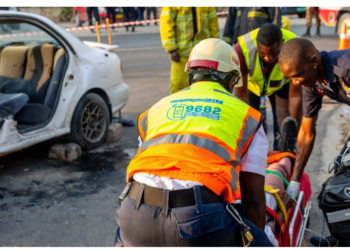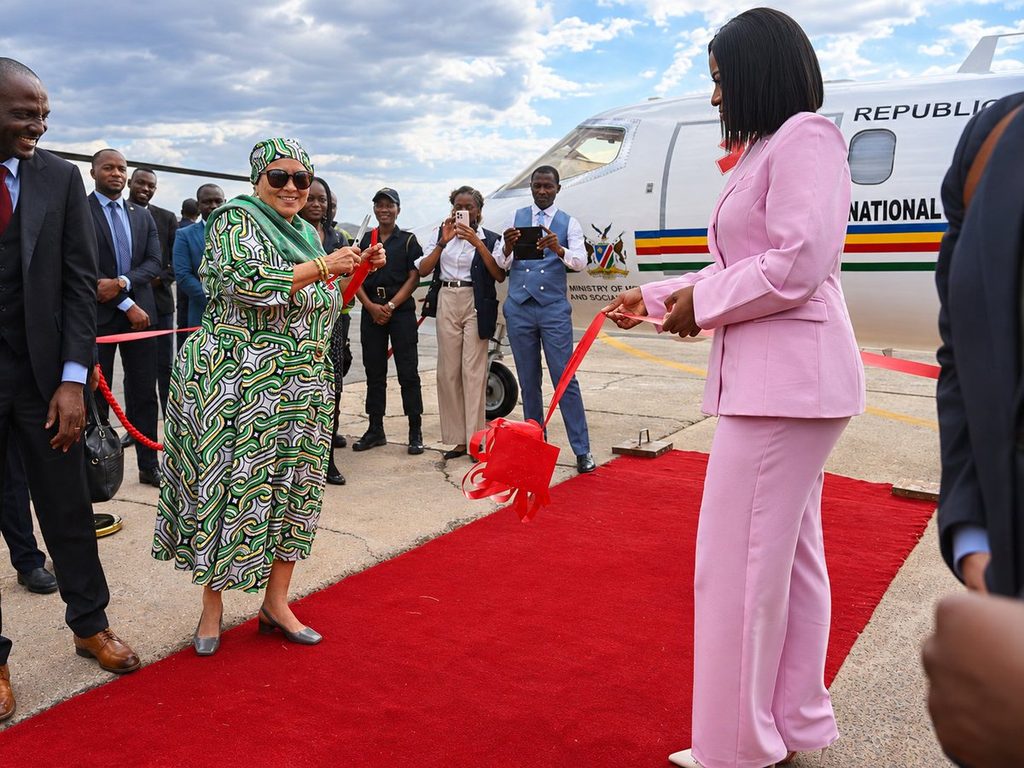
The Namibian government has launched its first state-owned air ambulance service to improve emergency medical response and reduce the time taken to transport critically ill and injured patients to specialised healthcare facilities.
The service, officially launched by Vice President Lucia Witbooi in Windhoek on Wednesday, includes a fully equipped Learjet air ambulance capable of providing intensive care during flights, as well as helicopter evacuation services supported by the Namibian Police Force (NAMPOL) and the Namibian Defence Force (NDF).
Speaking at the launch, Witbooi said the service would address longstanding challenges in accessing emergency medical care, particularly in remote areas where patients often face lengthy journeys to referral hospitals.
“For a long time, our vast geography and the great distances between our remote communities and referral hospitals have posed a significant challenge. When a critical injury occurs or a medical complication arises in a far-remote corner of our beautiful country, time is the absolute boundary between life and death,” she said.
Witbooi said the introduction of air ambulance services would significantly reduce patient transfer times, improving access to specialised medical treatment.
“For many patients, a gruelling, hours-long journey by road will now be reduced to a matter of minutes or a few short hours by air, ensuring they reach the specialised care they need on time,” she said.
The service will be supported by dedicated pilots and air emergency units provided by Government Air Transport Services (GATS), alongside specialised medical personnel responsible for providing emergency care during patient transfers.
Emergency service centres at national referral hospitals will also coordinate transfers and facilitate access to specialised treatment.
Witbooi said the air ambulance service would complement the existing ground ambulance fleet and strengthen patient referral systems between district, intermediate and national referral hospitals.
The launch follows concerns raised by Health Minister Esperance Luvindao in September over patients dying while being transferred between healthcare facilities.
At the time, the Ministry of Health and Social Services indicated that it was reviewing records of deaths during patient transfers over the preceding 24 months.
The new service is expected to improve emergency medical evacuation capacity, particularly for patients in remote areas who require urgent treatment at specialised healthcare facilities.