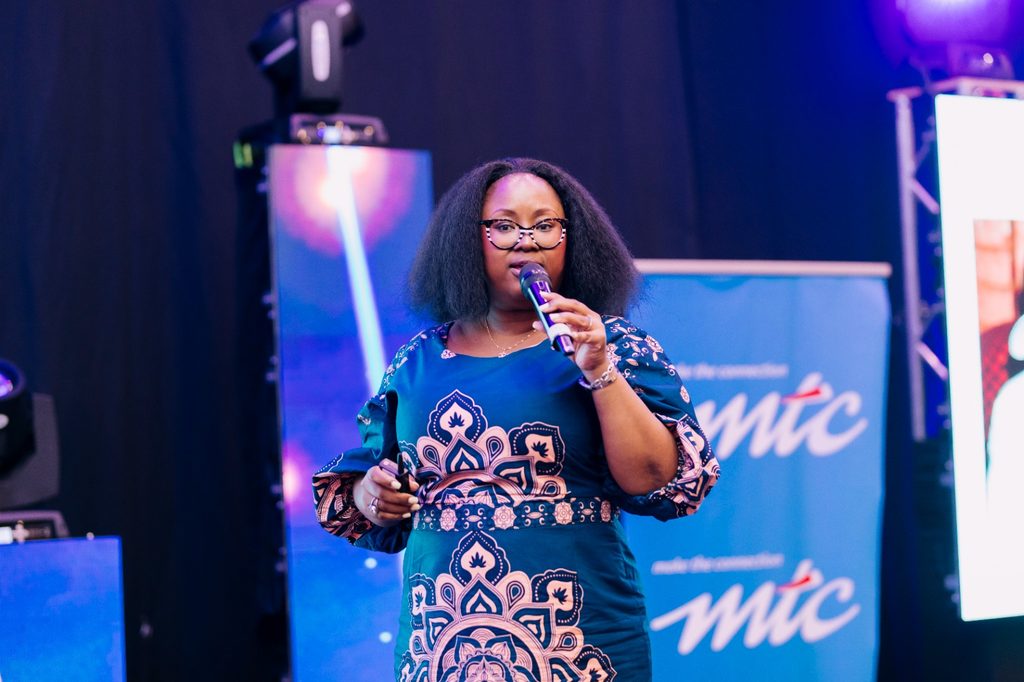
Professionals who fail to adapt to artificial intelligence (AI) risk losing their jobs to workers who can use the technology more effectively, according to Vumile Msweli, founder of the Hesed Africa Foundation and Africa Career Summit.
Speaking at the 2026 Institute of People Management (IPM) Namibia Annual Conference in Windhoek, Msweli said the growing adoption of AI would change workplace responsibilities and increase demand for employees capable of combining technology with critical thinking, creativity and human judgement.
“I don’t think AI is going to take our jobs and annihilate every single job in history. I think people who can’t leverage AI will lose their jobs,” she said.
Msweli said employees and organisations needed to reconsider how they performed their duties, particularly as AI increasingly takes over repetitive and administrative tasks.
She urged human resource practitioners to assess their daily responsibilities, identify tasks that could be automated and concentrate on activities requiring human expertise.
“Make a list of your daily tasks. What do you do on an average day? What do those tasks look like? Then find out what tools can be used,” she said.
Msweli said the ability to adapt to technological change would increasingly determine professional relevance, drawing comparisons with the transition from horse-drawn transport to motor vehicles.
She said workers who understood the underlying problems their jobs were intended to solve would be better positioned to adjust to emerging technologies.
“So what problem are you solving that will allow you to be relevant in the future? You must be able to collaborate in order to compete,” she said.
However, Msweli cautioned against excessive reliance on AI, warning that professionals who accepted AI-generated information without verification risked making poor decisions and damaging their credibility.
She said AI should support human judgement rather than replace independent thinking, particularly when preparing reports, developing strategies and making workplace decisions.
Msweli urged professionals to improve their ability to instruct AI systems by providing clear context, objectives and expected outcomes.
“Give AI a role. Give it a context. Then give it the objective. Don’t just tell it to be brief. Give it the format,” she said.
She also encouraged users to question AI-generated responses, identify possible weaknesses and verify information against reliable sources before using it professionally.
“Ask, where is this wrong? Because I guarantee you, if you go in and present to the wrong people, they’re going to say, ‘This is wrong,’ and you’re going to look like you didn’t do your research,” she said.
Msweli identified ChatGPT, Claude, Perplexity and Midjourney as examples of AI applications that could support writing, document analysis, research and creative work, depending on the requirements of individual tasks.
Despite the increasing capabilities of these technologies, she said communication, active listening, creativity and the ability to build trust would remain essential workplace skills.
“Our role as human capital practitioners is to listen to what people are not saying,” she said.
Msweli said HR professionals needed to understand changing employee expectations and recognise workplace concerns that might not be openly expressed.
She added that organisations should invest in continuous learning to ensure employees remained capable of adapting to changing technologies and business requirements.
“The ability to learn, to unlearn and to relearn is going to be absolutely imperative as you navigate the future,” she said.
Msweli urged professionals to abandon outdated working methods, strengthen their interpersonal skills and begin using AI more deliberately to improve productivity and decision-making.
“You need to continue being human. You need to continue bringing your creativity and your ability to communicate to the table,” she said.
She said the future of work would increasingly favour professionals who could combine technological competence with human judgement, creativity and effective communication.