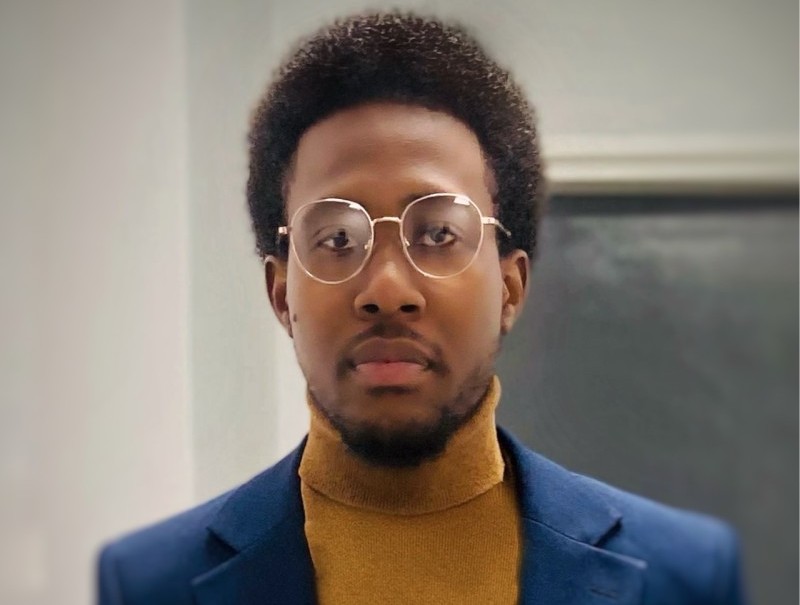
By Simeon Tuyoleni
Observing the rapid pace of global technological advancement, I find a quiet anxiety shadowing my thoughts about the future.
I see the swift rise of artificial intelligence, and it feels as though the ground is shifting beneath our feet.
For generations, humanity has experienced a gradual displacement of our traditional capabilities.
Where communities once relied entirely on physical endurance and an intimate, inherited knowledge of the natural world to survive, the arrival of heavy industry and mechanisation demonstrated that machinery could easily outmatch human physical labour.
Now, artificial intelligence is challenging our final stronghold: our intellect. I share the common fear of becoming economically obsolete, sidelined in a society that has historically valued individuals primarily for their productivity.
But recently, I have begun to realise that this fear rests on a flawed assumption. We have been conditioned to believe that if something is not economically useful, it is worthless.
Yet, is the orange glow of a Namibian sunset worthless because it cannot be monetised? Is a piece of handcrafted art or a local melody useless because it does not balance a spreadsheet? We are terrified of AI because we wrongly equate our human dignity with our economic utility.
When I view the future through this lens, that fear gives way to a sense of liberation. If AI eventually manages the heavy lifting of civilisation, if it solves the complex logistical problems of our daily survival, human action will finally be freed from the chains of necessity. We will act based on our own free will and agency, rather than the pressures of mere survival.
We already live this way in small fragments. We have industrial agriculture and commercial bakeries, yet many still find deep satisfaction in growing their own vegetables or baking their own bread. We have modern electric stoves, yet we still choose to gather, cook, and converse around an open fire. We have cars, yet we still choose to walk or hike up mountains. We do these things not because we must, but because we choose to.
In the future, we will continue to create, to learn, and to strive, not because we are the most efficient tools for the job, but because there is profound meaning in the effort and the craft itself.
The future is not a self driving car where we are doomed to sit as passive passengers, wasting away. True rebellion in this era is not panicking about the end of the world, it is embracing a rational optimism. We are not losing our purpose to the machines. Instead, we are finally gaining the freedom to discover what our purpose truly is when mere survival is no longer the primary goal.
* Simeon Tuyoleni, is a software engineer and founder of Asmbly, where we bring together the teachers, learners, and the system to improve the quality of education in Namibia and beyond.