Namibia is seeking to use deeper regional integration with South Africa to build green industrial value chains capable of supplying products to international markets, as demand for low-carbon products grows globally.
Joseph Mukendwa, Interim Head of the Namibia Green Hydrogen Programme, said cooperation between the two countries could allow Southern Africa to combine its renewable energy resources and industrial capabilities to compete more effectively in global green markets.
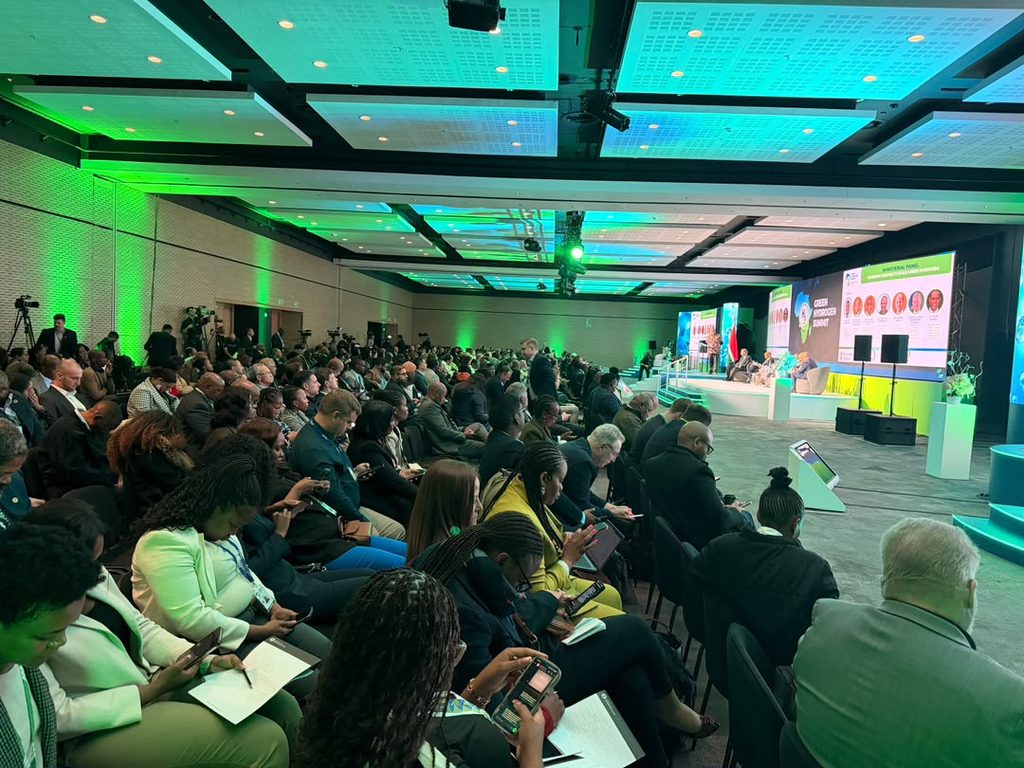
Speaking ahead of the African Green Hydrogen Summit in Cape Town, Mukendwa said Namibia’s strategy goes beyond developing green hydrogen projects and is increasingly focused on using clean energy to support industrialisation.
“I think for us as Namibia, as I indicated, the bigger play is green industrialisation. And I must admit that we cannot do that if we just look at Namibia developing these projects alone,” Mukendwa said.
He said Namibia and South Africa could jointly develop projects and create regional value chains that generate economic opportunities across SADC.
“So it’s also important that as we are coming here to South Africa, we talk about regional collaboration, regional integration, how Namibia and South Africa can work together and be the champions of SADC regional green industrialisation,” he said.
Mukendwa said a coordinated approach could strengthen the region’s ability to produce green products for African and international markets.
“Because if we can hold hands and develop projects in both these countries, I think we are in a better stance or in a better position to be able to meaningfully create opportunities for our people and produce green products that not only the region or the African continent but internationally they are looking for,” he said.
The push comes as international financiers increase commitments towards green hydrogen and related industrial projects in Africa.
The Cape Town summit has seen €20 million in European Union grant funding committed to South Africa, with the potential to mobilise a further €200 million from KfW.
An additional €37 million has been committed through the Global Gateway for South Africa, while the African Development Bank announced US$20 million in reimbursable grant funding for four projects across Namibia, South Africa, Morocco and Egypt.
The financing is expected to support efforts to develop green hydrogen and industrial projects as African countries seek to capture more value from their renewable energy resources.
The African Green Hydrogen Summit follows the Africa Green Industries Summit hosted by Namibia, where governments, investors and project developers discussed using renewable energy to support manufacturing, value addition and industrial development.
Mukendwa said Namibia would use the Cape Town summit to engage stakeholders on constraints facing its green industrialisation programme and explore solutions needed to advance projects.
“So we look forward to the next couple of days to engage all these various stakeholders and share with them some of the challenges that we’ve experienced and then try and find a way to craft together solutions that will see Namibia drive its green industrialisation ambitions further,” he said.