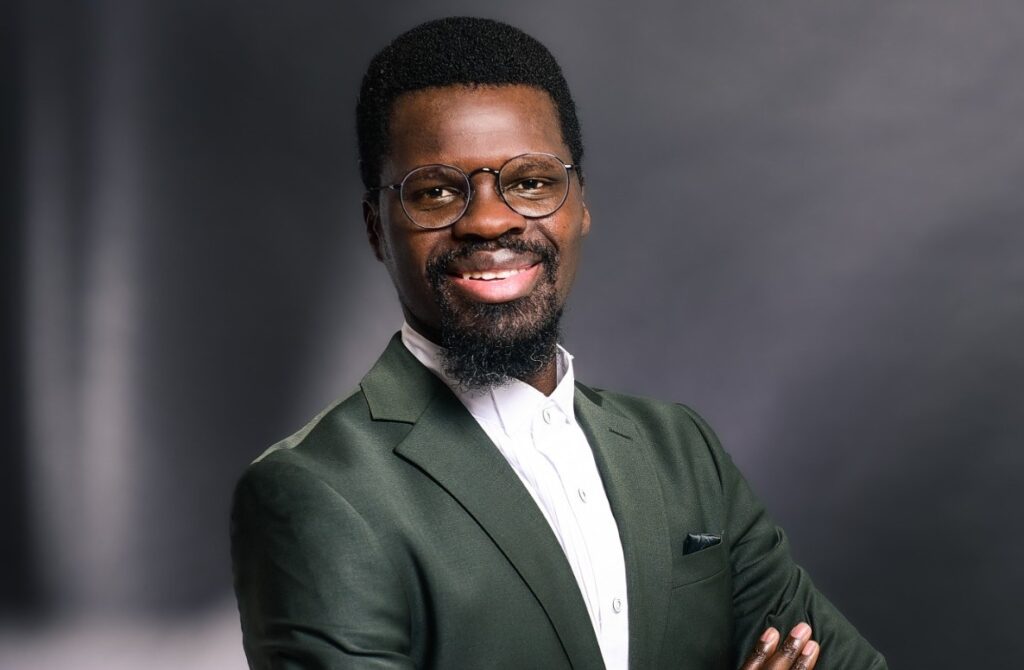
By Erastus Kalenga Hamunjela
ETFs let you invest in a whole basket of assets in a single transaction, giving you instant diversification without needing a large amount of money.
The real skill in investing is not picking one perfect fund, but combining a few funds so that they work together toward your goal.
Everything that follows is for educational purposes only. The example portfolios are illustrations of how a portfolio can be structured, not recommendations to buy.
The right mix for you depends on your own goals, your timeframe, and how much risk you can genuinely live with, and you should always check each fund’s latest fact sheet before making any decision.
Start With the Three Questions: every good portfolio begins with three questions, and no fund choice makes sense until you have answered them. First, what are you investing for?
A house in three years and retirement in thirty are completely different goals, and they call for completely different portfolios. Second, how long is your timeframe?
The longer you can leave your money untouched, the more short-term ups and downs you can afford to ride out, and the more growth you can reasonably pursue.
Third, what is your risk appetite? This is not only about the returns you want, but about what you can genuinely tolerate. A portfolio you panic-sell in a downturn is worse than a steadier one you can actually hold. Once you are honest about these three things, the shape of your portfolio almost chooses itself.
Diversification is important; this simply means not putting all your money in one place. Different assets behave differently, so when one is falling, another may be rising or holding steady, and that balance is what smooths your journey and protects you from a single bad bet.
This is exactly why ETFs are so useful for ordinary investors. A single ETF can give you exposure to dozens or even hundreds of companies at once, at a very low cost.
Instead of trying to pick individual winners, you own a slice of the whole basket. For most people, a handful of well-chosen ETFs is enough to build a genuinely diversified portfolio.
Avoid the Overlap Trap: here is a mistake many beginners make, and it is worth understanding because it is not obvious. It is possible to hold several different ETFs and still not be properly diversified. This happens when the funds you choose are all tracking the same underlying assets.
You might buy two or three funds from different providers, feel diversified because you hold several funds, and only later realise they all hold largely the same big companies. If those companies fall, all your funds fall together, because underneath the different names, you own the same thing.
So when you build a portfolio, look through to what each fund actually holds. The goal is for your funds to complement each other, a local fund alongside a global one, a growth fund alongside something steadier, rather than several funds quietly doing the same job.
Keep Your Costs Low: fees come off your returns every single year, so over the long term they make a real difference to what you actually keep. This is one of the biggest advantages of ETFs, they are generally far cheaper than actively managed funds.
To give a sense of how low costs can go, a broad local ETF like the Satrix Top 40 carries a total expense ratio of roughly 0.10 percent a year, and the Satrix RESI 10 around 0.43 percent a year, based on their published fund fact sheets.
Compare that to many actively managed funds, which can charge two percent a year or more once all fees are added. On a long-term investment, that difference compounds into a very large sum, so always check the total cost before you choose.
Ten Worked Examples: The ten structures below show how these principles come together in practice. Each is built to be diversified, to combine funds that do different jobs rather than duplicating one another, and to match a particular goal and level of risk.
They are teaching examples, arranged roughly from lower to higher risk. As you read them, focus less on the exact funds and more on why each fund is there and how they fit together.
1. The Beginner Core Portfolio
For someone just starting out who wants simplicity and solid diversification, a clean three-fund structure works well: around 40 percent in the Satrix Top 40 ETF, 40 percent in the Satrix MSCI World Feeder ETF, and 20 percent in the 10X Yield Bond ETF.
The Satrix Top 40 gives you broad exposure to South Africa’s largest companies in a single holding. The Satrix MSCI World Feeder carries your global developed-market exposure, including the large international technology names, and acts as a rand hedge.
The 10X Yield Bond ETF adds a measure of stability and income to soften the ride. Together these three form a low-cost foundation that balances local and global exposure, and for a beginner it is hard to go wrong with something this simple.
2. The Balanced Growth Portfolio
For an investor with a medium to long timeframe who wants more growth but still values balance, a structure might be 30 percent Satrix Top 40 ETF, 25 percent Satrix MSCI World Feeder ETF, 20 percent Satrix RESI 10 ETF, 15 percent Satrix MSCI India ETF, and 10 percent Satrix Divi Plus ETF.
The Top 40 and MSCI World form the stable core, with the MSCI World already carrying your major US technology exposure. The RESI 10 adds South African resources, which are heavily weighted toward gold and platinum mining shares, so it behaves very differently from the rest and is cyclical by nature.
The MSCI India ETF gives you a second growth engine in a completely different economy, deliberately avoiding another dose of US technology. The Divi Plus ETF provides some dividend income to smooth returns during volatile periods.
3. The Long-Term Wealth Builder
For someone with a long timeframe who wants to lean into equities, a structure might be 35 percent Satrix MSCI World Feeder ETF, 30 percent Satrix Top 40 ETF, 20 percent Satrix MSCI Emerging Markets ETF, and 15 percent Satrix S&P 500 ETF.
This is an equity-heavy portfolio built to compound over many years. The MSCI World and S&P 500 give you strong developed-market and US exposure, the Top 40 keeps you anchored locally, and the emerging markets ETF adds higher-growth potential from developing economies.
Because the timeframe is long, there is time to recover from the inevitable downturns, which is what justifies the heavier equity weighting here.
4. The Conservative Income Portfolio
For someone who prioritises capital preservation and regular income over growth, perhaps closer to or already in retirement, a structure might be 25 percent 10X Yield Bond ETF, 25 percent Satrix Property ETF, 20 percent Satrix Divi Plus ETF, 15 percent Satrix MSCI World Feeder ETF, 10 percent 10X Government Bond ETF, and 5 percent Satrix Inflation Linked Bond ETF.
The bond ETFs provide predictable yield and stability, the Property ETF distributes rental income regularly, and the Divi Plus focuses on dividend-paying shares.
A small allocation to the MSCI World is included to protect purchasing power over time, because even a conservative portfolio needs some growth to stay ahead of inflation.
5. The Global Diversification Portfolio
For an investor who wants to spread their money across the whole world rather than being tied to any single country, a structure might be 40 percent Satrix MSCI World Feeder ETF, 20 percent Satrix MSCI Emerging Markets ETF, 20 percent Satrix STOXX Europe 600 ETF, and 20 percent Satrix Japan ETF.
This gives you clean exposure across developed markets, emerging economies, Europe, and Asia without doubling up on any one region.
The MSCI World provides your core developed base covering the United States and United Kingdom, while the Europe and Japan funds hedge against volatility specific to the US market.
This structure ensures your outcome is not decided by the mood of a single country’s stock market.
6. The Resource and Inflation Hedge Portfolio
For an investor who wants protection against inflation and rand weakness alongside growth, a structure might be 30 percent Satrix Top 40 ETF, 25 percent Satrix RESI 10 ETF, 20 percent NewGold ETF, 15 percent Satrix MSCI World Feeder ETF, and 10 percent Satrix Property ETF.
The RESI 10 and NewGold give you real exposure to resources and gold, which historically perform well during periods of currency weakness and global uncertainty. It is worth being clear-eyed here, though. This is a more volatile, cyclical structure.
Resources ran up sharply into late 2025 and then corrected hard through 2026, so this portfolio suits someone who understands and accepts those swings, with the Top 40 and MSCI World providing some balance.
7. The Retirement Accumulation Portfolio
For someone steadily building toward retirement over decades, a structure might be 30 percent Satrix MSCI World Feeder ETF, 25 percent Satrix Top 40 ETF, 20 percent Satrix Balanced ETF, 15 percent 10X Yield Bond ETF, and 10 percent Satrix Property ETF.
The MSCI World and Top 40 provide long-term equity growth, the Balanced ETF brings professional multi-asset management to help navigate different market conditions, the bond ETF adds capital protection, and the Property ETF offers diversification and regular income.
This is designed to compound steadily over time while managing the depth of any drawdowns as you move closer to retirement.
8. The High-Yield Income Portfolio
For an investor who needs their portfolio to generate consistent cash flow, a structure might be 25 percent Satrix Property ETF, 20 percent 10X Yield Bond ETF, 20 percent Satrix Divi Plus ETF, 15 percent 10X Government Bond ETF, 10 percent Satrix Income ETF, and 10 percent Satrix MSCI World Feeder ETF.
The combination of property, bonds, dividend-paying shares, and a dedicated income fund is built to maximise regular distributions. The small global equity slice is there to stop the portfolio falling behind inflation over time.
This suits someone who needs an income from their investments, provided they understand that property and bonds carry their own risks and that distributions are never guaranteed.
9. The Aggressive Global Growth Portfolio
For an experienced investor with a long timeframe and a genuine appetite for risk, a structure might be 35 percent Satrix S&P 500 ETF, 25 percent Satrix MSCI World Feeder ETF, 20 percent Satrix MSCI Emerging Markets ETF, 10 percent Satrix STOXX Europe 600 ETF, and 10 percent Satrix MSCI India ETF.
This is a pure-growth, equity-only structure spread across the world’s major growth regions, with a heavy tilt toward US and global developed markets and a meaningful slice of emerging markets and India for extra growth potential.
There are no bonds or income assets here, which means bigger swings in both directions, so this only suits someone who can genuinely stay invested through steep falls without panicking and selling.
10. The Values-Based Sustainable Portfolio
For an investor who wants their money to reflect their principles, a structure might be 30 percent Satrix ESG Equity ETF, 25 percent Satrix Capped All Share ETF, 20 percent Satrix MSCI World ESG ETF, 15 percent Satrix Property ETF, and 10 percent 10X Yield Bond ETF.
The ESG equity funds screen companies for environmental, social, and governance standards, both locally and globally, while the Capped All Share provides a broad, well-diversified South African base with caps that prevent any single company from dominating.
The property and bond ETFs add income and stability. This shows that investing according to your values does not mean giving up diversification or sound structure.
Notice what runs through all ten of these examples. Each one is diversified, each combines funds that do genuinely different jobs rather than duplicating each other, and each is matched to a particular goal and level of risk..
The specific funds is more important far less than the structure and the discipline behind it. Whichever direction you lean, choose something you understand, make sure your funds are not secretly holding the same things, keep your costs low, contribute consistently, and give it time. There is no single perfect portfolio. There is only the one that fits you, and that you can hold with confidence for years to come.
*Erastus Kalenga Hamunjela is a Namibian investment researcher and financial markets commentator with a strong focus on capital markets, investment literacy, and data-driven financial education. For educational investments, business consultation, and collaborations: erastuskalengier@gmail.com
This article is for educational purposes only and does not constitute financial or investment advice. The example portfolios are illustrations of how a portfolio can be structured and are not recommendations. They do not take into account your personal circumstances, financial situation, or objectives.