…18 current informal markets support an estimated 44,200 livelihoods.
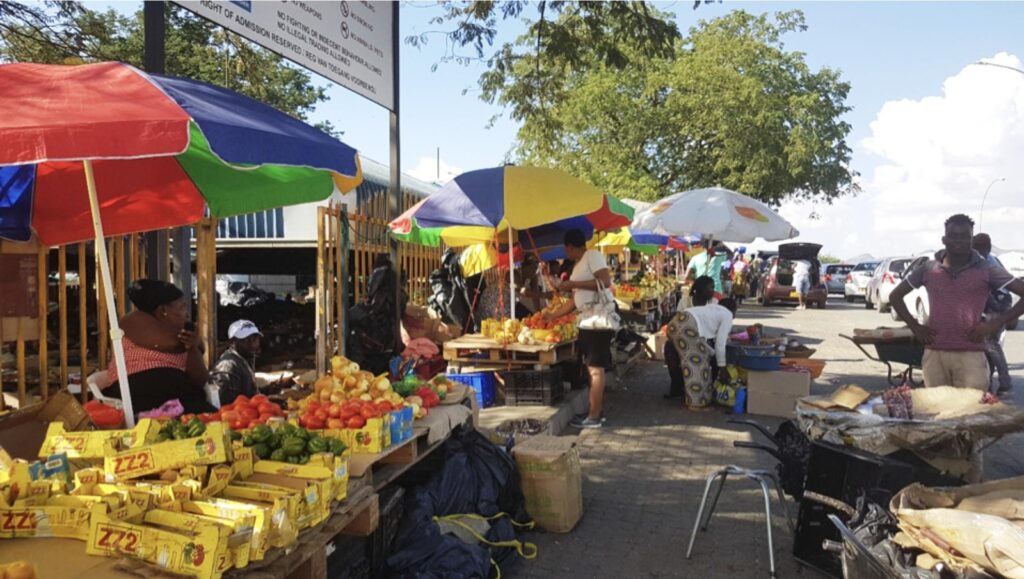
The City of Windhoek has approved 20 new temporary informal trading sites as it moves to address a shortage of about 3,000 trading spaces, with the municipality’s existing 18 informal markets supporting an estimated 44,200 livelihoods.
Speaking during the municipality’s July Ordinary Council meeting, Windhoek Mayor Sakarias Uunona said the expansion forms part of the City’s Informal Market Development Master Plan, which aims to accommodate growing demand from informal traders while permanent market infrastructure is developed.
Uunona said Namibia’s informal economy contributes about 26.5% of gross domestic product (GDP) and provides employment for 58% of the national workforce, highlighting its importance to household incomes and economic activity.
“To date, Council has developed a total of 18 open markets, including one communal car wash and four semi-developed markets that support the livelihoods of an estimated 44,200 people,” said Uunona.
He said the municipality’s existing facilities comprise 18 permanent open markets, one communal car wash, two product-specific craft markets and periodic markets. However, these facilities are no longer sufficient to meet growing demand from small businesses and start-ups.
To bridge the gap, Council has approved 20 temporary trading sites where informal traders will be allowed to operate under minimum hygiene standards while permanent market infrastructure is developed.
Uunona said the temporary sites will require investment in essential services, including water, electricity, ablution facilities and shaded trading areas.
The City is exploring public-private partnerships (PPPs), land exchange models, build-operate-transfer (BOT) arrangements and joint ventures to finance the developments.
He added that registering traders and providing basic infrastructure would improve compliance monitoring while enabling the municipality to collect levies to help fund future market developments.
“By implementing controlled measures such as site demarcation, infrastructure provision when funds become available, and the registration of traders, Council will be able to monitor compliance and collect relevant levies from the sites earmarked for temporary trading to support the rollout of future market infrastructure development projects,” he said.
Uunona said supporting informal traders remains central to the municipality’s efforts to improve livelihoods while ensuring trading activities are conducted within the City’s regulatory framework.
“By supporting informal traders, Council aims to empower thousands of residents to support their families with dignity while contributing to the development and prosperity of our city. While Council has demonstrated its support for informal traders, these activities must be managed within the parameters of our laws to create a conducive environment and a prosperous city for all residents,” he said.
The Informal Market Development Master Plan, first introduced in 2022 and approved by Council last year, is expected to guide the development of additional trading facilities through partnerships with the private sector and other investment models.