By Nashilongo Gervasius
As nations navigate an increasingly complex and interconnected world, it is clear that development can no longer be driven by governments or institutions acting alone.
Today’s challenges, from economic resilience and technological transformation to skills development and innovation, require collaboration across sectors.
In the knowledge economy, partnerships are no longer merely complementary to development. They are development infrastructure.
For universities, this shift presents an important opportunity. Institutions of higher learning are increasingly moving beyond their traditional roles of teaching and research to become platforms where government, industry, civil society, the media and international partners come together to co-create solutions that address national priorities.
This is the essence of meaningful internationalisation. It should not be measured by the number of agreements signed or global partnerships established, but by the local impact those collaborations deliver. International partnerships should strengthen institutions, develop local talent, facilitate knowledge exchange and create opportunities that contribute to national development.
Universities as catalysts for national development
Modern universities are uniquely positioned to bridge the gap between knowledge and practice. Through strategic partnerships, they can accelerate innovation, support entrepreneurship, influence public policy and contribute directly to national development goals.
At the Namibia University of Science and Technology (NUST), corporate engagement and internationalisation are viewed through this lens.
Partnerships are not pursued for their own sake but because they create opportunities for collaborative research, student and staff development, industry engagement and international knowledge exchange.
Equally important is the recognition that development is strengthened through collaboration across what has traditionally been known as the “Triple Helix” of universities, industry and government.
Today, however, there is a compelling case for recognising the media as a fourth pillar. Without informed journalism, innovation receives little visibility, investment opportunities remain underreported and public accountability is weakened.
A well-informed media sector plays a vital role in translating complex issues into accessible information that empowers citizens and strengthens democratic governance.
Better information builds stronger economies
Development depends not only on the knowledge we generate but also on the quality of information available to society.
Strong institutions thrive when citizens, policymakers and investors have access to credible, accurate and insightful reporting.
Financial journalism plays a critical role in helping the public understand national budgets, taxation, investment, entrepreneurship, public debt and broader economic trends. Transparent reporting also enhances accountability and investor confidence.
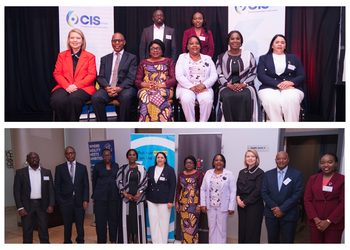
In this regard, programmes such as the Bloomberg Media Initiative Africa Financial Journalism Training Programme, which NUST is co-implementing in Namibia this year, illustrate the transformative potential of strategic partnerships.
For NUST, investing in professional capacity is also an investment in stronger institutions, more informed public discourse and greater economic resilience.
There is also a broader lesson for Africa. For too long, the continent’s economic narrative has often been shaped externally. In the true pursuit of decolonisation, Africa’s development story should be informed by African researchers, African universities and African journalists using African data.
As Namibia pursues its development ambitions, there is a greater need than ever to invest in partnerships that create lasting value.
The most successful collaborations are those rooted in mutual respect, shared expertise and long-term institutional strengthening.
Their success should be measured by the capabilities they leave behind, the institutions they strengthen and the opportunities they create for future generations.
Namibia’s future competitiveness depends on how effectively we collaborate to generate, apply and communicate knowledge for the benefit of society.
If development is to be inclusive and sustainable, partnerships must become more than strategic aspirations. They must become the foundation upon which stronger institutions, informed citizens and resilient economies are built.
*Nashilongo Gervasius is Director of Corporate Engagement and Internationalisation at the Namibia University of Science and Technology (NUST) and a Technology Policy Researcher.