By Dr Etuna Simon
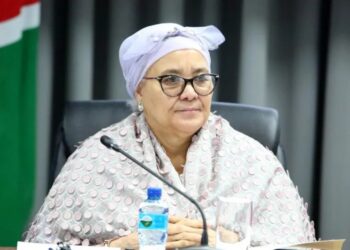
The recent State Visit to China by the Minister of Education, Innovation, Youth, Sport, Arts and Culture, Hon. Sanet Steenkamp, as part of the Presidential delegation, comes at a pivotal moment in Namibia’s development journey.
While the visit strengthens diplomatic and economic relations, it also presents an opportunity for Namibia to position itself within one of the most transformative technologies of our time Artificial Intelligence (AI).
China has become a global leader in AI through sustained investment in research, digital infrastructure, education, innovation and industry.
Its experience demonstrates that long-term planning, strategic partnerships and investment in human capital can transform economies and improve public services.
Namibia should seize this opportunity not only to strengthen bilateral relations but also to learn how AI can drive sustainable national development.
The question is no longer whether AI will change Namibia it already is. The real question is whether Namibia will become a creator of AI-enabled solutions or remain a consumer of technologies developed elsewhere.
Fortunately, Namibia is not starting from scratch.
The launch of Namibia’s Artificial Intelligence Readiness Assessment Report by the National Commission on Research, Science and Technology (NCRST), in partnership with UNESCO, marked an important milestone.
The report highlights encouraging progress in digital connectivity, AI awareness and education, while also identifying key gaps, including limited AI expertise, insufficient research funding, inadequate digital infrastructure and the absence of a comprehensive national AI strategy.
These challenges should not discourage us; they should guide our priorities.
Rather than attempting to compete with countries such as China or the United States in developing massive AI platforms, Namibia should focus on using AI to solve its own development challenges.
Imagine AI assisting healthcare professionals to diagnose diseases in remote clinics, supporting teachers through intelligent learning systems, helping farmers predict droughts and optimise crop production, improving water resource management, strengthening mining safety, detecting financial fraud and modernising government services. These are practical opportunities that can improve lives while stimulating economic growth.
Education will be the foundation of this transformation.
Schools, TVET institutions and universities must equip learners not only with digital skills but also with critical thinking, creativity, ethical reasoning and problem-solving abilities. Graduates must be prepared to work alongside AI, innovate with it and develop solutions relevant to Namibia’s unique context.
At the same time, educators require continuous professional development to integrate AI effectively into teaching, research and assessment while maintaining academic integrity.
AI also presents significant economic opportunities. Emerging industries in data science, software engineering, robotics, cybersecurity, digital agriculture and intelligent manufacturing will require new skills and create new careers.
Preparing Namibia’s workforce for these opportunities will ensure that technological change becomes a driver of employment rather than a threat.
The State Visit to China should therefore inspire partnerships that go beyond traditional cooperation.
Namibia should pursue joint AI research, faculty exchanges, innovation hubs, technology transfer, startup incubation, scholarship programmes and collaborative centres of excellence.
Such partnerships should focus on building local expertise and strengthening national institutions rather than creating dependence on imported technologies.
AI also offers Namibia an opportunity to preserve its rich cultural heritage. Indigenous languages, oral histories and traditional knowledge can be digitised and protected using AI technologies, ensuring that Namibia’s diverse cultural identity remains visible in the digital age.
To realise these opportunities, coordinated national action is essential.
Namibia should accelerate the implementation of a National Artificial Intelligence Strategy aligned with Vision 2030 and the Sixth National Development Plan.
Greater investment is needed in digital infrastructure, affordable broadband, cybersecurity, research, innovation and reliable electricity, particularly in underserved communities.
Universities should establish AI research laboratories and innovation centres where students, researchers and industry collaborate to develop practical solutions for national challenges.
Government should also introduce dedicated funding mechanisms to support AI startups, university research and innovation commercialisation while strengthening legal and ethical frameworks for data governance, privacy and responsible AI.
Artificial intelligence is not simply about technology it is about people, productivity, competitiveness and national development. Countries that invest strategically today will shape the economies of tomorrow.
Namibia has a unique opportunity to learn from one of the world’s leading AI nations while building solutions that reflect its own priorities and aspirations. The recent State Visit to China should therefore be viewed not only as a diplomatic success but also as the beginning of a bold national conversation on how AI can transform education, healthcare, agriculture, mining, entrepreneurship and public service delivery.
The AI revolution is already underway. Namibia now has an opportunity to move beyond observing technological change and become an active participant in shaping Africa’s digital future.
*Dr Etuna Simon holds a PhD in Mathematics, Science and Technology Education and serves as Head of the Centre for Curriculum Development and Innovation at Welwitschia University. The views expressed are those of the author and do not necessarily reflect those of Welwitschia University or any affiliated institution.