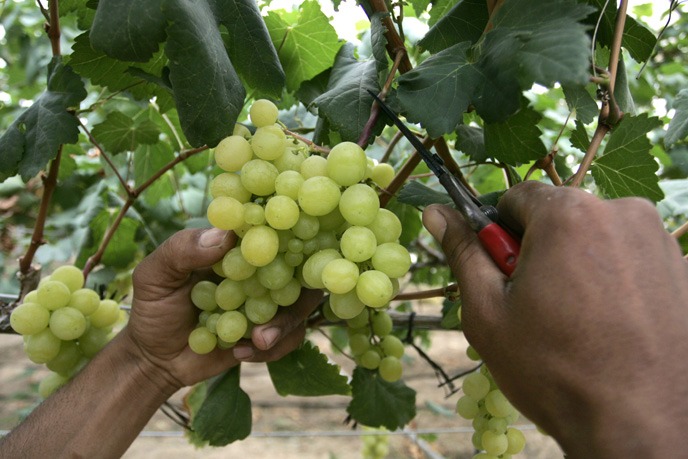
Namibia and China have signed a phytosanitary protocol that opens the Chinese market to Namibian fresh table grapes, giving local producers access to one of the world’s largest fruit markets as the country seeks to expand its agricultural exports.
The agreement was signed on 10 July 2026 between Namibia’s Ministry of Agriculture, Fisheries, Water and Land Reform and the General Administration of Customs of the People’s Republic of China, establishing the phytosanitary requirements for exporting fresh table grapes to China.
Ministry spokesperson Romeo Muyunda said the protocol creates the regulatory framework required for Namibian producers to access the Chinese market while complying with the country’s food safety and plant health standards.
“On 10 July 2026, the Ministry of Agriculture, Fisheries, Water and Land Reform of the Republic of Namibia and the General Administration of Customs of the People’s Republic of China officially signed a protocol establishing the phytosanitary requirements for the export of fresh table grapes from Namibia to China,” Muyunda said.
Under the agreement, all table grapes exported to China must be free of quarantine pests and soil contamination. The protocol also requires the registration of orchards, packing houses and cold-treatment facilities, while setting standards for integrated pest management, packaging, traceability and pre-export inspections.
Namibia’s Ministry of Agriculture will oversee the registration of production facilities and quality management systems, while Chinese customs authorities will inspect consignments upon arrival to ensure compliance.
“The protocol outlines comprehensive measures including orchard management, registration of orchards, packing houses and cold-treatment facilities, integrated pest management, packaging and traceability, as well as pre-export and entry inspections. Both parties have agreed to uphold the highest standards in agricultural practices and phytosanitary controls,” Muyunda said.
The agreement comes as Namibia’s table grape industry continues to drive growth in the country’s horticultural exports.
According to the Namibia Statistics Agency (NSA), horticultural exports increased by 155% to N$668 million during the first quarter of 2026, up from N$262 million in the corresponding period last year.
Table grapes accounted for N$561.3 million of total horticultural exports during the quarter, making them Namibia’s largest horticultural export product.
The sector also recorded a strong performance in the fourth quarter of 2025, when horticultural exports reached N$1.3 billion, with grapes contributing approximately N$1.2 billion.
Until now, the Netherlands, United Kingdom and Germany have been Namibia’s principal export destinations for table grapes. The agreement with China is expected to diversify export markets, create new opportunities for producers and strengthen agricultural trade between the two countries.