Friday, August 21, 2026
Subscribe
The Brief | Namibia's Leading Business & Financial News
  • Home
  • Companies
    • Finance
    • Agriculture
    • Technology
    • Property
    • Trade
    • Tourism
  • Business & Economy
  • E-PAPERreader
  • Mining & Energy
  • Opinions
    • Analysis
    • Columnists
  • Africa
No Result
View All Result
The Brief | Namibia's Leading Business & Financial News
  • Home
  • Companies
    • Finance
    • Agriculture
    • Technology
    • Property
    • Trade
    • Tourism
  • Business & Economy
  • E-PAPERreader
  • Mining & Energy
  • Opinions
    • Analysis
    • Columnists
  • Africa
No Result
View All Result
The Brief | Namibia's Leading Business & Financial News
Subscribe
No Result
View All Result
Home Latest

Marginalised communities make up 2.5% of Namibia’s population

by reporter
July 15, 2026
in Latest
8
A A
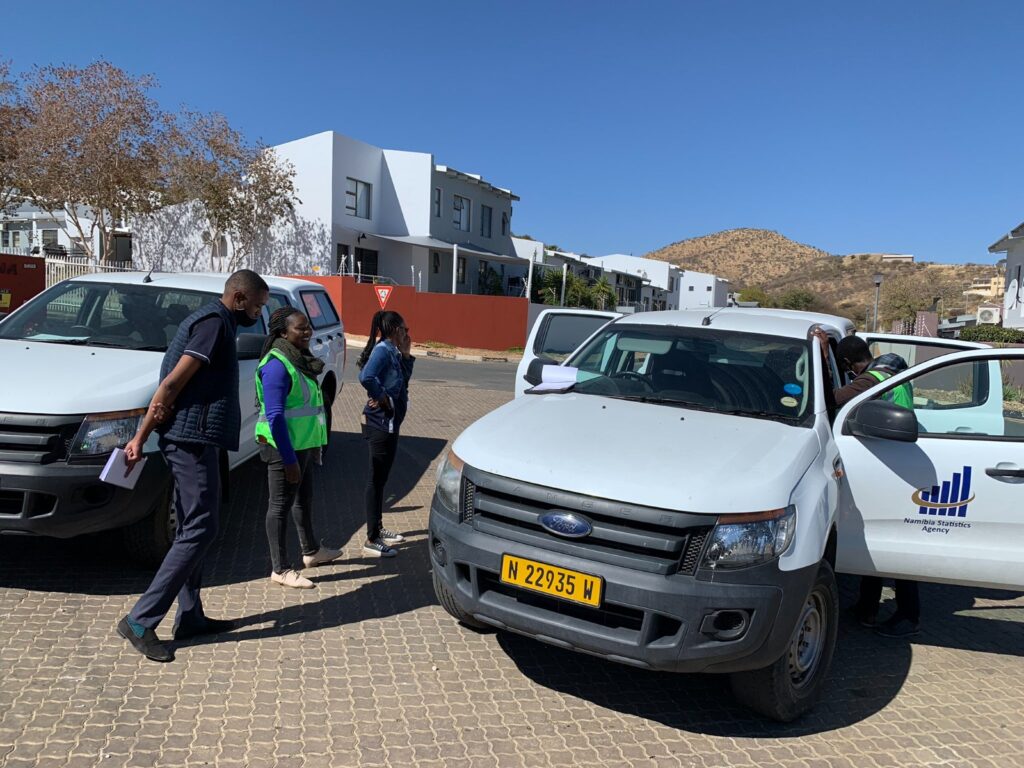
People stand by white vans with Namibia Statistics Agency logo in a sunny residential area. A man in a dark vest, a woman in a green safety vest, and another woman converse nearby.

Namibia’s marginalised communities comprise 75,569 people, representing 2.5% of the country’s population, according to the Namibia Statistics Agency’s (NSA) 2023 Population and Housing Census profile.

The report, presented by Statistician-General Alex Shimuafeni, provides the first comprehensive digital census profile of the San, Ovature/Ovatwa and Ovatjimba communities and is intended to support evidence-based policymaking and development planning.

The census found that 75.9% of the marginalised population is under the age of 35, highlighting a predominantly youthful demographic with growing needs in education, employment and social services.

Otjozondjupa has the largest marginalised population at 23,864 people, while the //Kharas Region has the smallest at 159. The San population is concentrated mainly in Otjozondjupa, Omaheke and Kunene, while the Ovature/Ovatwa and Ovatjimba communities are predominantly found in Kunene.

“Total marginalised population groups comprise 75,569 persons, which is about 2.5% of Namibia’s total population. The largest population of marginalised communities is found in the Otjozondjupa Region, while the region with the least population is //Kharas,” Shimuafeni said.

The report also highlights low labour force participation among marginalised communities, with the participation rate standing at 44.7% for males and 30.0% for females.

Agriculture, forestry and fishing remain the largest employers, accounting for 41.9% of employed people from marginalised communities, while 35.5% are employed in elementary occupations, reflecting limited access to higher-skilled jobs.

“The labour force participation rate for males stands at 44.7%, while for females it is 30.0%. Across all age groups, males have a higher participation rate than females. The agriculture, forestry and fishing industry is the largest employment sector for the marginalised population, accounting for 41.9% of employment,” Shimuafeni said.

Households headed by members of marginalised communities rely primarily on salaries and wages, which account for 42.4% of household income, followed by old age pensions at 15.6%. State Maintenance Grants and Old Age Pensions are the most widely accessed forms of social assistance.

The census further found that 38.1% of children aged between zero and four years do not have birth certificates, with the highest proportions recorded in Kavango West (60.7%), Omusati (50.6%) and Ohangwena (49.0%).

Educational attainment remains low. Half of the marginalised population aged 15 years and older have completed only primary education, while 7.5% have completed secondary education and just 1.6% have attained tertiary qualifications.

Housing conditions also remain challenging. Of the 21,379 households headed by members of marginalised communities, only 26.5% own the dwellings they occupy, while 46.4% live in informal structures or shacks.

The report found that 68.4% of these households have no toilet facilities, while 61.6% of urban households lack access to a flush toilet. However, 88.4% have access to safe drinking water.

Electricity is the main source of lighting for 32.4% of households, while 10.3% rely on solar energy.


author avatar
reporter
See Full Bio
Previous Post

Governor warns bureaucracy, land scarcity slowing Khomas housing delivery

Next Post

DBN appoints Mbango, Mbuende to executive leadership

Must Read

Bright yellow license plates with large black numbers stacked diagonally in the frame, overlapping each other.
Latest

Govt plans new national standard for vehicle number plates

August 20, 2026
Straight highway through a desert landscape under a blue sky with a few clouds.
Latest

Roads Authority targets N$2.1bn upgrade of nine Oshana roads

August 20, 2026
Smiling woman with a black top and gold jewelry against a dark blue studio backdrop.
Latest

The bankability bridge: Turning Namibia’s economic potential into SME participation

August 18, 2026
Construction workers in high-visibility vests along a dirt road under construction beside a busy highway; muddy tire tracks, piles of soil, and distant hills.
Latest

Auas Road Phase 3 kicks off, targets major expansion over next 12 months

August 18, 2026
Construction-site fence with a Namibian Competition Commission banner in front of a modern brick building; street signs show Marien Ngouabi St and Wisserstraat.
Latest

Namibia’s merger rules out of step with regional peers despite proposed increase

August 17, 2026
Why Namibia urgently needs consumer protection laws on home auctions
Latest

Blood is no longer thicker than water

August 14, 2026
Load More

Related News

Namibia agrees to UN Water Convention

Namibia agrees to UN Water Convention

June 13, 2023
Fish, fruit and meat drive Namibia’s N$418m average food trade surplus

Imports rise 11% to N$68.4bn as Namibia’s trade deficit widens to N$3.1bn

July 7, 2026
Woman in a black lace dress sits in a brown leather high-back chair at a formal event, with attendees behind her.

Ohangwena commits N$1.4bn to regional roads upgrade

July 8, 2026

Browse by Category

  • Africa
  • Agriculture
  • Analysis
  • Business & Economy
  • Columnists
  • Companies
  • Finance
  • Finance
  • Fisheries
  • Green Hydrogen
  • Health
  • Investing
  • Latest
  • Market
  • Mining & Energy
  • Namibia
  • namibia
  • News
  • Opinions
  • Property
  • Retail
  • Technology
  • Tourism
  • Trade
The Brief | Namibia's Leading Business & Financial News

The Brief is Namibia's leading daily business, finance and economic news publication.

CATEGORIES

  • Business & Economy
  • Companies
    • Agriculture
    • Finance
    • Fisheries
    • Health
    • Property
    • Retail
    • Technology
    • Tourism
    • Trade
  • Finance
  • Green Hydrogen
  • Investing
  • Latest
  • Market
  • Mining & Energy
  • namibia
  • News
    • Africa
    • Namibia
  • Opinions
    • Analysis
    • Columnists

CONTACT US

Cell: +264814612969

Email: newsdesk@thebrief.com.na

© 2026 The Brief | All Rights Reserved. Namibian Business News, Current Affairs, Analysis and Commentary

Welcome Back!

Login to your account below

Forgotten Password?

Retrieve your password

Please enter your username or email address to reset your password.

Log In
No Result
View All Result
  • Home
  • Companies
  • Mining & Energy
  • Business & Economy
  • Opinions
    • Analysis
    • Columnists
  • Africa

© 2026 The Brief | All Rights Reserved. Namibian Business News, Current Affairs, Analysis and Commentary

This website uses cookies. By continuing to use this website you are giving consent to cookies being used. Visit our Privacy and Cookie Policy.