Thursday, August 20, 2026
Subscribe
The Brief | Namibia's Leading Business & Financial News
  • Home
  • Companies
    • Finance
    • Agriculture
    • Technology
    • Property
    • Trade
    • Tourism
  • Business & Economy
  • E-PAPERreader
  • Mining & Energy
  • Opinions
    • Analysis
    • Columnists
  • Africa
No Result
View All Result
The Brief | Namibia's Leading Business & Financial News
  • Home
  • Companies
    • Finance
    • Agriculture
    • Technology
    • Property
    • Trade
    • Tourism
  • Business & Economy
  • E-PAPERreader
  • Mining & Energy
  • Opinions
    • Analysis
    • Columnists
  • Africa
No Result
View All Result
The Brief | Namibia's Leading Business & Financial News
Subscribe
No Result
View All Result
Home Latest

Imports rise 11% to N$68.4bn as Namibia’s trade deficit widens to N$3.1bn

by reporter
July 7, 2026
in Latest
7
A A

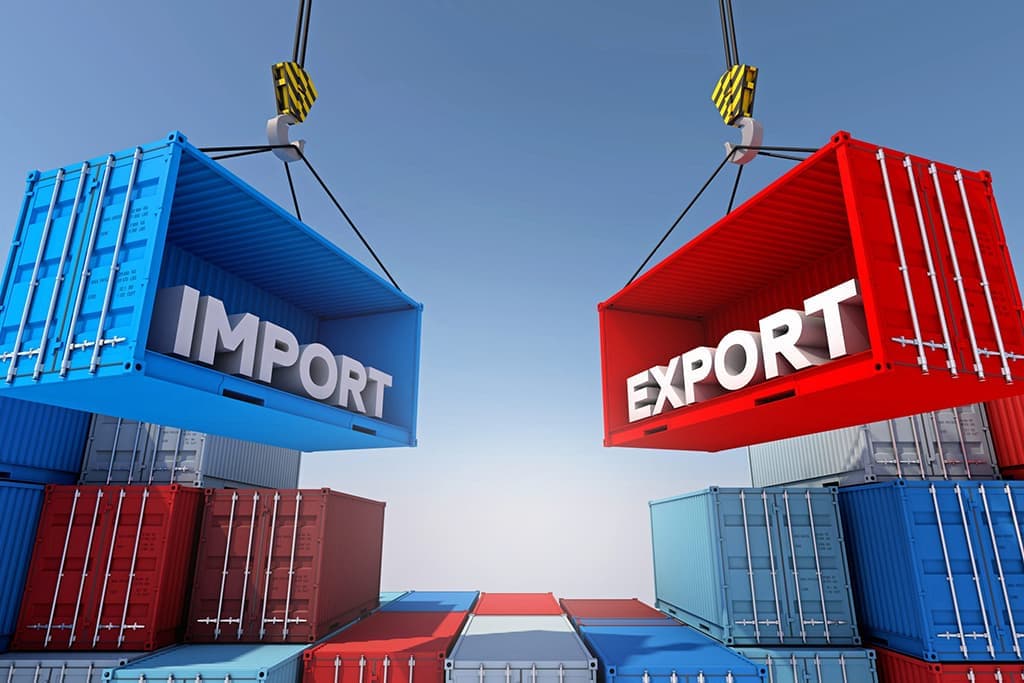
Namibia’s import bill rose to N$68.4 billion during the first five months of 2026, up from N$61.5 billion recorded over the same period in 2025, as rising demand for foreign goods continued to widen the gap between imports and exports.

Total exports reached N$54 billion, representing a year-on-year increase of N$1.9 billion.

According to the Namibia Statistics Agency’s (NSA) Merchandise Trade Statistics, Namibia recorded a merchandise trade deficit of N$3.1 billion in May 2026 as the country’s import bill surged to N$15.5 billion, significantly exceeding exports valued at N$12.4 billion.

While the trade deficit improved from the previous month, Namibia’s reliance on imported goods remained evident, with imports increasing by 34.6% compared to May 2025. Exports, meanwhile, rose by 6.6% year-on-year.

“In May 2026, Namibia’s trade figures show exports amounting to N$12.4 billion, while imports were higher at N$15.5 billion, resulting in a trade deficit (a negative difference between the country’s exports and imports) of N$3.1 billion. This development reflects an improved trade balance compared to the N$4.4 billion deficit recorded in April 2026. Further analysis shows that a N$115 million surplus was recorded in the same month of the previous year,” said NSA Statistician-General and CEO Alex Shimuafeni.

The NSA reported that the higher import bill was largely driven by manufactured goods, which accounted for N$10.1 billion of total imports, followed by mining and quarrying products at N$4.9 billion.

Petroleum oils were the largest imported commodity, accounting for 21.3% of total imports, with the United States remaining the principal source.

Other major imports included nickel ores and concentrates, commercial vehicles, sulphur and unroasted iron pyrites, as well as passenger motor vehicles.

“The top five commodities imported into the country jointly accounted for 38.5% of total imports. Petroleum oils emerged at the top of the list during the month under review, accounting for 21.3% of total imports. In second and third positions were nickel ores and concentrates and motor vehicles for commercial purposes, accounting for 7.7% and 3.7% of total imports, respectively. Sulphur and unroasted iron pyrites, and motor vehicles for the transport of persons ranked fourth and fifth, with shares of 3.4% and 2.4%, respectively,” the report said.

On the export side, Namibia’s mining sector remained the largest contributor, generating N$6.6 billion and accounting for more than half of total export earnings.

 Uranium was the country’s leading export commodity, contributing 22.3% of exports, with China remaining its primary destination.

Other major exports included fish, precious stones, non-monetary gold, and nickel ores and concentrates. China remained Namibia’s largest export market, absorbing 25.2% of total exports, while South Africa continued to be the country’s largest source of imports, accounting for 31.1% of total imports.

“Uranium was Namibia’s largest exported commodity in May 2026, accounting for 22.3% of total exports, mainly absorbed by China. Fish emerged as the second-largest export, accounting for 11.4% of total exports and destined mainly for Spain, Zambia and the Democratic Republic of the Congo. Precious stones (diamonds), destined mainly for Botswana, the United States and Hong Kong, ranked third, accounting for 10.8% of total exports. Non-monetary gold occupied the fourth position, also accounting for 10.8% of total exports, with all shipments destined for South Africa,” the report said.

The report also highlighted Namibia’s continued positive performance in food trade, with the country recording a N$510 million surplus, supported mainly by fish exports worth N$1.5 billion and meat exports valued at N$426 million.

Beverages, however, remained a net import category, resulting in a trade deficit of N$226 million.

The Port of Walvis Bay continued to play a central role in Namibia’s trade, handling the highest value of both exports and imports during the month.


author avatar
reporter
See Full Bio
Previous Post

MTC ranked Namibia’s best-governed public enterprise

Next Post

World Bank appoints Stefano Mocci as Namibia Country Manager

Must Read

Bright yellow license plates with large black numbers stacked diagonally in the frame, overlapping each other.
Latest

Govt plans new national standard for vehicle number plates

August 20, 2026
Straight highway through a desert landscape under a blue sky with a few clouds.
Latest

Roads Authority targets N$2.1bn upgrade of nine Oshana roads

August 20, 2026
Smiling woman with a black top and gold jewelry against a dark blue studio backdrop.
Latest

The bankability bridge: Turning Namibia’s economic potential into SME participation

August 18, 2026
Construction workers in high-visibility vests along a dirt road under construction beside a busy highway; muddy tire tracks, piles of soil, and distant hills.
Latest

Auas Road Phase 3 kicks off, targets major expansion over next 12 months

August 18, 2026
Construction-site fence with a Namibian Competition Commission banner in front of a modern brick building; street signs show Marien Ngouabi St and Wisserstraat.
Latest

Namibia’s merger rules out of step with regional peers despite proposed increase

August 17, 2026
Why Namibia urgently needs consumer protection laws on home auctions
Latest

Blood is no longer thicker than water

August 14, 2026
Load More

Related News

Global wealth hit record high of US$530trn in 2021

Global wealth hit record high of US$530trn in 2021

June 10, 2022
What changes when you change scale in Change Management?

What changes when you change scale in Change Management?

May 22, 2023
Standard Bank appoints Elzita Beukes as Senior Manager for PR and Communications

What can I do now to take the pressure off January’s back-to-school costs?

December 16, 2025

Browse by Category

  • Africa
  • Agriculture
  • Analysis
  • Business & Economy
  • Columnists
  • Companies
  • Finance
  • Finance
  • Fisheries
  • Green Hydrogen
  • Health
  • Investing
  • Latest
  • Market
  • Mining & Energy
  • namibia
  • Namibia
  • News
  • Opinions
  • Property
  • Retail
  • Technology
  • Tourism
  • Trade
The Brief | Namibia's Leading Business & Financial News

The Brief is Namibia's leading daily business, finance and economic news publication.

CATEGORIES

  • Business & Economy
  • Companies
    • Agriculture
    • Finance
    • Fisheries
    • Health
    • Property
    • Retail
    • Technology
    • Tourism
    • Trade
  • Finance
  • Green Hydrogen
  • Investing
  • Latest
  • Market
  • Mining & Energy
  • namibia
  • News
    • Africa
    • Namibia
  • Opinions
    • Analysis
    • Columnists

CONTACT US

Cell: +264814612969

Email: newsdesk@thebrief.com.na

© 2026 The Brief | All Rights Reserved. Namibian Business News, Current Affairs, Analysis and Commentary

Welcome Back!

Login to your account below

Forgotten Password?

Retrieve your password

Please enter your username or email address to reset your password.

Log In
No Result
View All Result
  • Home
  • Companies
  • Mining & Energy
  • Business & Economy
  • Opinions
    • Analysis
    • Columnists
  • Africa

© 2026 The Brief | All Rights Reserved. Namibian Business News, Current Affairs, Analysis and Commentary

This website uses cookies. By continuing to use this website you are giving consent to cookies being used. Visit our Privacy and Cookie Policy.