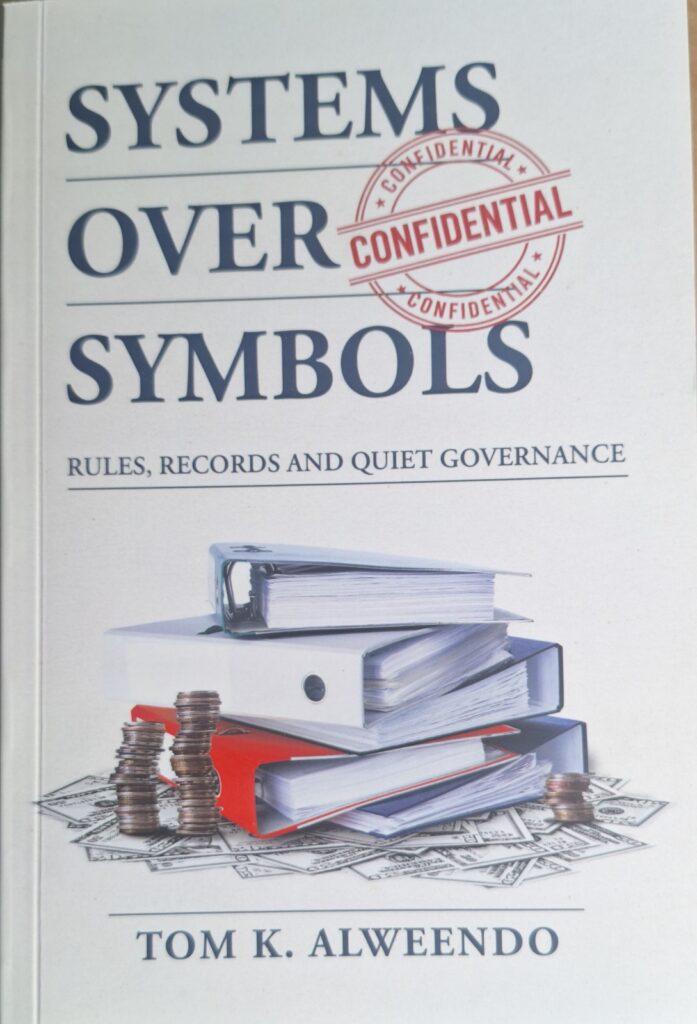
Former Mines and Energy Minister Tom Alweendo says Namibia’s long-term economic and governance success will depend on building strong institutions and effective systems rather than relying on individual leaders.
Speaking to The Brief ahead of the launch of his new book, Systems Over Symbols: Rules, Records and Quiet Governance, Alweendo said sustainable development requires leaders to prioritise institutional strength, accountability and trust instead of personal legacy.
He said the book is not intended to defend his record in public office but to reflect on the lessons, mistakes and leadership challenges he encountered during his career.
“It’s not really about perfect leadership. It’s not about victory, because usually it’s tempting for someone who has held office to try to write about preserving a legacy or to defend something. It’s not really about that. It’s not really a victory lap. If anything, it’s really just a reflection on lessons I’ve learned, the mistakes I’ve made, and things I should have done better,” Alweendo said.
He argued that institutions should be designed to function effectively regardless of who occupies leadership positions, warning against systems that depend on individuals.
According to Alweendo, while speeches and public announcements can inspire confidence, they do not by themselves improve public services. Instead, he said, lasting progress depends on clear rules, sound processes and institutions capable of consistently delivering results.
“For example, what does it take for a leader to build trust? How do we design institutions in such a manner that the system does not depend on one person? We have a hero, and then when the hero is no longer there, suddenly the institution is no longer there,” he said.
Alweendo said much of the work that strengthens public institutions is rarely visible because it focuses on improving internal systems rather than high-profile initiatives.
“The most valuable work is sometimes the quiet work that nobody sees,” he said.
He also identified humility as a critical leadership quality, saying leaders who stop listening weaken the institutions they lead.
Alweendo said some of the most important decisions during his career were influenced by junior officials, economists and analysts whose expertise often exceeded that of senior decision-makers in specialised areas.
“Some of the most important corrections in my career came from people who were not the most senior. Sometimes it came from the most junior people: a young economist, a young analyst, a quiet officer who knew more about the numbers than the leader did,” he said.
He said creating an environment where employees at all levels are encouraged to contribute strengthens decision-making and improves institutional performance.
Alweendo added that public trust is built through transparent communication, integrity and the consistent application of sound governance principles, rather than through individual personalities or political symbolism.
He said he hopes the book will encourage a broader national conversation about leadership and inspire future leaders to focus on building institutions that continue to serve the public effectively long after individual office bearers have left.