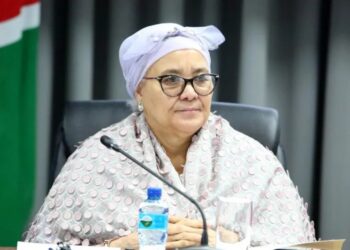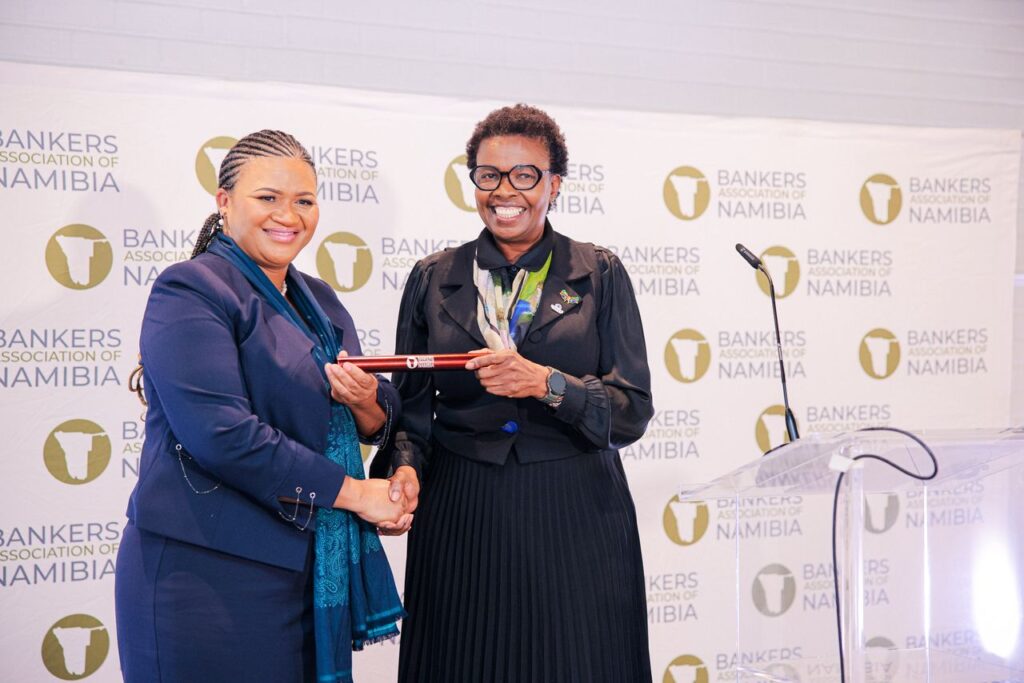
The Bankers Association of Namibia (BAN) has appointed Nedbank Namibia Chief Executive Officer Martha Murorua as its new Chairperson.
Murorua succeeds Letshego Namibia Chief Executive Officer Ester Kali, who completed her one-year tenure as Chairperson.
Speaking at the handover ceremony on Tuesday, Murorua stressed the importance of collaboration between banks, regulators and other stakeholders in maintaining a stable, resilient and responsive financial system.
She said the banking sector must continue to play a central role in supporting economic participation by broadening access to finance and supporting the growth of small businesses.
“Our role as banks is clear: to mobilise capital, unlock opportunities, and ensure that Namibians fully participate in their own economy. This includes financing small businesses, supporting ambition and growth in communities,” she said.
Murorua said Namibia’s current economic environment, while challenging, presents significant opportunities for growth and transformation, particularly in emerging sectors such as green hydrogen, renewable energy, and oil and gas.
“Colleagues, as we address these challenges, we must also recognise the opportunities ahead. Namibia stands on the threshold of transformation through oil and gas, green hydrogen, and renewable energy. The question is not whether growth will come, but who will benefit from it,” she said.
Outgoing Chairperson Ester Kali described her tenure as both challenging and rewarding, noting that the banking sector had navigated a difficult economic environment while maintaining stability and supporting customers.
“Over the past year, we have been operating in an environment of uncertainty for households and businesses, with inflationary pressures and affordability challenges affecting many Namibians,” Kali said.
She said banks had also faced increasing regulatory demands and rising public expectations around transparency, innovation, digital transformation and service delivery.
“We also experienced growing public expectations regarding transparency, service delivery, digital transformation, and accessibility. In a rapidly changing world, stakeholders rightly expect banks to innovate while maintaining trust, stability, and security. This requires us to have difficult but constructive conversations about how best to strengthen confidence in the sector,” she said.
Despite the challenges, Kali said the banking industry had remained resilient and continued to strengthen stakeholder engagement, advance financial inclusion and support national development priorities.