Investor demand for Namibian government bonds is weakening, raising concerns over the state’s ability to continue financing widening budget deficits through domestic borrowing, Bank of Namibia Governor Ebson Uanguta has warned.
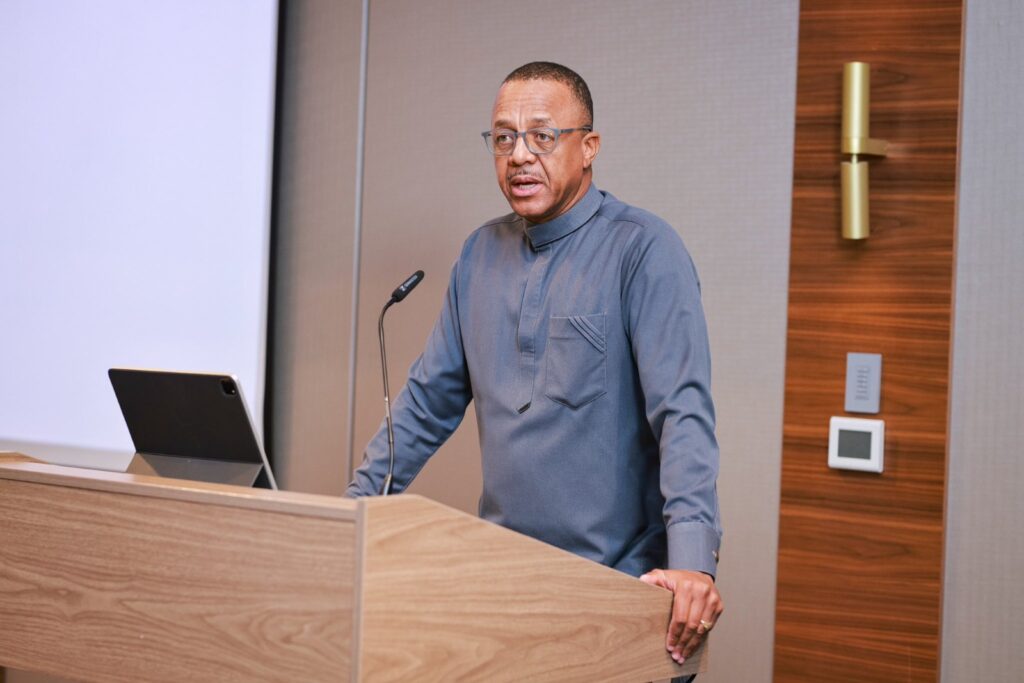
Speaking during a fiscal outlook presentation, Uanguta said Namibia’s domestic capital market has historically provided strong support for government borrowing, with bond auctions regularly attracting demand far in excess of the amounts on offer.
However, he warned that investor appetite for government securities has cooled significantly, increasing the risk that future borrowing requirements may not be fully funded through the local market.
“In the past, when the government issued securities to borrow money, we oversubscribed five-fold. If we wanted N$1 billion, investors offered N$5 billion. Today, that appetite has cooled significantly. This suggests that the private sector’s willingness to lend to the government is declining. If we do not implement reforms, we risk a situation where there is no demand for government securities at all,” Uanguta said.
The warning comes as Namibia’s public debt has climbed above 65% of gross domestic product (GDP), well above the government’s 50% debt benchmark.
Authorities have previously cautioned that, without corrective measures, the country’s debt burden could approach or exceed 70% of GDP in the coming years.
Uanguta said the weakening demand for government debt underscores the need for urgent fiscal reforms and tighter expenditure controls.
He urged government to reassess spending priorities, direct resources towards high-impact development projects and postpone lower-priority expenditure to improve fiscal sustainability.
The Governor attributed the country’s fiscal pressures to sluggish economic growth, limited expansion in domestic revenue sources and volatility in receipts from the Southern African Customs Union (SACU), while government spending remains elevated.
The warning comes at a time when Namibia faces a range of domestic and external risks that could further strain public finances and economic growth.
“Now, the domestic economy outlook remains subject to several downside risks from both external and domestic developments. Regionally, the outbreak of foot-and-mouth disease in neighbouring countries, particularly in Botswana and South Africa, poses a risk to livestock production and export earnings. Globally, ongoing geopolitical tensions, as well as evolving United States policies, may contribute to volatility in commodity prices, the exchange rate, and also the cost of key imported inputs, such as food,” Uanguta said.
The remarks add to growing concerns over Namibia’s fiscal position as government continues to balance rising spending demands against slower revenue growth and increasing debt-servicing obligations.