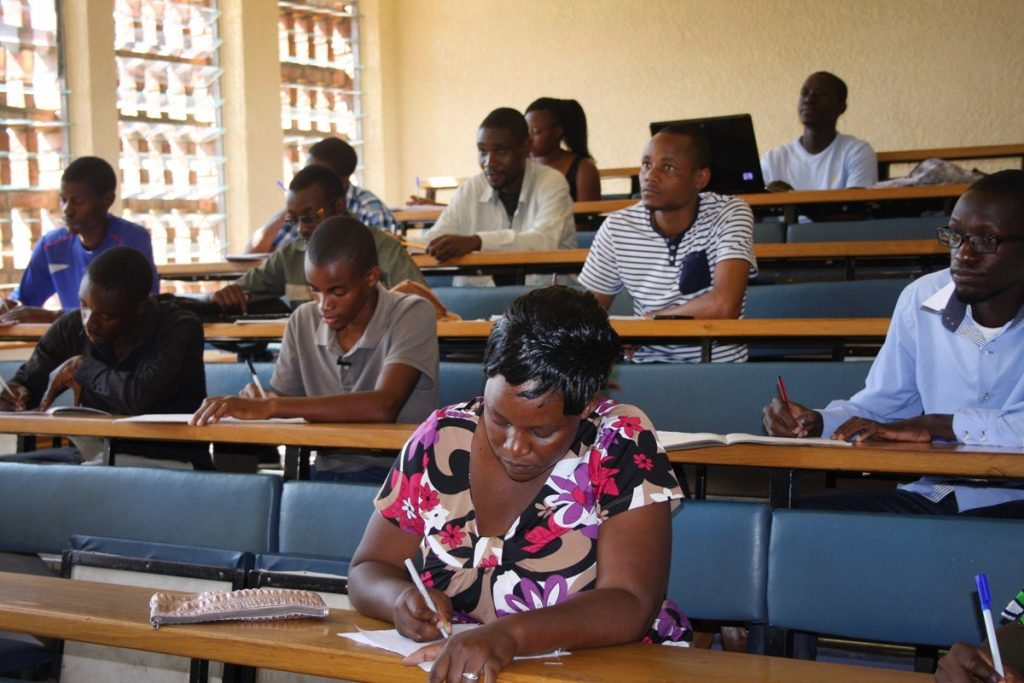
Namibia is stepping up efforts to increase foreign student enrolment as it seeks to position itself as a regional academic hub under the newly launched SHINE project.
International students currently make up just three percent of total enrolment, well below the Southern African Development Community (SADC) benchmark of at least five percent. Government now wants to close that gap as part of a broader push to open up the country’s higher education system.
Minister of Education, Innovation, Youth, Sports, Arts and Culture, Sanet L. Steenkamp, said Namibia is actively targeting students from across the region and beyond.
“We are positioning Namibia as a destination for international students. The three percent shows there is significant room to grow, and we are focused on attracting students who want quality education and opportunities to collaborate,” she said.
Steenkamp said increasing foreign student numbers will not only boost enrolment, but also strengthen the global competitiveness of Namibia’s universities and graduates, while supporting knowledge exchange.
She added that the strategy will extend beyond Windhoek, with towns such as Katima Mulilo, Nkurenkuru and Lüderitz expected to play a role in expanding access to higher education and hosting students.
The SHINE project also aims to promote “internationalisation at home”, ensuring that local students benefit from global academic standards, partnerships and exposure, even if they do not study abroad.
The initiative brings together local institutions, including the University of Namibia, Namibia University of Science and Technology, the International University of Management and Welwitchia University, alongside European partners to strengthen collaboration, research and student mobility.
European Union Ambassador to Namibia, Ana Beatriz Martins, said the project reflects growing cooperation between Namibia and Europe in higher education and research, supported through the EU’s Erasmus+ programme.
“Education and research help drive development. They equip people with skills, strengthen institutions and enable countries to respond to global challenges,” she said.
Martins added that Namibia’s participation in international scientific initiatives, such as the planned Africa Millimetre Telescope, supports its ambition to become a recognised destination for academic and research excellence.