By Zulene Bio
Leadership is often crafted from the perspective of titles, positions, access to formal spaces of influence or the gravitas of the boardroom. When we narrow down the definition and exclude the components that make leadership a well-rounded concept, we overlook a fundamental truth:
“Leadership begins long before any title is assigned. It begins with the individual”.
At it’s core leadership is not a position assumed, but a capacity developed. It is reflected in judgment, clarity, and the ability to navigate uncertainty. These qualities are developed internally, long before they are recognised externally.
Self-leadership is the core of All Leadership.
Self-leadership is built in moments of discipline, reflection, and personal responsibility. Life experiences shape this foundation, but it is strengthened through intentional learning. Its absence makes room for leadership to become performative rather than effective
My personal journey made it clear and therefore leadership, for me, has been less about position and more about the difficult, often solitary work of leading myself through uncertainty.
Through my study of project management, I was introduced to principles such as defining vision, planning, executing, and adapting. What began as academic concepts gradually grew into personal practices.
I found myself applying them not only to meet academic requirements but also to my own life. This required me to read deeply, think critically, and translate understanding into action.
These experiences did not unfold in visible spaces, but in moments that demanded that I reflect, adjust, and take responsibility. And it is in those moments that my understanding of leadership was truly formed.
I had to move away from equating accomplishment with titles. I had to challenge my own tendency toward timidity. It was in that shift that I recognised a fundamental truth: leadership is not defined by external strength but by the internal capacity to execute, take ownership, and lead without permission.
Literacy as a Development imperative
The act of reading is often conflated with much greater skills: The ability to read and comprehend allows for engagement beyond an individual’s immediate environment, assumptions are questioned in this space, and making informed decisions over reactive ones is more achievable.
The connection between literacy and leadership is more critical than ever. Both national and regional assessments have consistently indicated that a significant number of learners struggle with reading for meaning, particularly in the early grades.
While we acknowledge that access to education has improved significantly over the years and inline with the national priorities in the frameworks such as Education and Training Sector Improvement Programme (ETSIP) and the National Development Plans (NDPs), there remains a gap within the system, comprehension remains a challenge, learners can read words, but fewer can interpret, analyse, and apply what they read.
These findings are not only an issue of access, but of quality. Access ensures that learners are in class, but quality places a demand on what learners take away from a classroom session, access alone cannot translate into meaningful learning outcomes.
Economic growth, governance, and social development depend on an informed and capable population, and literacy cannot be viewed only as an educational outcome, but instead as a developmental necessity.
The overarching successes of the National Development Plan are dependent on the capacity of its people to engage with information and contribute meaningfully to economic and social conversations. In this sense, literacy is not a standalone component,it is the thread that runs through the building blocks of development.
The Genesis of Comprehension
Perhaps we need to go back to the beginning, where we will find truth of the connection between language, thought and creation. It is best captured in scriptures “In the beginning was the Word, and the Word was with God, and the Word was God.” (John 1:1). “The earth was without form and void… And God said, ‘Let there be light.'” (Genesis 1:2-3).
For God to have spoken a word, there had to exist a preceding act of profound understanding and an awareness of what was needed. That awareness, the discernment of necessity, is an act of supreme thought. The articulation of that thought into words was the birth of Creation. The concept of “the word” becomes more than language or theological rhetoric,it becomes a symbol of intention, comprehension, and the power of applied thought.
It demonstrates that the ability to truly think, comprehend, and articulate a vision is the ultimate precursor to meaningful action and impactful creation.
If the genesis of creation was founded upon the ability to comprehend the contrast between void and form and to articulate vision, how much more crucial is it for us in our human capacity to cultivate the equivalent depth of thinking through robust literacy to build and ultimately achieve our Namibian reality.
A solution or just an opinion?
The path to a truly empowered Namibia does not lie within a complex and distant solution,it begins with a fundamental shift of our view on the two forces: Leadership and Literacy, viewing them as deeply connected symbiotic drivers of progress.
Our most tangible and immediate step is cultivating self-leadership at an individual level. It means actively and systematically encouraging discipline, unwavering accountability, and intentional, critical thinking in how we approach our own lives, our work, and our contributions to society.
True leadership, must first be practised internally,it is within this inner forge that decisions are truly made, values are tested and affirmed, and thinking is perpetually refined.
Making this an enforceable measure translates to integrating self-leadership development into the national frameworks in Education, Public and Corporate Sectors, Community and Grassroots initiatives.
With this approach, we transform the cultivation of self- leadership from an abstract into a foundational and non-negotiable expectation.
For Goverment , literacy must be treated as a foundational priority, extending beyond mere access to encompass deep comprehension. This demands a stronger focus on reading with meaning in the early grades. Learners must not only be exposed to words but must be equipped to interpret, question, and apply what they read. Fundamentally, this requires a cultural shift: reading must be recognised not as a routine task, but as an essential tool for growth, critical thinking, and empowerment.
A Shared Responsibility
If leadership truly begins before the boardroom , then it begins here: in how we think, how we read, and how we intentionally choose to lead. Let us build with the fierce dedication and thought our country and it’s people, ensuring that we forge a future, by our fully comprehending, deeply thoughtful, and self-led minds. This is our shared mandate.
We don’t need grand pronouncements, but a personal commitment rooted in true leadership,
There is no ‘reserve Namibia’ tucked away somewhere. This is it. This magnificent, challenging, hopeful land is all we have. It is our inheritance, our present, and our future.
Every decision we make, every book we read, every mind we empower, shapes this Namibia.
We are not waiting for Namibia to become something more. We are the ones responsible for what it becomes.
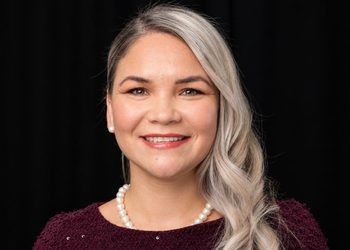
*Zulene Bio is a systems-focused thinker whose work explores the connection of leadership, literacy, and development. She is currently advancing her studies in project management and writes on the role of implementation in shaping meaningful outcomes in education and governance.