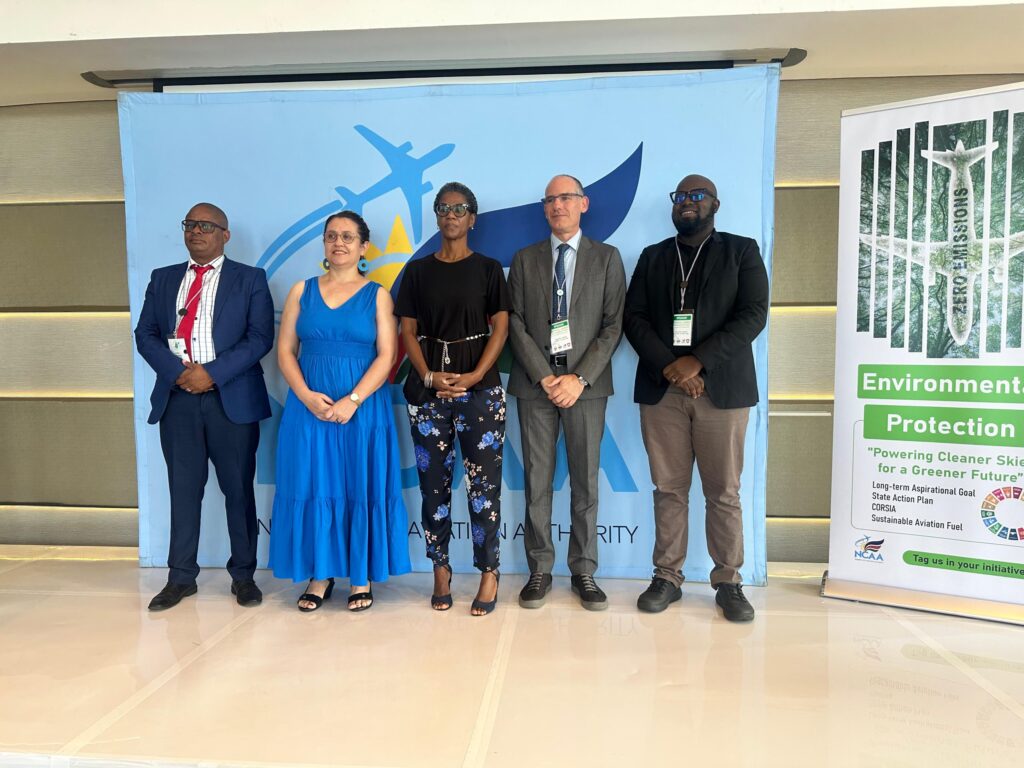
Namibia has been selected as one of 50 countries to undergo a feasibility study assessing its readiness to produce sustainable aviation fuel (SAF), as part of a €400 million (approximately N$7.8 billion) Swiss-led clean aviation initiative.
The six-month study will evaluate Namibia’s preparedness across key areas, including policy and regulatory frameworks, feedstock availability, infrastructure capacity and investment potential. The findings are expected to inform an evidence-based roadmap to guide the development of a domestic SAF industry.
Speaking at the launch, Josef Janssen, programme manager for sustainable aviation fuels at Switzerland’s Federal Office of Civil Aviation, said the initiative is funded by the Swiss Parliament and forms part of broader efforts to reduce aviation emissions.
“Switzerland is also supporting the scaling of sustainable aviation fuel production beyond its borders, backed by approximately €400 million allocated by the Swiss Parliament for national and international climate innovation initiatives,” Janssen said.
He added that the programme aligns with the International Civil Aviation Organisation’s ACT-SAF initiative, which promotes the global adoption and development of sustainable aviation fuels.
Speaking on behalf of the Executive Director of Civil Aviation, Toska Sem, Chief Legal Counsel Christoph Seimelo said Namibia’s inclusion reflects its alignment with green industrialisation strategies, particularly through the Namibia Green Hydrogen Programme.
He noted that early-stage projects, including those led by Clean Air Solutions Namibia, are already laying the groundwork for potential SAF production.
Seimelo said industry stakeholders are beginning to align with the transition towards cleaner fuels, with operators such as West Air Aviation and FlyNamibia indicating readiness to support sustainable aviation initiatives.
“Within the aviation sector, operators such as West Air Aviation and FlyNamibia are demonstrating growing awareness and readiness to support sustainable aviation initiatives,” he said.
He added that the Namibia Airports Company is preparing infrastructure to support future green fuel supply chains and the development of “green airport” concepts.
“At the infrastructure level, the Namibia Airports Company continues to play a critical role in preparing our airports to support future sustainable fuel supply chains and green airport concepts,” Seimelo said.
Namibia has also strengthened its position through participation in international climate frameworks, including joining the Carbon Offsetting and Reduction Scheme for International Aviation (CORSIA) in 2017 and engaging in the ACT-SAF programme since 2024.
Authorities said the feasibility study will determine whether Namibia can position itself as a competitive producer of sustainable aviation fuels, as global demand for low-carbon aviation solutions accelerates.