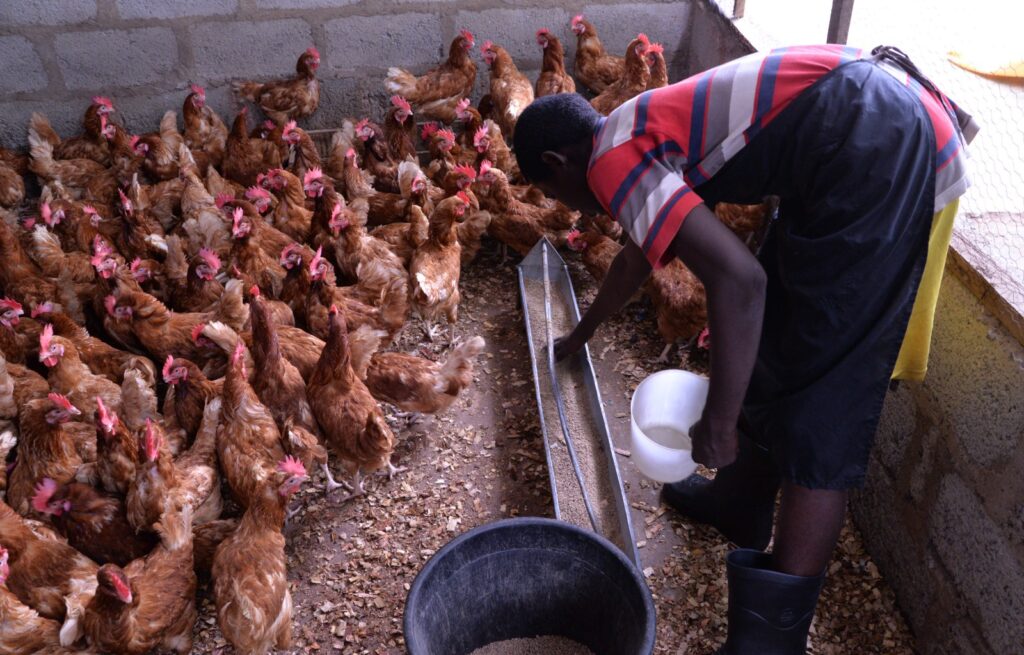
The Namibia Agricultural Union (NAU) says small and medium enterprises (SMEs) are playing an increasingly important role in Namibia’s poultry industry, with SME producers supplying about 60,000 broilers per week to informal markets.
The NAU said growth in the SME segment has been supported by stronger regulatory enforcement, including border policing by the Livestock and Livestock Products Board of Namibia and levy-funded controls aimed at curbing poultry smuggling.
The union added that ongoing engagements with the Directorate of Veterinary Services are focused on developing an Avian Influenza Master Plan to safeguard sector-wide biosecurity.
According to the NAU, the poultry industry continues to expand rapidly and is now the second-largest contributor to farmers’ cash receipts, supported by growing private-sector investment and closer regulatory coordination.
“Namibia’s poultry sector continues to expand rapidly and is the second biggest sector contributing to farmers’ cash receipts. The SME segment is also growing, producing approximately 60,000 broilers per week for informal markets. Regulatory support through LLPBN border policing and levy-funded enforcement has strengthened controls against poultry smuggling,” the union noted.
The NAU reported that production growth has been driven by both established producers and new market entrants. In 2024, broiler production increased by 14.94%, while egg production rose by 6.63%.
The union added that this momentum continued into 2025, with more than 9.3 million chickens marketed in the first half of the year, largely driven by NPI and the first full year of operations at Kadila Poultry.
The NAU further noted that several producers are undergoing major expansions, including new processing plants and integrated breeder–hatchery systems, positioning the industry for significant scale-up in the coming years.
“In 2024, broiler production increased by 14.94% and egg production by 6.63%. More than 9.3 million chickens were marketed in the first half of 2025. Several producers are undergoing major expansions with new processing plants and integrated breeder–hatchery systems,” the NAU said.
Despite strong domestic growth, the NAU said Namibia continues to import large volumes of poultry meat, with more than 11,388 tonnes imported in the first half of 2025, accounting for about 30% of domestic consumption.
According to the union, the sector also remains heavily dependent on imported yellow maize and soy for feed, exposing producers to feed cost volatility and external supply risks.
Looking ahead to 2026, the NAU expects the poultry sector to maintain its upward trajectory, supported by expanding processing capacity, maturing breeder and hatchery operations, and improved biosecurity planning.
“Namibia still imports large volumes of poultry meat, accounting for about 30% of domestic consumption. Feed cost volatility and Avian Influenza risks in neighbouring countries remain key challenges. Overall, the sector is well-positioned for sustained growth, with SME participation remaining robust,” the union said.