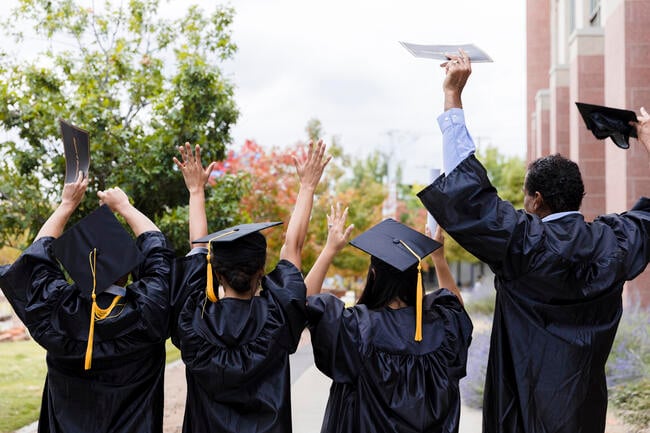
Namibia risks producing more graduates than the market can absorb if free tertiary education is not linked to employability and practical training, experts have warned.
Speaking at the recent Sanlam Allianz Brief Session, Statistician-General Alex Shimuafeni said the country’s education reforms must prioritise skills development, job creation, and economic diversification to ensure that free tertiary education delivers long-term benefits.
This follows government’s allocation of N$663 million for registration and tuition fees for the first quarter of 2026 as part of the phased rollout of subsidised free tertiary education.
Shimuafeni cautioned that education must respond to economic needs, noting that 44.4% of Namibians aged 15 to 34 are unemployed, rising to 61.4% when including discouraged job seekers.
“I read on social media where someone said about our beautiful roads infrastructure that people do not eat roads. If we are serious about reducing unemployment, government procurement must deliberately buy local and create opportunities for young producers. Education must empower our youth to supply the goods and services our economy consumes every day,” he said.
He added that Namibia imports N$36 million in bed linens and N$44 million in embroidered textiles annually, a combined N$80 million market that could support local youth-led businesses.
“When we import more than we export, we create jobs outside the country instead of internally. Our biggest challenge is that our education and economic systems operate separately. We must build a model where what we teach translates into what we can produce,” Shimuafeni said.
Economist Armando Jansen of Simonis Storm said education reform must align with sectors that generate broad-based employment.
“We need to move funds to sectors that create more employment. Capital-intensive industries contribute to growth, but they do not employ people in significant numbers. Our focus should be on areas that stimulate broad participation and sustainable livelihoods for the youth,” Jansen said.
He added that free education must also promote entrepreneurship, financial literacy, and practical learning from secondary school, supported by closer collaboration with the private sector to ensure graduates are job-ready.
“We have the drive ,we just don’t know how to practically do it. Free education should not only remove financial barriers; it must also teach practical problem-solving, communication, and professionalism so that young people are ready to contribute from day one,” Jansen said.
Media student Quintele Nunuwe urged government to involve young people in curriculum reform, arguing that existing programmes are overly theoretical and fail to prepare learners for innovation or self-employment.
“Don’t just announce that you are changing the curriculum without engaging us. Involve young people in shaping these policies because we understand our struggles better than anyone else. When decisions are made without our input, the results often fail to meet our needs or the market’s expectations,” she said.
President Netumbo Nandi-Ndaitwah announced in April that tertiary education at all public institutions will be fully subsidised from 2026.